
An aftermarket dual tone horn kit is not only two loud horns in a box. For distributors, repair chains, and private-label brands, the kit has to work as a practical replacement package: two matched tones, suitable current draw, stable brackets, compatible connectors, clear installation guidance, and packaging that reduces returns. If one part of the kit is vague, buyers may face the same problem later through installer complaints.
OSUN's automotive horn product range gives buyers several useful references. The ODL-161, ODL-162, and ODL-165 snail horns are marked around 12V 4A with high and low tone examples, while the compact ODL-151 disc horn gives another path for tighter spaces. For wider vehicle coverage, OSUN's multi-fit car horn adapter concept can help buyers think beyond sound and into installation risk.
Build the Kit Around the Pair
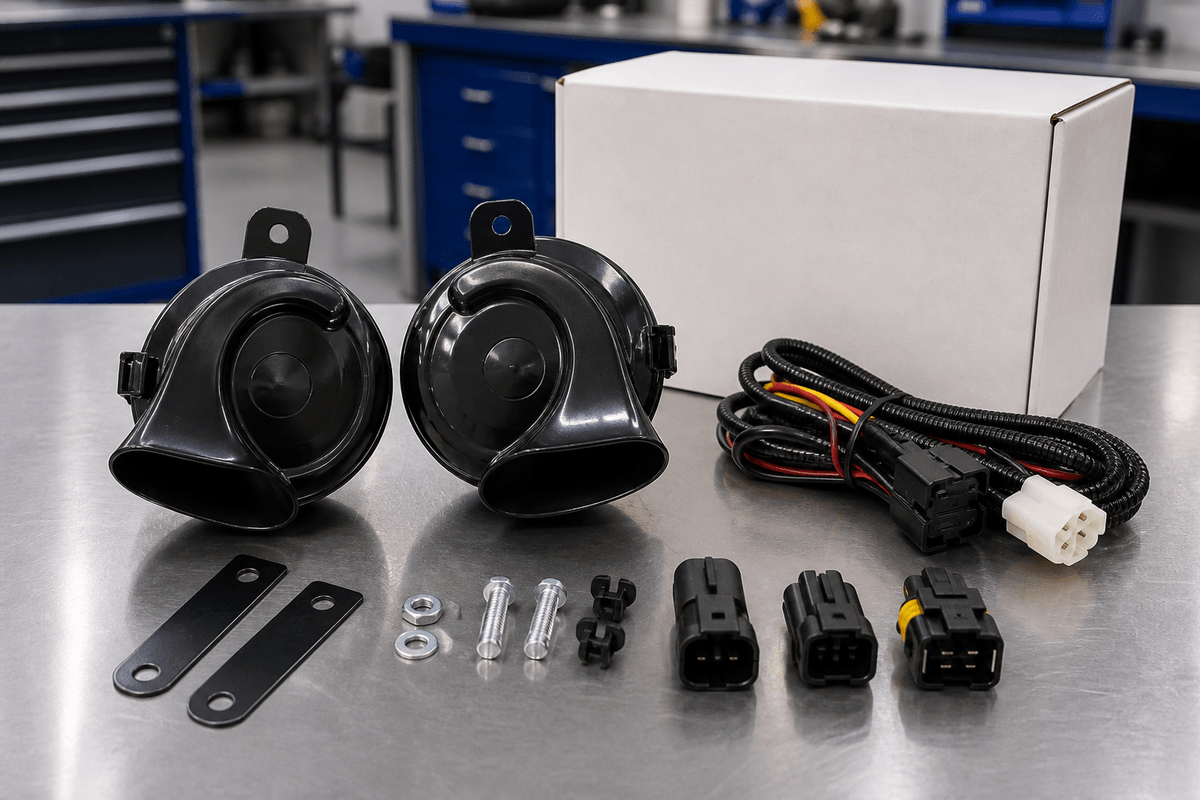
A dual tone kit should be treated as a matched pair. Buyers should verify whether the high and low tone horns are supplied together, whether the frequency markings match the approved sample, and whether the sound test is done at the same voltage and distance. A single impressive sound clip is not enough for a sourcing decision.
For example, OSUN snail horn references commonly show high and low tone markings such as 500Hz and 400Hz on 12V horn examples. Those numbers are useful because they give buyers a concrete sample record. However, the final RFQ should still ask OSUN to confirm the exact SKU, tone pair, test voltage, sound level test method, and whether the shipment will match the approved sample.
Where OSUN Examples Fit
Different OSUN horns can support different kit positions. The ODL-161 snail horn is useful when buyers need a mini snail design with water-drainage language and forward sound direction. The ODL-162 snail horn is more relevant when E-mark positioning, membrane filter technology, anti-corrosion treatment, and pure copper wording matter to the program. The ODL-165 can suit premium aftermarket lines where shell material and climate adaptation are part of the sales story.
If the target catalog includes compact cars or repair shops with limited mounting space, buyers should also compare disc horn options. The ODL-151 disc horn has a compact disc format, visible 12V 3A 110dB markings on the reviewed product image, and a bracket drawing with an 8.5 mm mounting hole. That may be a better path for some replacement kits than a larger snail pair.
Sampling Notes for Aftermarket Programs
Sampling should include both bench checks and installation checks. A horn kit that sounds good on a desk can still fail if the bracket angle hits the body panel, the connector does not match the target vehicle parc, or the wiring needs are not clear enough for a retail installer.
- Confirm whether the kit is single-vehicle, universal, or multi-fit.
- Record voltage, current draw, frequency pair, sound level, and test distance.
- Check bracket hole size, mounting depth, horn mouth direction, and water exposure position.
- Inspect terminals for firmness, plating consistency, and cable retention.
- Ask whether adapters, relay, fuse, wiring, and mounting hardware are included or optional.
Kit Contents Buyers Should Specify
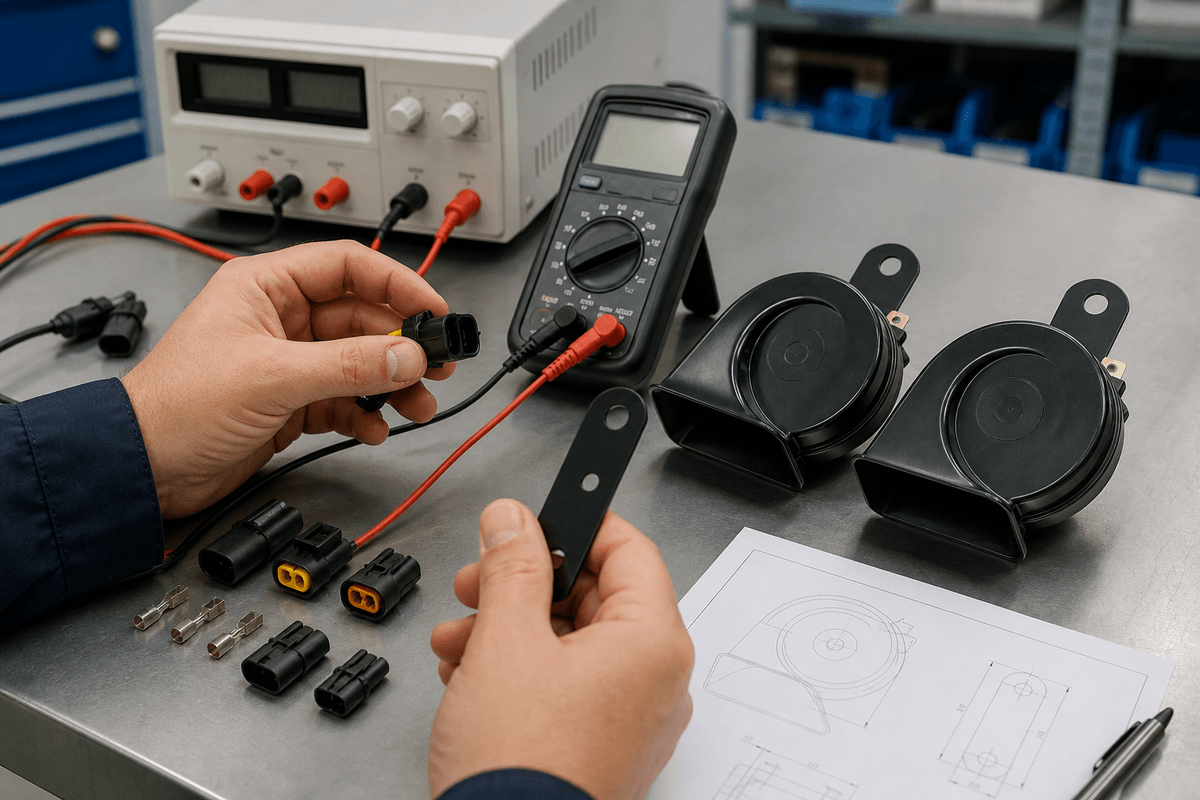
A good aftermarket dual tone horn kit should be specified as a complete selling unit. The RFQ should list the horn pair, bracket type, terminal type, connector or adapter set, wiring harness, label requirements, instruction sheet, carton quantity, and sample approval criteria. If the buyer wants plug-and-play positioning, the adapter list must be checked against actual vehicles rather than described only as universal.
HELLA and PIAA both show the market value of clear horn categories, voltage information, tone pairs, and installation-oriented product presentation. OSUN buyers can use the same logic when building private-label kits: make the sound attractive, but make the installation predictable.
Conclusion
An aftermarket dual tone horn kit should be selected by system fit: matched sound, electrical load, connector design, bracket space, water exposure, and packaging. OSUN's snail horn models, compact disc horn, and multi-fit adapter concept give buyers practical examples for building a kit that is easier to sample, install, stock, and explain to customers.