
Are car horns universal? The practical answer is: some horns are marketed for broad use, but no buyer should assume every horn fits every vehicle. Voltage, current draw, mounting space, bracket angle, connector type, horn mouth direction, and market documentation can all change whether a horn is truly suitable for a vehicle or sales channel.
This matters for importers and distributors because "universal" wording can reduce catalog complexity, but it can also increase returns if the product is not checked properly. OSUN's automotive horn range includes product types that can support broad coverage, but buyers still need a fitment process.
Universal Usually Means Broad, Not Unlimited
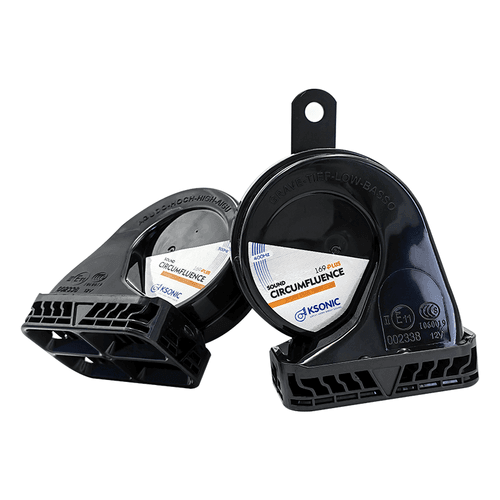
A universal horn may share common 12V electrical operation and a flexible bracket style, but that does not guarantee fitment behind every bumper or grille. A compact car, truck, motorcycle, and SUV can have different space, wiring, splash exposure, and sound direction needs. A horn that physically bolts on may still need the right connector or relay arrangement.
HELLA and other automotive horn suppliers separate horn types by application and product design. That is a useful reminder: disc horns, snail horns, trumpet-style horns, sports horns, and air horns are not interchangeable just because they all make sound.
What Makes OSUN's Multi-Fit Horn Relevant?
OSUN's multi-fit car horn is the most relevant OSUN product for this question. The product page highlights a 20-adapter concept, broad vehicle coverage language, OEM-style assembly match, stable connection, pure copper terminal, low resistance, and safer installation. For distributors, that kind of product can reduce SKU pressure and help repair shops serve more vehicles with fewer stocked items.
However, the buyer still needs to verify the connector list. OSUN's page uses broad coverage language, but coverage should be matched to the buyer's actual vehicle parc. A product that works well for one region may need a different adapter mix in another market.
Universal Fitment Checklist
Before approving a car horn as universal, buyers should confirm these points:
- Voltage: Most passenger-car horn programs use 12V, but the buyer should confirm target vehicle applications.
- Current draw: Check whether the horn needs relay support or a wiring update.
- Connector: Compare plug shape, terminal position, adapter list, and connection stability.
- Bracket: Confirm hole diameter, bracket length, bracket angle, and mounting strength.
- Body size: Measure horn depth, height, width, and clearance around nearby vehicle parts.
- Horn opening: Make sure the sound outlet is not blocked and can handle water exposure.
- Certification: If E-mark or another proof is required, match it to the exact SKU.
When a Disc, Snail, or Sports Horn Is Better

If the buyer wants compact replacement, OSUN's ODL-151 disc horn is a useful reference because the page emphasizes compact design, sealing, crisp tone, and E-mark positioning. If the buyer wants a fuller dual-tone sound, OSUN's ODL-161 or ODL-162 snail horn may be more suitable because those pages discuss water drainage, waterproof/exhaust design, anti-corrosion treatment, and high/low tone examples.
For retail upgrade positioning, a sports horn such as ODL-163 or KSN169P may fit the product story better than a generic universal horn. In other words, "universal" is not always the best sales promise. Sometimes the better promise is "compact replacement," "dual-tone upgrade," or "multi-adapter installation kit."
How to Write Safer Product Claims
Buyers should avoid packaging claims such as "fits all cars" unless they have a verified application list. Safer wording can say broad fitment, multi-fit adapter set, compatible with many common vehicle applications, or check adapter list before installation. This makes the product more credible and reduces after-sales disputes.
OSUN's contact page can be used to send vehicle-market details, current horn photos, connector photos, and packaging requirements. The more specific the fitment brief, the more useful the supplier's recommendation will be.
Conclusion
Car horns are not universally interchangeable in the strict sense. A good universal or multi-fit horn program still needs voltage, current, connector, bracket, size, sound direction, and documentation checks. OSUN's multi-fit horn gives buyers a practical broad-coverage direction, while disc, snail, and sports horn models support more specific market positions. The best result comes from promising fitment only where the buyer has verified it.