
Start with the Application
The first question is not "which horn is loudest?" It is "which vehicle and sales channel is this horn for?" A standard replacement program may need a familiar disc horn. An upgrade program may need a dual-tone snail horn. A motorcycle, truck, or specialty vehicle may need a different mounting and sound profile. HELLA and Seger both organize horn products around use case and category, which is a useful model for aftermarket buyers.
Application also affects packaging. Retail packaging needs a simple product promise and installation clarity. Wholesale cartons need model identification, batch consistency, and efficient handling. OEM-style buyers may care more about approval documents, durability testing, and stable long-term supply.
Core Specifications to Review
- Voltage: 12V is common for passenger vehicles, but operation range still matters.
- Current: Higher current draw may require careful wiring, relay, or fuse review.
- Sound level: Compare dB values by test method and distance, not only marketing words.
- Frequency: High and low tone pairs can create a fuller, more premium sound.
- Temperature range: Cold and heat performance matter for global distribution.
- Fitment: Check bracket, connector, size, and mounting direction before bulk orders.
Disc, Snail, and Sports Horn Positioning
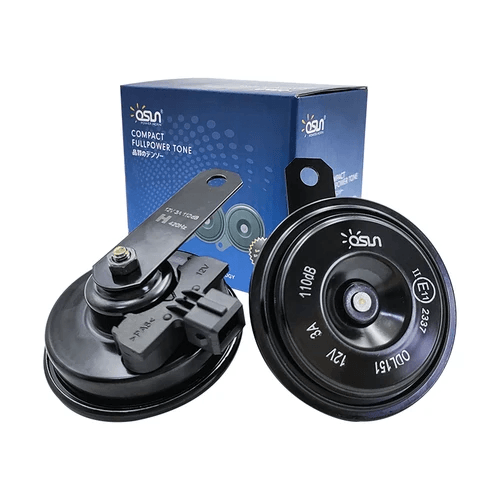
Disc horns are compact and practical for standard replacement. Snail horns are often selected for stronger tone, paired high/low sound, or upgrade positioning. Sports horns can support a more distinctive aftermarket personality, but they need clear product education so customers understand fitment and sound expectations.
OSUN's universal horn category gives buyers a place to compare models with different shell designs, tone positioning, and technical data. This is useful when a distributor wants a layered catalog rather than one generic horn.
Quality Signals Beyond Sound
Sound is important, but repeatability is what protects a buyer's brand. Ask suppliers about material selection, membrane design, corrosion treatment, waterproofing ideas, life-cycle testing, packaging, and inspection. If a sample sounds good but production varies, the buyer still has a problem.
OSUN's short-video topic style, including "what makes a good horn" and low-temperature testing, can be translated into practical buyer questions: Does the horn sound stable after cold exposure? Is the shell resistant to harsh conditions? Does the tone stay consistent across samples? Can the supplier support documentation and packaging needs?
Buyers should also think about how the horn will be sold after import. A repair-shop channel needs simple fitment guidance and dependable installation hardware. A retail channel needs clear packaging and an easy value message. A distributor serving multiple countries may need different approvals or labels. Good sourcing starts with product performance, but it finishes with the practical details that help the channel sell and support the part.
Conclusion
Choosing an automotive horn is a sourcing decision, not just a sound preference. Buyers should compare application, voltage, sound level, frequency, fitment, durability, approval documents, and supplier support. A strong horn program gives distributors the right mix of standard replacement, upgrade, and premium options.