
A China E-mark car horn factory should be evaluated by exact product evidence, not by a broad certificate claim. Buyers need to confirm whether the certificate applies to the selected SKU, voltage, horn type, tone version, marking, and production configuration. A certificate shown for one horn should not automatically be treated as approval for every horn in the catalog.
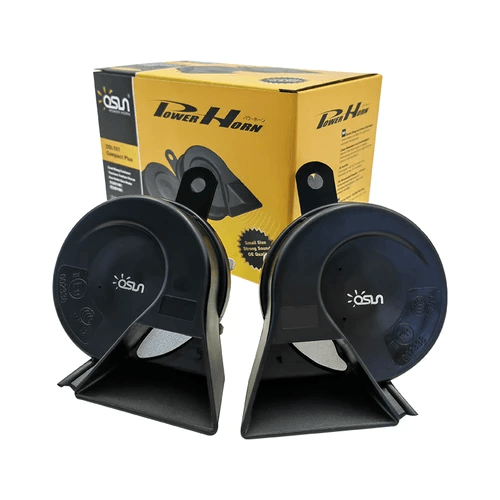
OSUN's website references E-mark positioning on specific horn pages, including the ODL-151 disc horn and ODL-162 snail horn. Those examples are useful starting points, but buyers should request the exact certificate and sample record before ordering.
Understand What E-Mark Supports
E-mark discussions are connected to regulated vehicle equipment and approval practices. UN/ECE Regulation No. 28 is relevant because it covers audible warning devices and audible signals. For a buyer, the practical lesson is simple: do not treat a sound claim, a catalog label, and an approval certificate as the same thing. The certificate must match the product being purchased.
HELLA's horn information also mentions ECE 28 labelling in the context of horn products. This supports the same buyer habit: ask for documented approval details, not only a verbal statement.
Match Certificate, Marking, and Sample
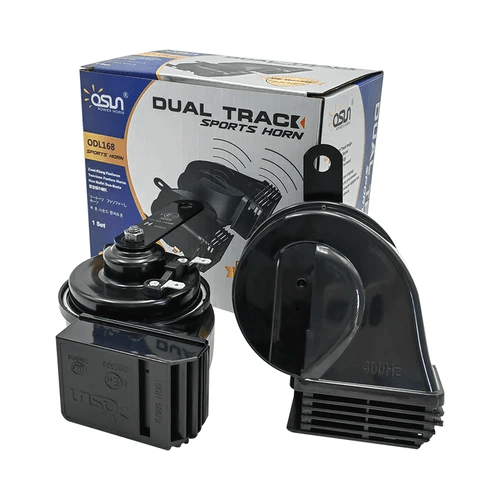
The approved sample should show the marking, model, voltage, current draw, and tone version that the certificate covers. For OSUN ODL-151, reviewed product details include compact disc horn positioning, 12V 3A 110dB style marking, and high/low tone examples around 420Hz and 350Hz. For ODL-162, reviewed details include 12V 4A 110dB style marking, high/low tone examples around 500Hz and 400Hz, E-mark positioning, membrane filter technology, and anti-corrosion treatment.
Buyers should ask OSUN to confirm whether the certificate covers the exact tone pair, connector option, bracket version, and packaging claim. If the buyer changes a functional detail, confirm whether approval evidence remains valid.
Factory Audit Questions
- Which OSUN model and SKU does the E-mark evidence cover?
- Does the sample marking match the certificate and final carton label?
- What sound level, frequency, voltage, and current draw were tested?
- Are high and low tone versions separately identified?
- Does the connector, bracket, or customization affect approval scope?
- How will shipment inspection confirm the same approved configuration?
Use E-Mark Without Overclaiming
For B2B content and packaging, avoid phrases that imply every horn in the factory is E-mark approved. A safer statement names the exact model or asks the buyer to confirm certificate scope. This matters for private label buyers, distributors, and importers because unsupported compliance language can create regulatory and customer-service risk.
The document package should be prepared before the buyer approves packaging. Ask for the certificate copy, model name, product marking photo, voltage, tone version, frequency record, sound test condition, and a photo of the final label or carton wording. If the buyer is sourcing both disc and snail horns, keep separate records for each model. If a connector or bracket option changes for a private-label kit, ask whether that change affects the approval evidence or only the accessory package.
Shipment inspection should also include certificate-related checks. Inspectors can compare the physical marking, packaging wording, and model code against the approved record. This is more reliable than asking the warehouse to confirm that the goods are "E-mark horns" without a model-level reference.
Conclusion
A China E-mark car horn factory should be chosen through certificate-to-sample matching. OSUN's E-mark positioned ODL-151 and ODL-162 examples give buyers concrete models to discuss, but the final purchase should verify the exact SKU, marking, test method, tone version, and shipment inspection standard.