
An EV horn replacement is normally part of the vehicle's low-voltage electrical system, not the traction battery circuit. That does not make every electric vehicle a conventional 12V installation. Low-voltage architecture, horn control, diagnostics, physical access and pedestrian-warning equipment can differ by model year and market. The correct replacement begins with official service information for the exact vehicle.
Separate Three Different Systems

Electric vehicles may contain a high-voltage traction system, a low-voltage accessory network and an acoustic vehicle alerting system for low-speed pedestrian awareness. The normal driver-operated warning horn is not interchangeable with the pedestrian-warning speaker. Do not modify or disable either system based on appearance.
Orange cables and high-voltage components require trained procedures and personal protective equipment. A horn repair should avoid those areas entirely unless the manufacturer procedure specifically requires high-voltage isolation by qualified personnel.
Identify the Low-Voltage Platform
Do not assume the word EV means 12V. Some newer vehicles use another low-voltage platform, and different production years of the same model can change architecture. Check the service manual, original horn marking, connector pinout and measured circuit voltage before selecting a product.
Useful pre-order data includes:
- Vehicle model, production date, market and trim.
- Low-voltage system nominal and operating voltage.
- Original horn count, frequency, connector and mounting position.
- Control method, fuse protection and diagnostic monitoring.
- Measured operating current and voltage drop.
- Required approval, sound character and local road-use rules.
Where OSUN Products May Enter the Evaluation
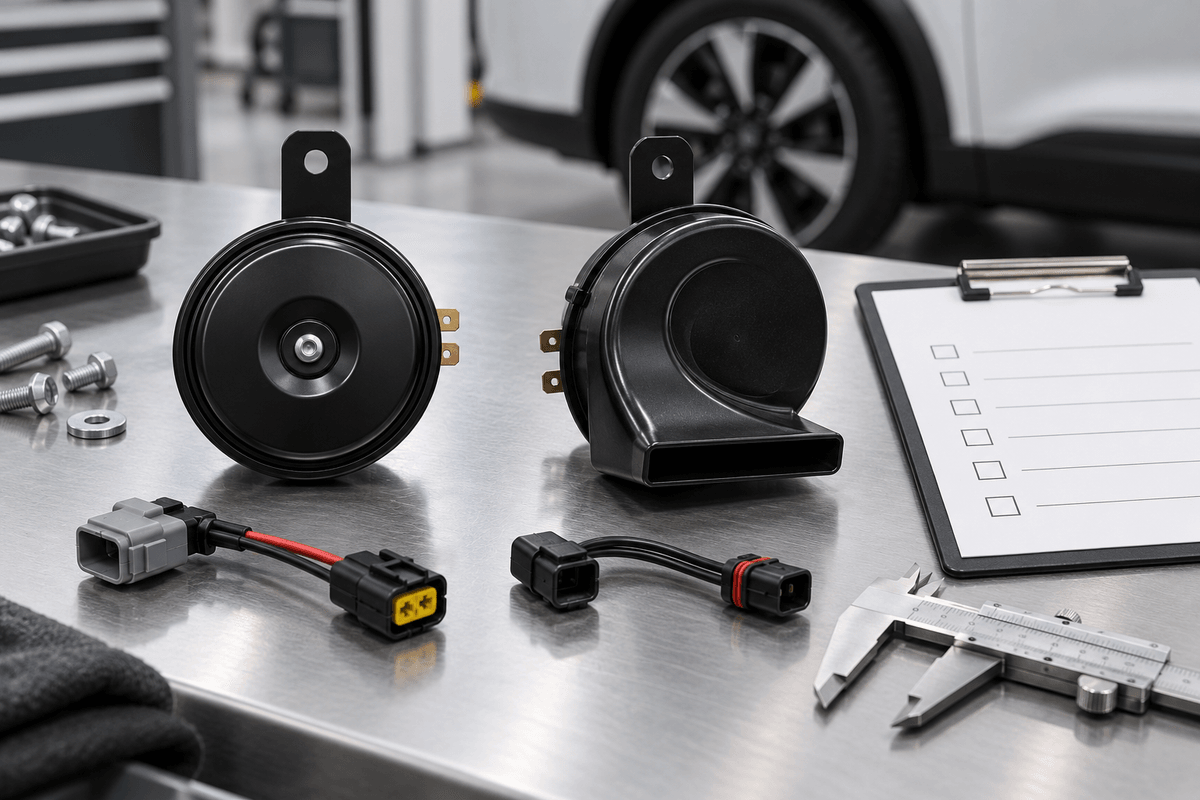
The OSUN ODL-151 disc horn is a compact product whose visible marking shows 12V and 3A, with high/low versions at 420Hz and 350Hz. Its reviewed drawing indicates approximately 76mm body width, 47mm depth and an 8.5mm mounting hole. It can be considered only when the target EV's low-voltage system and circuit support those specifications.
The ODL-161 snail horn shows 12V and 4A markings and offers a 65mm-depth, drainage-oriented package. A high-low pair creates a larger combined load than one disc horn. Never connect a 12V horn to a different nominal low-voltage system without an approved interface design and vehicle-specific validation.
Control Modules Change the Upgrade Question
Some EVs switch the horn through a body controller rather than sending full load through a simple steering-wheel contact. The module may monitor open circuits, shorts or unexpected current. Adding a relay does not automatically solve compatibility because the relay coil is also a load and can generate transients unless correctly suppressed.
A safe design needs circuit documentation, suitable fuse placement, wire capacity, connector retention, grounding and protection against water. After installation, run the manufacturer's diagnostic or functional test when required and check that no fault code appears.
Installation and Acoustic Checks
- Follow the official power-down and access procedure.
- Keep tools and wiring clear of high-voltage components and cooling hardware.
- Confirm bracket torque, clearance and crash-structure compatibility.
- Orient openings and drainage features correctly.
- Measure voltage and current while operating the horn.
- Check both individual tones and the pair if two units are fitted.
- Reassemble aerodynamic shields and fascia exactly as specified.
EV body panels and sealed undertrays can change sound radiation, so test on the fully assembled vehicle. For drawings, samples and model-specific connector options, buyers can contact OSUN, while treating compatibility as unverified until the exact EV application passes engineering checks.