
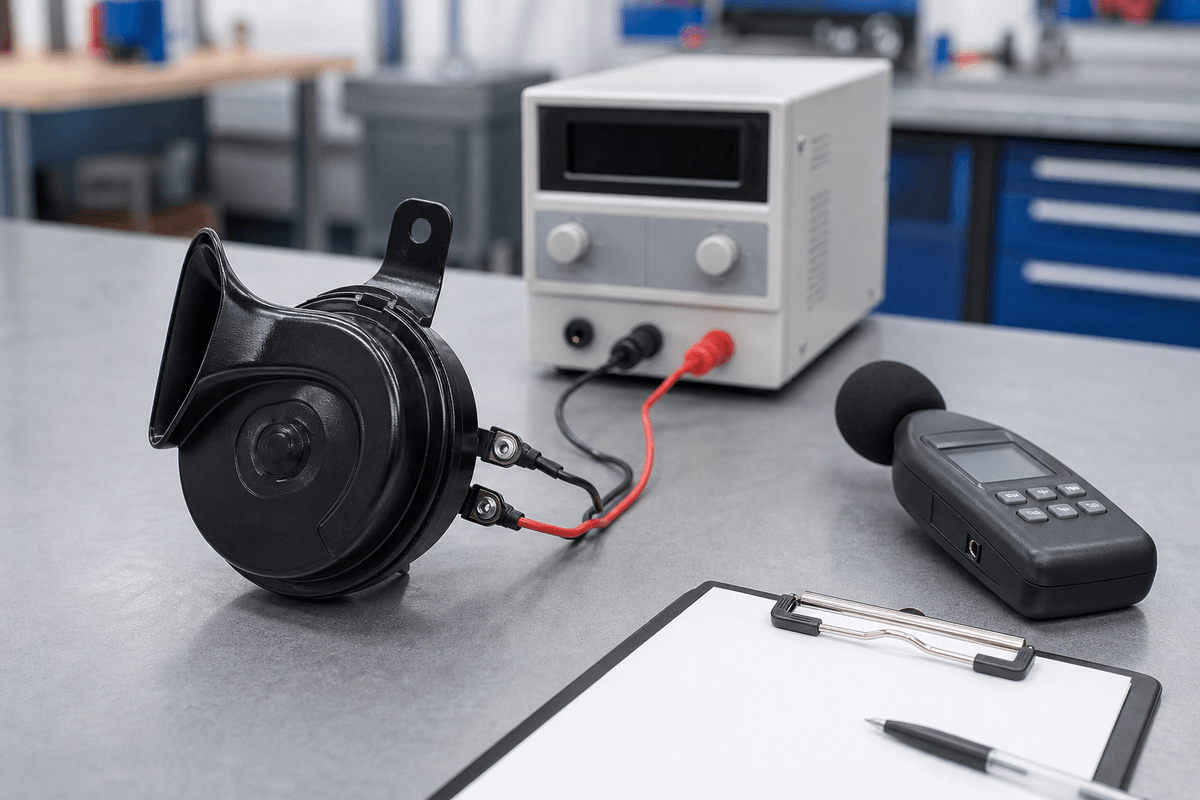
A 110dB 12V car horn sounds like a clear specification, but buyers should still ask how the number was measured. Sound pressure depends on voltage, test distance, environment, horn direction, mounting, and frequency. A sample marked 110dB can be useful, but the buyer should not approve a shipment only by reading the label.
OSUN product evidence shows several 12V horn examples with 110dB markings, including disc and snail horn models. These pages are practical because they help buyers connect sound level to current draw, frequency pair, shell type, and fitment checks.
Read the Complete Marking
OSUN's ODL-151 disc horn product evidence shows 12V 3A 110dB high/low tone examples around 420Hz and 350Hz. For buyers, that tells a fuller story than 110dB alone. Lower current draw and compact installation may be important when the horn is used as a standard replacement.
OSUN snail horn models such as ODL-162 show 12V 4A 110dB high/low tone markings around 500Hz and 400Hz. That may fit a fuller tone program, but it also needs more installation space and electrical attention than a compact disc horn.
Test Method Matters
Ask the supplier how the 110dB value is tested. What voltage is used? What is the distance between horn and meter? Is the horn mounted freely or behind a grille? Is the value an average, minimum, or typical marking? If a buyer tests samples in a different way, results may not match the catalog.
HELLA and PIAA present horn products as automotive components where type, tone, and application matter. That supports a more careful approach: sound is one criterion, not the only criterion.
Sample Test Checklist
- Confirm the sample marking for voltage, current draw, dB value, and frequency.
- Test at the voltage specified by the supplier and record the setup.
- Compare high tone and low tone separately before approving a pair.
- Mount the horn in a realistic orientation and check whether sound is blocked.
- Inspect shell, bracket, terminal, and connector quality after testing.
- Repeat the test after water exposure or vibration checks when the product is sold for harsh conditions.
OSUN Product Fit
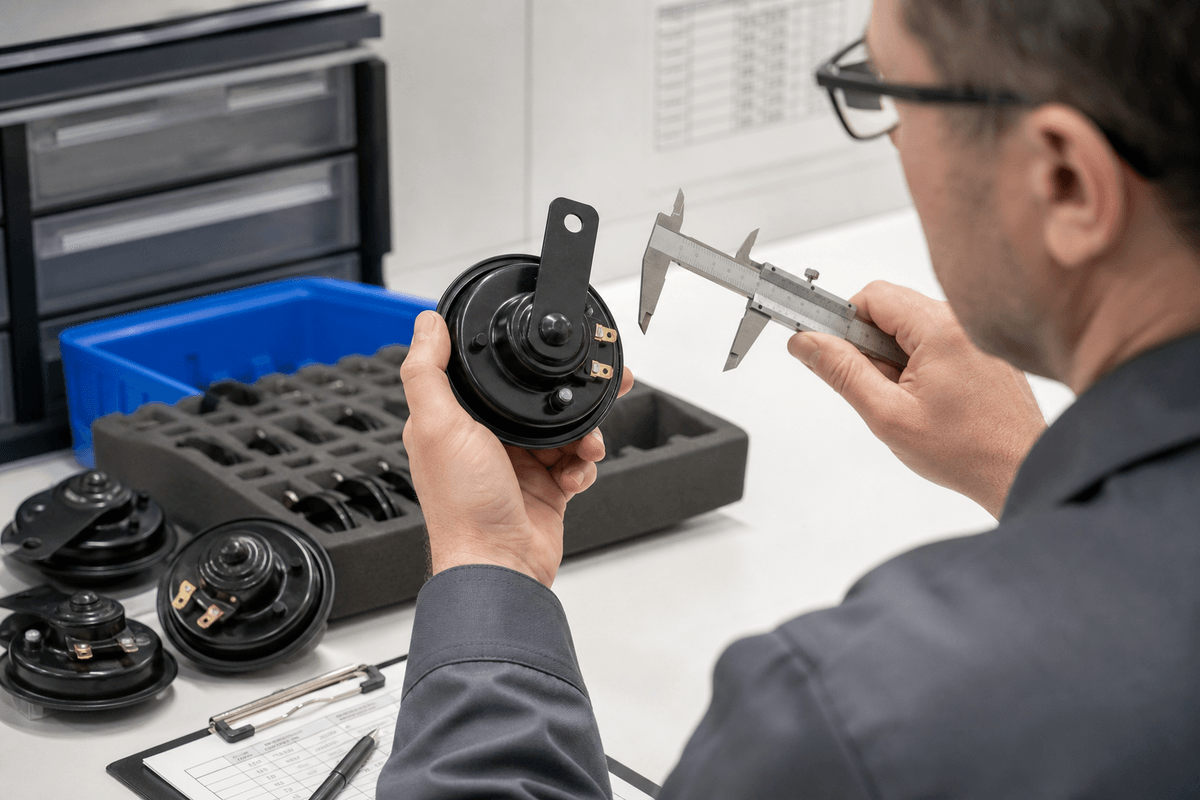
Use ODL-151 when the buyer needs compact disc horn replacement with lower current marking. Use ODL-161 or ODL-162 when the buyer wants snail horn sound direction, drainage, membrane/exhaust, or anti-corrosion features. Use sports horn pages cautiously when the article discusses higher sound claims, because page text and visible markings should be verified against exact samples.
Why Two 110dB Horns Can Feel Different
Two horns with the same dB marking can feel different because frequency, direction, shell shape, and installation position change the listener's perception. A disc horn may sound sharper and easier to package. A snail horn may sound fuller and project forward differently. That is why buyers should compare real samples in the intended mounting position and not treat 110dB as the only product identity.
Conclusion
A 110dB 12V car horn should be tested as a real part, not judged as a number. Buyers should verify voltage, current draw, frequency, test method, mounting direction, and sample consistency. OSUN's 110dB-marked disc and snail horn examples provide useful references for building a reliable sample approval process.