
An 118dB car horn 12V search often comes from buyers who want a stronger upgrade product. That is understandable, but higher sound claims need careful handling. A big dB number can help a retail listing, yet it can also create risk if the test method, voltage, distance, sample marking, and legal context are not clear.
OSUN's sports horn pages include models where the page text mentions up to 118dB. Buyers should treat this as a claim to verify, not as a universal guarantee across all models or shipments. The safest sourcing process turns the claim into sample testing.
Use Sports Horn Claims Carefully
OSUN's ODL-168 dual track sports horn page describes a dual sound track design, waterproof cover, powerful tone, and page-level wording around up to 118dB. That makes it relevant for an upgrade catalog, but buyers should request the exact test method before printing the number on packaging.
OSUN's ODL-163 sports horn page also uses strong sound language and waterproof cover positioning. Product evidence has been read cautiously because page wording and visible markings may not always communicate the same value. When values differ, buyers should confirm the actual SKU marking, certificate, and sample test result.
What the Buyer Should Ask
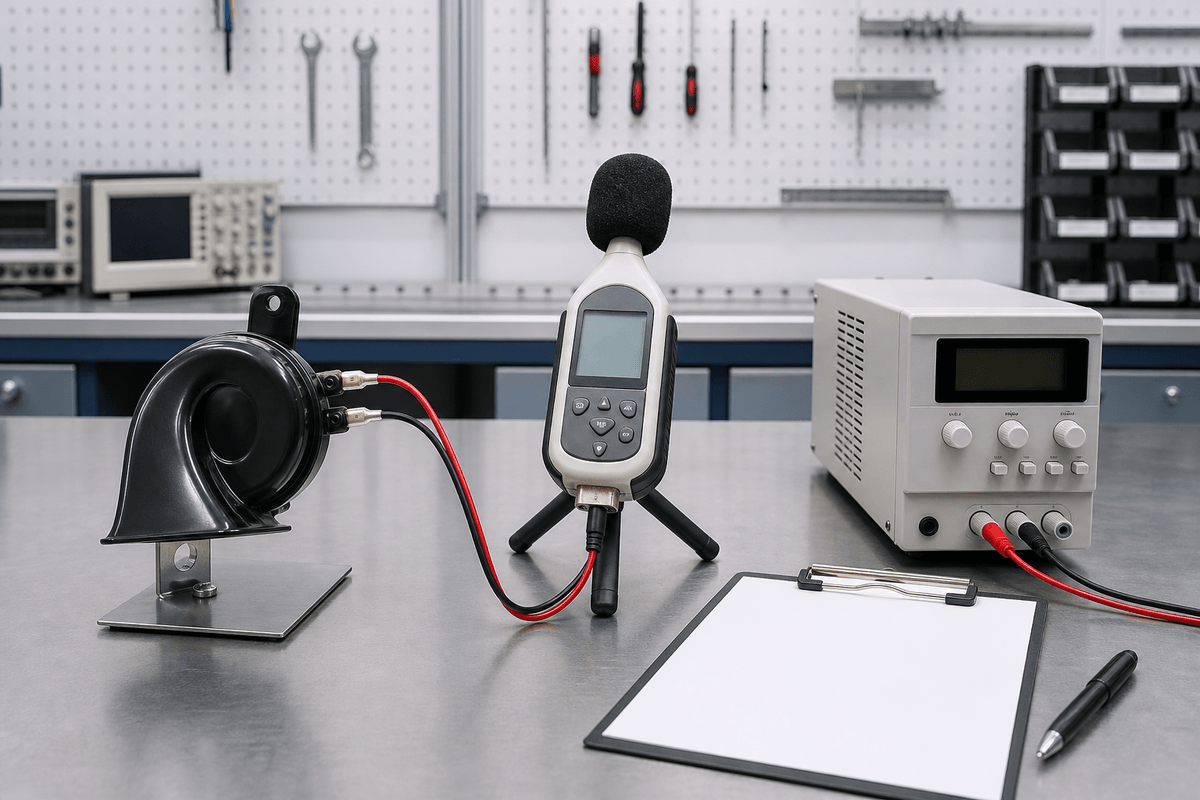
A high sound claim should always come with a test condition. Ask the supplier whether the value is tested at rated 12V, what distance is used, whether the horn is tested as a single unit or pair, and whether the product is mounted in open air or inside a fixture. Also ask whether the value is typical, maximum, or guaranteed minimum.
PIAA and HELLA both sell automotive horns by product type and application, not only by dB number. This is useful guidance for buyers: a horn should be chosen by sound character, fitment, current draw, durability, and documents as well as loudness.
Risk Controls Before Listing 118dB
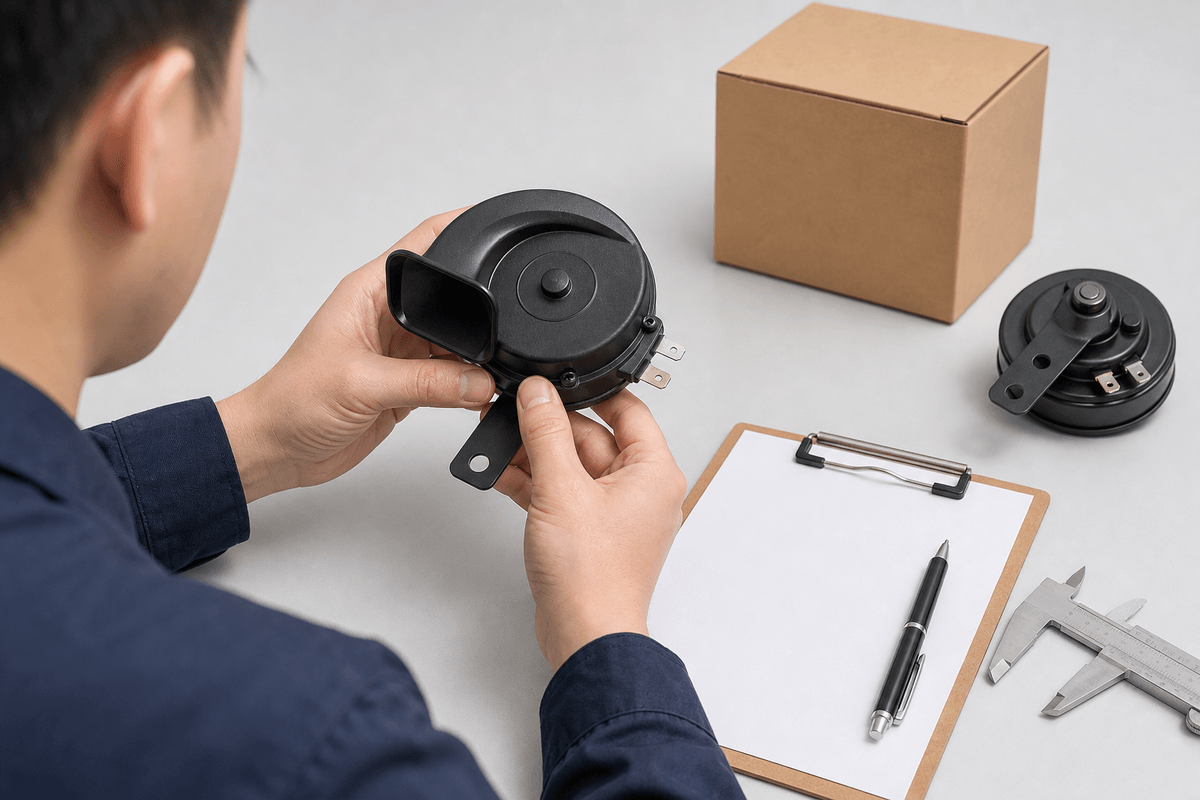
- Request a written sound-test method and keep it with the approved sample record.
- Confirm voltage, current draw, frequency pair, and whether the horn is sold single or paired.
- Check if the sample marking supports the packaging claim.
- Verify waterproof cover, shell, bracket, and terminal quality for upgrade-market use.
- Ask whether the target market has restrictions or expectations for horn sound claims.
- Use cautious listing language if the claim is based on supplier page wording rather than independent testing.
OSUN Product Fit
ODL-168 is the better OSUN reference when the buyer wants a dual-track sports horn story. ODL-163 is useful for waterproof cover and sports styling discussions. If the buyer does not need a high promotional sound claim, OSUN's 110dB-marked disc and snail horn examples may be easier to position for standard replacement programs.
Conclusion
An 118dB 12V car horn claim can be useful, but it must be verified before it is used in sales copy. Buyers should check test method, voltage, distance, frequency, sample marking, waterproof design, and local market requirements. OSUN sports horn examples provide relevant product angles, but the final claim should always match the exact tested SKU.