
A 12V snail horn manufacturer should give buyers more than a loud sample. The right supplier should help define model type, tone, installation space, current draw, durability features, documents, packaging, and repeat production. For importers and aftermarket brands, this is the difference between a product that sells once and a product line that can be supported over time.
OSUN's car horn product range includes multiple snail horn models, so buyers can compare compact, E-mark-positioned, material-focused, and sports-style options instead of treating every 12V snail horn as identical.
Start with the Application
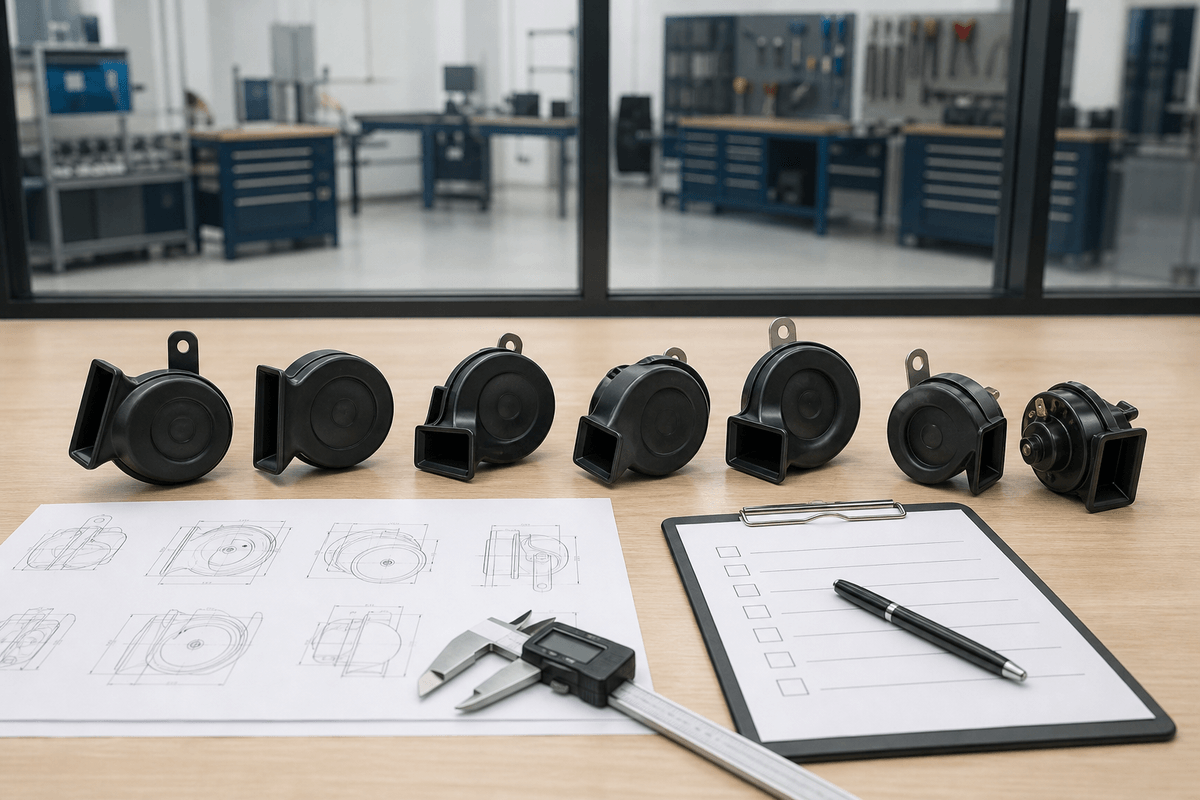
Before asking for a price, define the application. Is the horn for standard replacement, retail upgrade, OEM-style service, motorcycle use, or a private-label aftermarket kit? Does the buyer need a high/low pair or a single horn? Does the target vehicle have enough space for the shell depth and horn-mouth direction? A manufacturer can recommend the right model only when these questions are clear.
HELLA, Seger, and PIAA all organize horn products by type and application. This approach is useful because the sound, fitment, and durability requirements are not the same across every vehicle or sales channel.
OSUN Model Examples
OSUN's ODL-161 is useful when the buyer wants compact depth, water-drainage design, and forward sound direction. Product evidence shows 12V 4A 110dB and high/low tone markings of 500Hz and 400Hz.
The ODL-162 fits buyers who want E-mark positioning, membrane filter technology, waterproof/exhaust performance, anti-corrosion treatment, and classical snail horn styling. The ODL-165 adds shell-material and weather-resistance positioning, including carbon-fiber-added pure-PP shell language on the product page.
Manufacturer Questions That Matter
- Which 12V snail horn models are best for compact replacement, premium upgrade, and harsh-weather use?
- What are the current draw, frequency pair, and dB markings for each sample?
- Which models have E-mark wording or related documents, and what exact SKU is covered?
- What shell dimensions, bracket hole size, and terminal style should the buyer approve?
- How does the manufacturer test sound, water exposure, corrosion resistance, and batch consistency?
- Can packaging be built for single horns, high/low pairs, kits, or private-label programs?
Do Not Let Price Lead Too Early
Price is important, but an early low quote can hide missing details. A horn without clear packaging, documents, connector control, or sample approval may create extra cost later. Ask for a model recommendation, drawings, sample markings, and test method before comparing quotes.
A useful first sample pack should include at least one compact snail horn, one E-mark-positioned model if required, and one weather-focused option if the buyer sells into harsh climates. Each sample should arrive with model number, voltage, current draw, high/low tone marking, bracket drawing, packaging option, and any available certificate evidence. This makes the manufacturer's recommendation visible and testable.
What a Good Reply Looks Like
A strong manufacturer reply does not simply say "we have 12V snail horns." It recommends models for the buyer's application, explains the difference between ODL-161, ODL-162, and ODL-165 style options, and asks about target market, installation space, certification needs, packaging format, and annual purchase plan. That kind of response tells the buyer the supplier understands the product, not just the keyword.
Conclusion
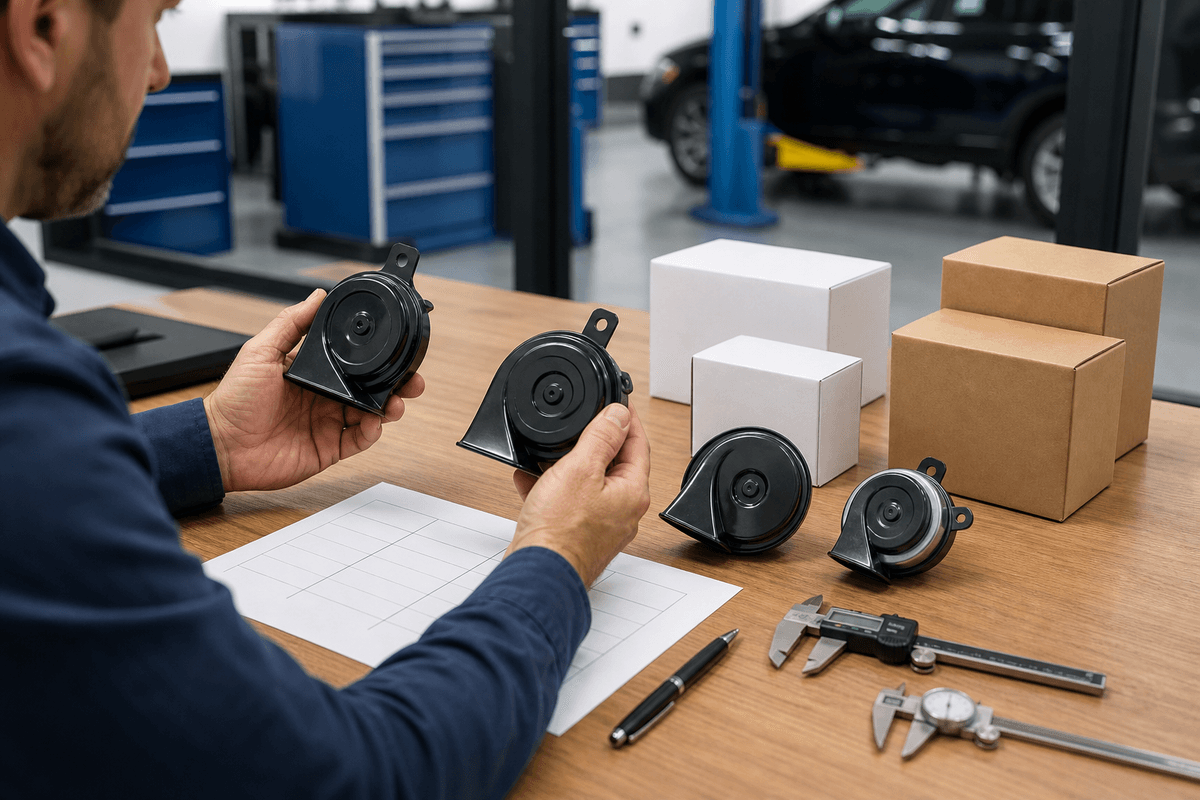
A 12V snail horn manufacturer should be evaluated through product range and verification discipline. OSUN's ODL-161, ODL-162, and ODL-165 give buyers concrete examples for comparing drainage, E-mark positioning, shell material, sound data, and fitment. The best sourcing decision starts with application needs and ends with approved samples.