
A 12V snail horn factory review is different from a catalog comparison. A catalog tells the buyer what the product is supposed to be. A factory review shows whether the supplier can make the same horn repeatedly, with stable sound, reliable electrical data, consistent shell quality, and controlled packaging. For wholesale and private-label buyers, that matters as much as the first sample.
OSUN's website positions the company around R&D, production, and sales of automotive horns and related parts. The buyer can use OSUN model details to build a practical factory review checklist instead of walking through production with only a price sheet.
Inspect the Parts that Create Consistency
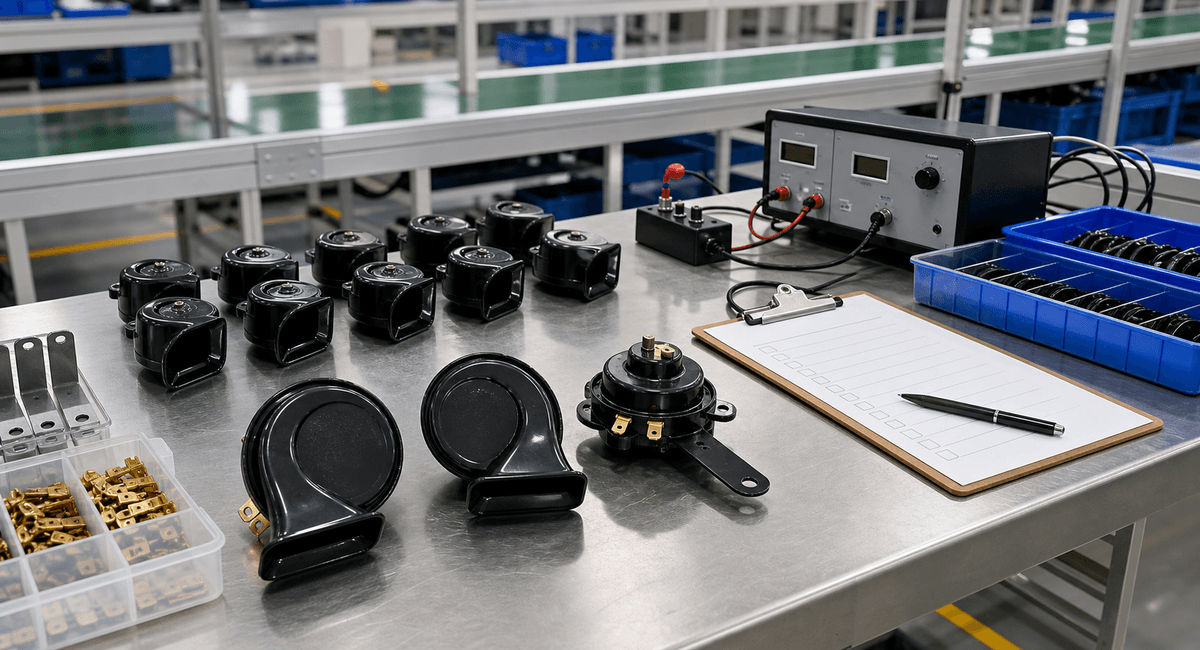
Snail horn quality comes from several parts working together: shell, resonant path, bracket, coil, diaphragm, terminal, membrane or drainage detail, and final adjustment. If one supplier changes material without control, the horn may still look similar but sound different or fail sooner in harsh conditions.
For OSUN's ODL-165, shell material and climate positioning are central to the product story. For ODL-161, water drainage and compact shape matter. For ODL-162, membrane filter, waterproof/exhaust, anti-corrosion, and E-mark positioning are key review points.
Factory Testing Should Match Buyer Claims
If the buyer wants to sell a horn as 12V, 110dB, high/low tone, waterproof, or E-mark positioned, the factory should have a way to check the relevant data. A sound claim should include voltage, distance, test setup, and acceptance range. A waterproof or drainage claim should include sample orientation and exposure method. A certificate claim should be tied to exact SKU and marking.
Seger and HELLA both show how professional horn suppliers present product categories and applications. Buyers can use that benchmark to ask for organized documentation, not just scattered sample photos.
Factory Review Checklist
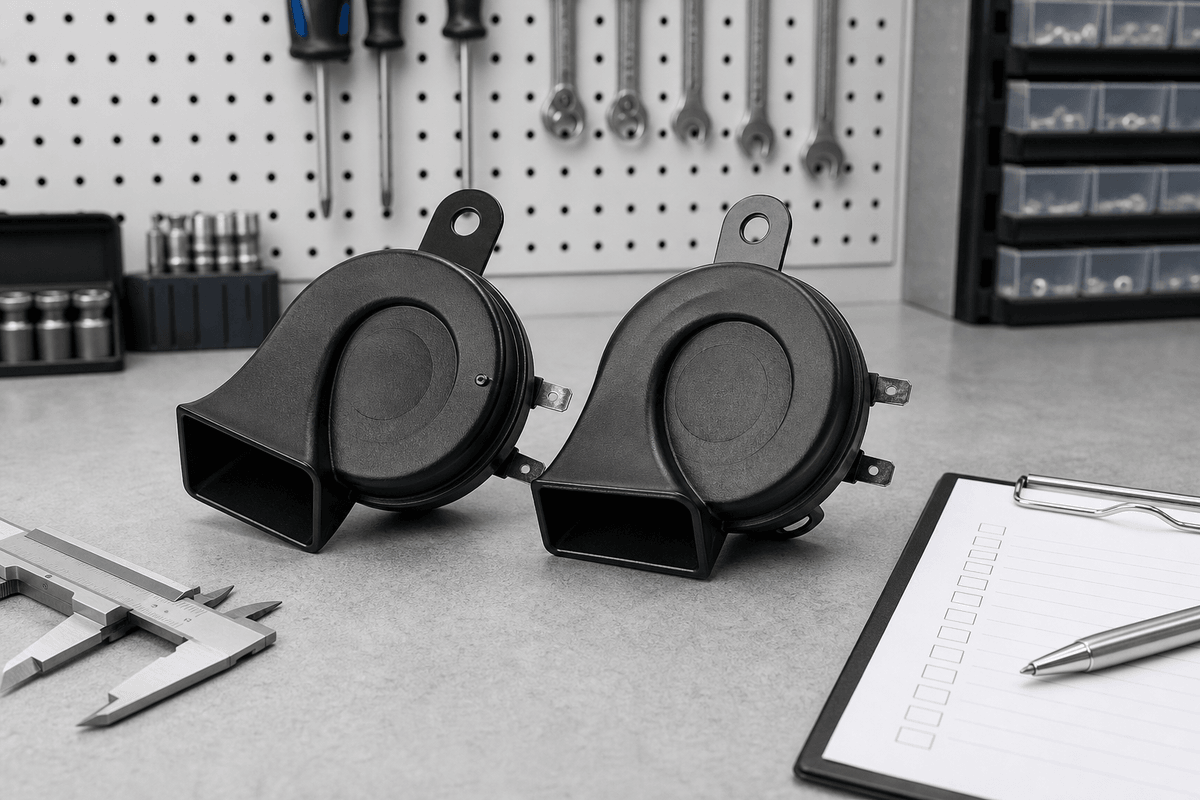
- Raw material and component control for shell, bracket, terminals, coils, and membranes.
- Shell molding quality, bracket strength, and horn-mouth consistency.
- Electrical testing for 12V operation, current draw, and terminal connection.
- Sound testing for dB marking and high/low tone frequency.
- Water exposure, drainage, membrane, or anti-corrosion checks for waterproof models.
- Sample approval process before bulk production starts.
- Packaging control for single horn, paired horn, kit, and private-label orders.
OSUN Product Fit
OSUN's company overview and product range give buyers enough context to structure a factory review around real models. Rather than asking "Can you make 12V snail horns?", ask how each approved OSUN model is controlled from component sourcing to final packing.
Pre-Shipment Inspection
After the factory review, build a shipment checklist that can be repeated. Pull samples from finished cartons, compare them with the approved sample, check terminal style and bracket dimensions, and test a small batch for sound and current draw. For paired horns, confirm the high and low tone units are not mixed. For waterproof models, inspect the drainage or membrane feature visually before the goods leave the factory.
Conclusion
A 12V snail horn factory should be judged by repeatability. Buyers should inspect materials, shell quality, coil and terminal control, waterproof design, sound testing, certificate handling, and packaging process. OSUN's ODL snail horn examples provide practical checkpoints that make factory review more useful than a general supplier visit.