
Car horn connector types are easy to overlook because buyers often focus first on sound level, tone, and price. In replacement programs, the connector can decide whether the horn installs cleanly or forces the mechanic to cut, splice, or improvise. For distributors and aftermarket brands, that difference can affect return rates, installer confidence, and the way the product is positioned in the catalog.
OSUN's multi-fit car horn adapter is the central OSUN reference for connector planning. Its product page emphasizes multiple connectors, pure copper terminal wording, stable connection, simple plug use, and low-resistance installation language. These details are useful, but buyers still need a method for checking which connector type is right for each program.
Connector Type Is a Fitment Decision
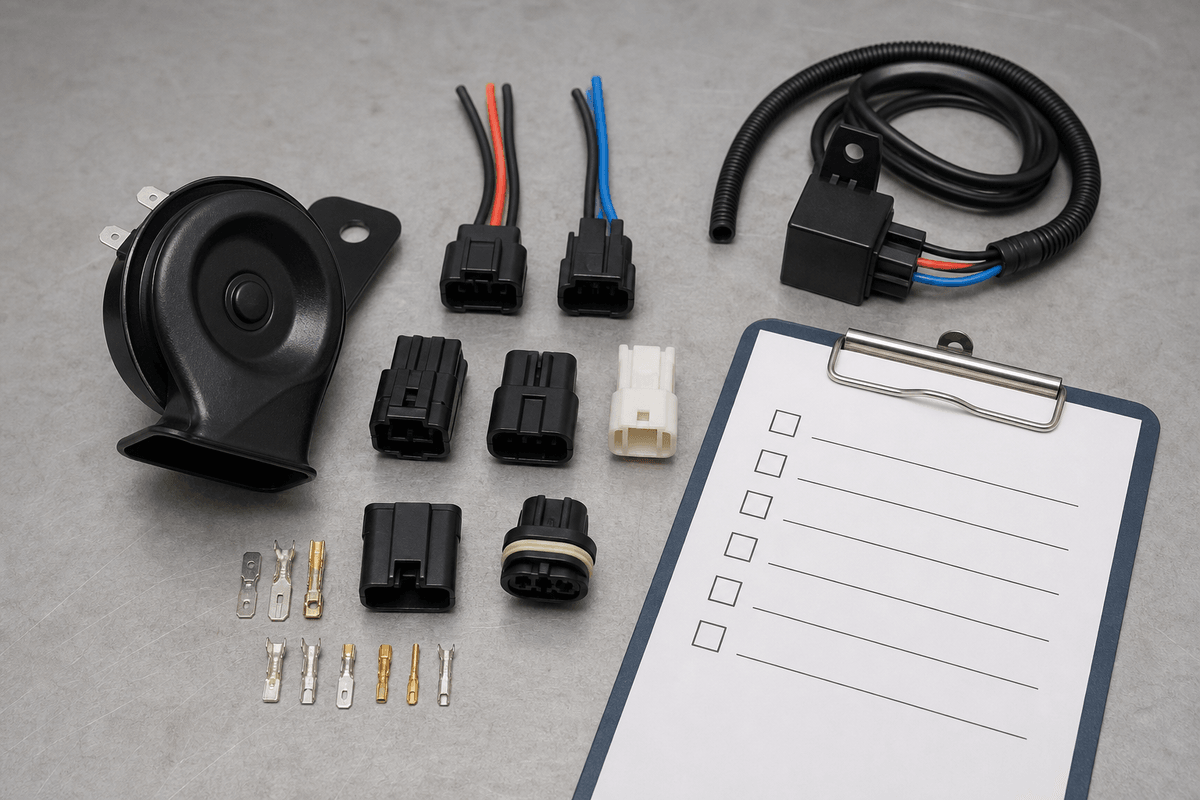
A connector is not just a shape. It has to hold the terminal firmly, transmit current reliably, resist vibration, and keep the installation serviceable. Bosch's connector guidance describes vehicle connectors as removable interfaces for power and signal transmission in environments affected by vibration, dampness, and temperature change. That is exactly why horn connector choice should be part of sample approval.
For a simple disc horn replacement, blade terminals may be enough if the vehicle harness and installation instructions are clear. For broader aftermarket coverage, a plug adapter or multi-fit adapter set can reduce wire cutting. For dual horn kits, the connector decision also affects relay, fuse, and wiring harness design.
Common Connector Questions
Before approving a car horn connector type, buyers should ask several practical questions. Does the connector match the target vehicle's original plug? Is the terminal material and plating suitable for repeated handling? Can the installer identify polarity? Does the connector lock positively after the horn is mounted? Will the cable bend sharply or touch hot and wet areas?
OSUN's ODL-151 disc horn, ODL-161 snail horn, and multi-fit horn examples also remind buyers to connect the connector decision to current draw. A reviewed ODL-151 image shows a 12V 3A marking, while several snail horn examples show 12V 4A markings. The connector and harness should be checked against the selected horn, not copied from another SKU without testing.
Buyer Table: Connector Types and Checks
| Connector Approach | Best-Fit Use Case | Buyer Verification |
|---|---|---|
| Blade terminal connection | Simple replacement, repair-shop wiring, compact disc horn programs | Terminal width, polarity mark, current draw, corrosion exposure, instruction clarity |
| Vehicle-style plug adapter | Plug-and-play replacement where buyers want less wire cutting | Locking fit, cable retention, target vehicle list, sample installation on real vehicles |
| Multi-fit adapter set | Distributor inventory, broad service coverage, private-label universal kits | Adapter count, exact shapes, top vehicle coverage, terminal material claim, packaging map |
| Harness with relay | Dual horn kits, higher-current upgrades, retail kits needing clearer installation | Wire gauge, fuse, relay rating, waterproof routing, installation diagram |
What to Request From OSUN
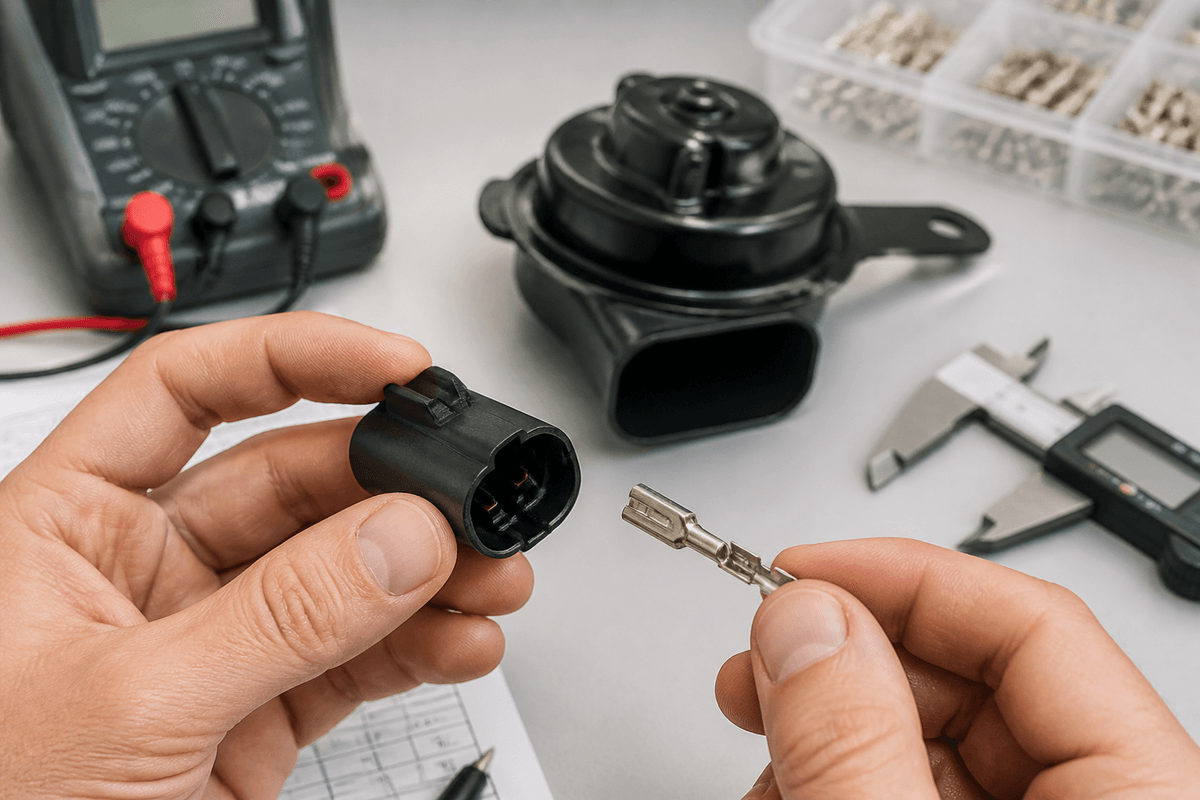
When discussing connector types with OSUN, buyers should request more than a product photo. Ask for connector drawings, adapter list, terminal material description, sample markings, current draw range, installation diagram, and packaging plan. If the buyer needs E-mark or another certificate for a specific horn, request the certificate for that SKU rather than assuming the connector kit changes nothing.
- Keep an approved connector photo record for each market application.
- Test the adapter after mounting, not only before installation.
- Check the horn body space, bracket hole, and connector clearance together.
- Confirm whether the final carton includes every adapter shown in the sample.
Conclusion
Car horn connector types should be selected through fitment, electrical load, and installation behavior. Blade terminals, plug adapters, multi-fit sets, and relay harnesses each solve different problems. OSUN's multi-fit adapter concept is useful for broad coverage, while specific horn models still require current, bracket, and space verification before ordering.