
A multi fit car horn adapter program is attractive because it promises one horn package for many vehicle applications. For importers and distributors, that can mean fewer SKUs, easier branch stocking, and faster service for repair shops. But the value is real only when the adapter set matches the actual vehicle parc and the horn itself still fits the mounting space, current load, and sound requirement.
OSUN's multi-fit car horn is built around this idea. The OSUN page presents a multi-connector approach, pure copper terminal wording, low-resistance language, simple plug use, and broad car-model coverage positioning. Because product pages can express coverage in different ways, buyers should confirm the exact adapter list for their market before printing any coverage claim on packaging.
What Multi-Fit Should Solve
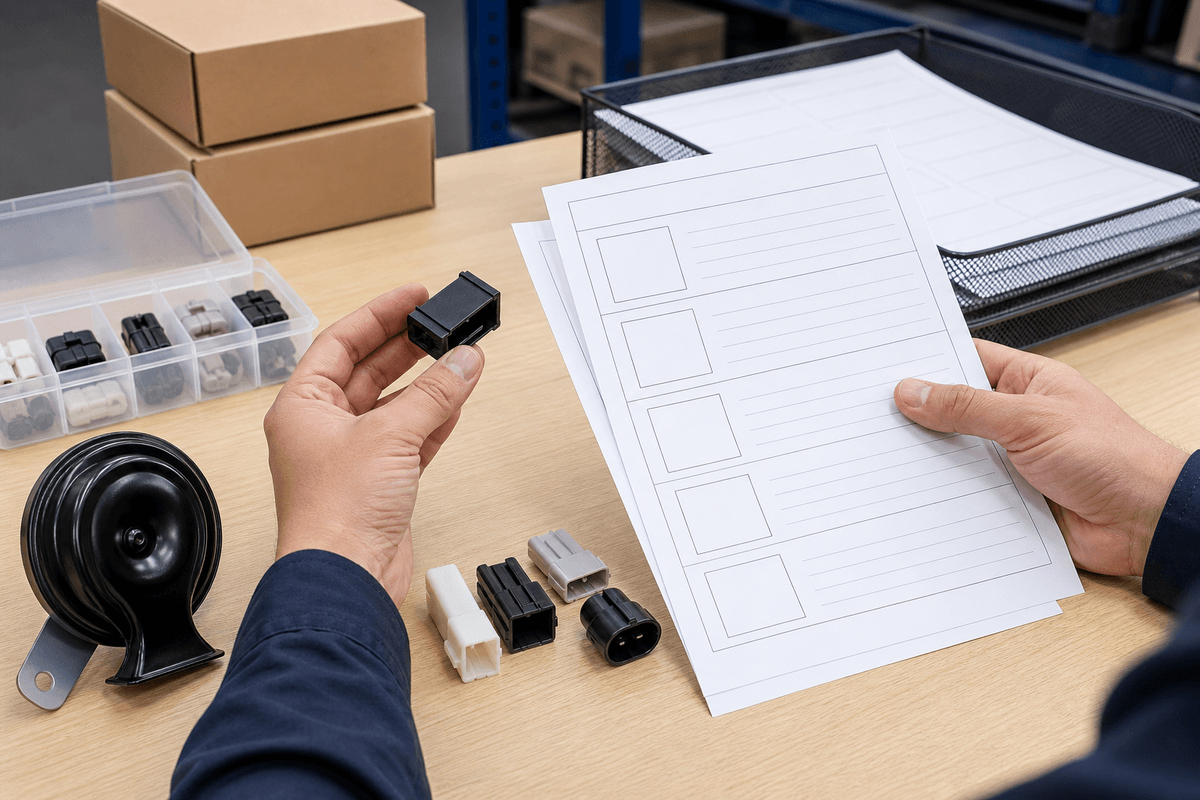
A multi-fit adapter should solve a business problem, not just add more pieces to the carton. If the buyer's market has many connector styles, a well-documented adapter kit can reduce slow-moving horn SKUs and help repair shops finish installation without cutting original wiring. If most sales are for a small set of vehicles, a smaller vehicle-specific kit may be cleaner.
The strongest use cases are distributor lines, workshop service packs, emergency replacement inventory, and private-label products where buyers want one practical kit that covers common applications. In these cases, the adapter map becomes as important as the horn specification.
OSUN Multi-Fit Details to Validate
OSUN's multi-fit page gives buyers several concrete checks. The first is connector count and shape. The second is terminal quality, especially the pure copper terminal and low-resistance positioning. The third is installation behavior: no broken wire, stable connection, and simple plug use are all buyer-facing claims that should be verified on samples.
A buyer should not approve the program from product photos alone. Ask OSUN for adapter drawings, sample photos, terminal details, packaging layout, and a fitment list. Then test the actual sample on the highest-volume vehicle applications in the buyer's market. A broad adapter set is useful only when the top applications are covered correctly.
Inventory and Service Benefits
When validated properly, a multi-fit car horn adapter program can make the product line easier to manage. The same core horn can serve different service scenarios, the warehouse can keep fewer slow-moving variants, and repair shops can choose from the included adapters instead of modifying the harness.
That said, the horn body still matters. For compact installations, OSUN's ODL-151 disc horn is a useful comparison point because its reviewed drawing shows compact dimensions and an 8.5 mm mounting hole. For fuller dual tone programs, OSUN snail horn references such as ODL-161 or ODL-162 may be more relevant, but the buyer must check depth, bracket angle, and current draw.
RFQ Checklist
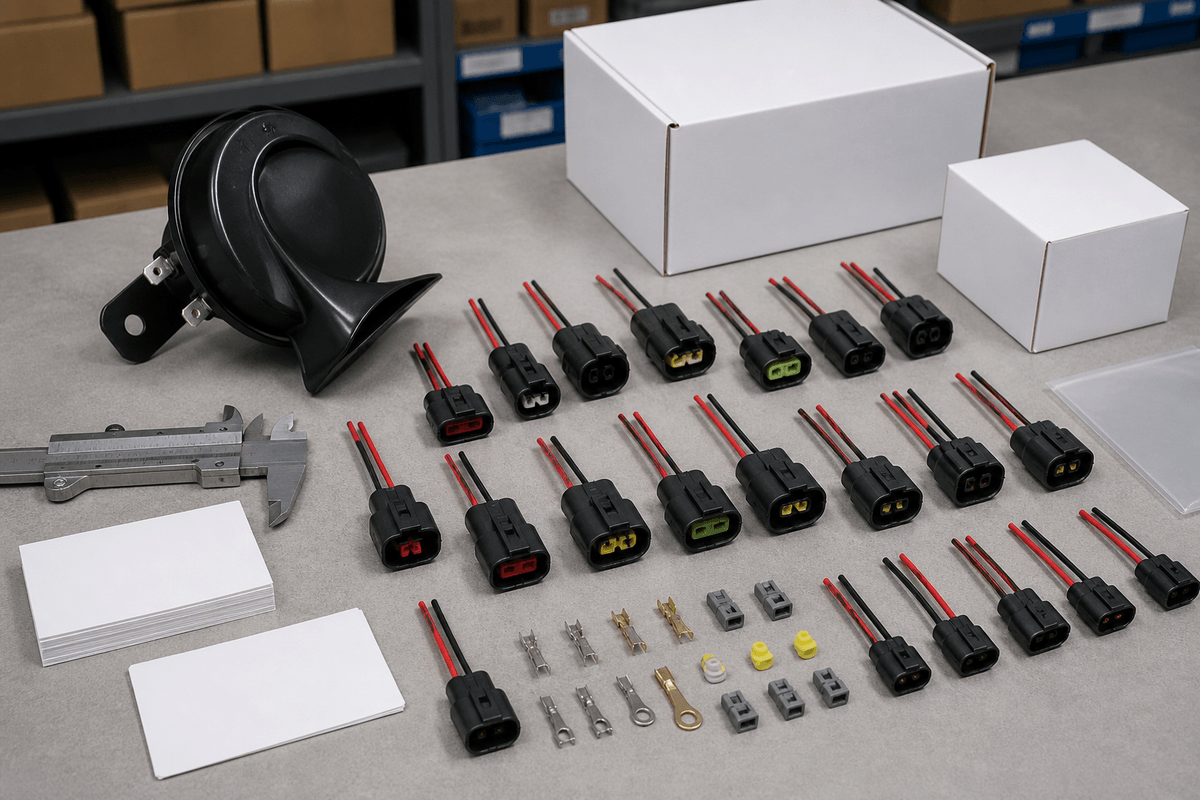
- State target vehicle list, region, and top-selling models.
- Request the full adapter list with photos or drawings.
- Confirm terminal material, plating, crimp strength, and contact stability.
- Ask for horn voltage, current draw, frequency, sound level, and test method.
- Check whether the kit uses a single horn, high/low pair, relay, or wiring harness.
- Approve carton artwork only after adapter coverage wording is verified.
Conclusion
A multi fit car horn adapter is most useful when it is managed as a fitment system. Buyers should validate adapter coverage, terminal quality, electrical load, horn body fit, and installation instructions together. OSUN's multi-fit horn concept gives a practical starting point for reduced inventory and broader service ability, but exact connector verification should drive the purchase decision.