
Car horn sound level dB is one of the first numbers buyers notice, but it is also one of the easiest numbers to misunderstand. A horn listed at 110dB does not tell the buyer the test voltage, distance, environment, frequency pair, mounting condition, or whether the shipment will match the approved sample. For serious B2B sourcing, the dB value should start the technical conversation, not end it.
OSUN's car horn product range gives buyers practical examples. Several OSUN product images and pages reference 12V horns around 110dB, while some sports-horn pages use higher sound language. Buyers should handle those numbers carefully and confirm the exact SKU, sample marking, and test method before using any claim in a catalog.
Ask How the dB Was Measured
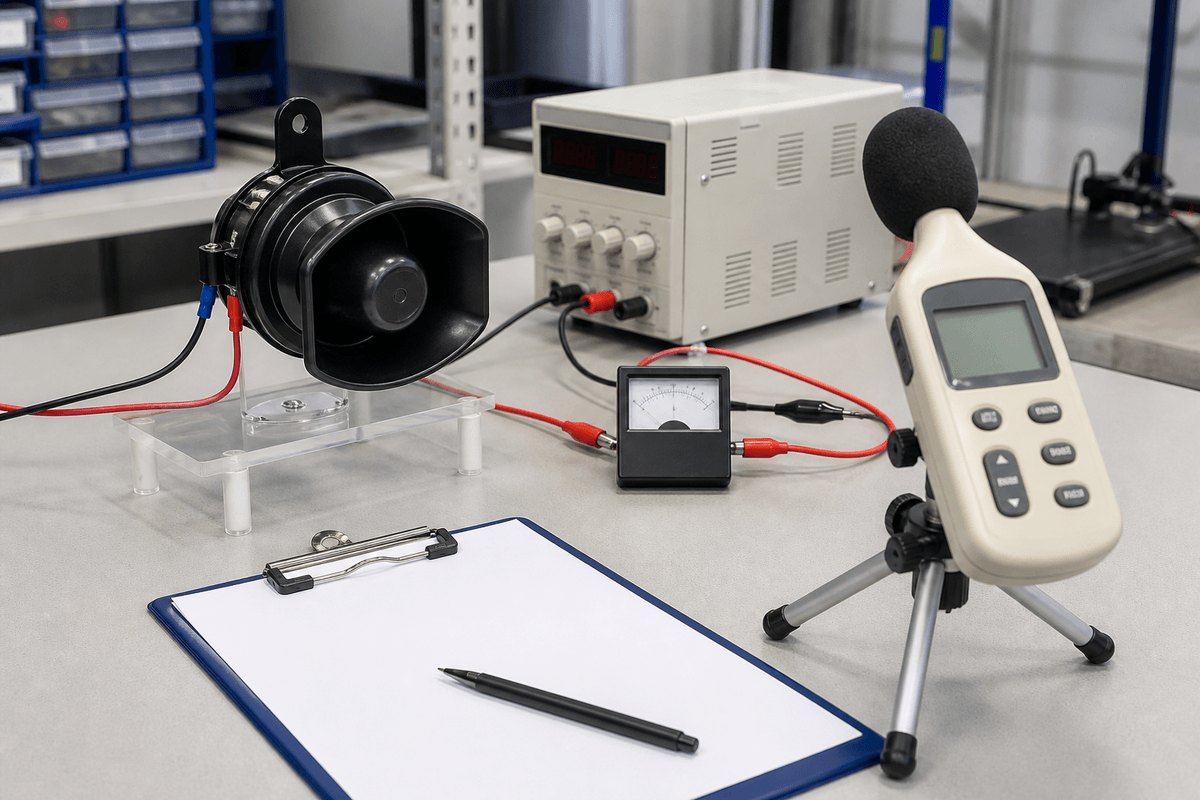
A sound level number changes with voltage, distance, background noise, fixture, and measurement setup. If two suppliers provide different dB values without test conditions, the comparison is weak. The RFQ should ask for the test voltage, distance from the horn, sound meter position, environment, and whether the horn was tested alone or installed on a bracket.
UN Regulation No. 28 is a useful reference because it deals with approval of audible warning devices and vehicle audible signals. It reminds buyers that horn sound is tied to defined requirements and test methods, not just promotional loudness.
Use OSUN Markings as Sample Records
The OSUN ODL-151 disc horn is a compact reference where reviewed product imagery shows 12V 3A 110dB with high and low tone examples around 420Hz and 350Hz. This is useful for buyers because it connects sound level to current draw and frequency. A disc horn may be selected when the program needs compact fit, crisp tone, and lower electrical load.
OSUN snail horn examples such as ODL-161, ODL-162, and ODL-165 are often reviewed with 12V 4A and 110dB style markings, plus high/low tone references around 500Hz and 400Hz. These models can be more relevant when buyers want a fuller sound and a stronger dual-tone kit. For sports horns such as ODL-163 or ODL-168, page language may mention stronger sound claims. Treat those as claims to verify through a sample test record, not as universal values for every shipment.
Sound Character Matters Too
dB measures level, but buyers also need to evaluate sound character. A disc horn can sound crisp and direct. A snail horn can sound fuller because of its horn path. A sports horn may be chosen for a stronger catalog identity. HELLA's horn page is useful here because it discusses different product groups, sound pressure ranges, and frequency ranges rather than treating all horns as the same product.
What to Put in the Sound Test Request
- Rated voltage and actual test voltage.
- Sound level in dB(A) and the measurement distance.
- High and low tone frequency values for paired horns.
- Current draw during the sound test.
- Mounting fixture, horn mouth direction, and test environment.
- Sample marking, certificate number if applicable, and shipment inspection standard.
Avoid Overusing the Loudest Number
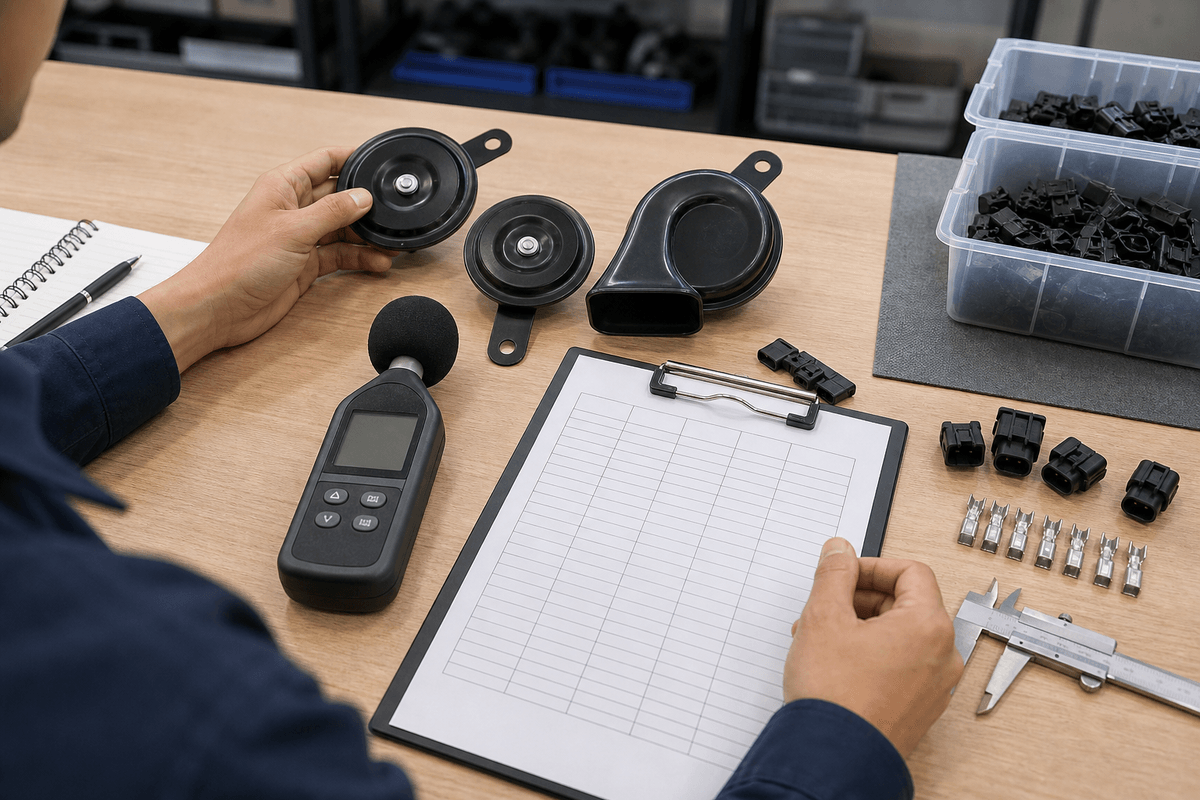
A louder number is not always the best purchasing decision. The horn still has to fit the vehicle, comply with the target market requirement, avoid wiring stress, and sound consistent across batches. If the buyer needs E-mark or another approval basis, request evidence for the exact OSUN SKU and tone version. Do not move a dB claim from one model page to another model without verification.
Conclusion
Car horn sound level dB should be evaluated with voltage, distance, current draw, frequency, product type, and certification evidence. OSUN's disc, snail, and sports horn examples give buyers useful starting points, but the approved sample and test method are the real source of confidence. A clear dB record protects the buyer's catalog, installer expectations, and shipment inspection.