
A copper coil car horn can sound like a simple quality upgrade, but procurement teams should treat the phrase as a claim to verify. The coil affects electrical behavior, magnetic response, heat, and sound consistency, but it is only one part of the horn. A good sourcing decision also checks terminals, bracket, shell, diaphragm, current draw, tone, packaging, and production consistency.
OSUN's automotive horn range includes disc, snail, sports, and multi-fit horn examples that help buyers turn copper-related claims into practical sample checks. The important question is not just "does it use copper?" but "where is copper used, and how does the complete horn perform?"
Ask What the Copper Claim Covers
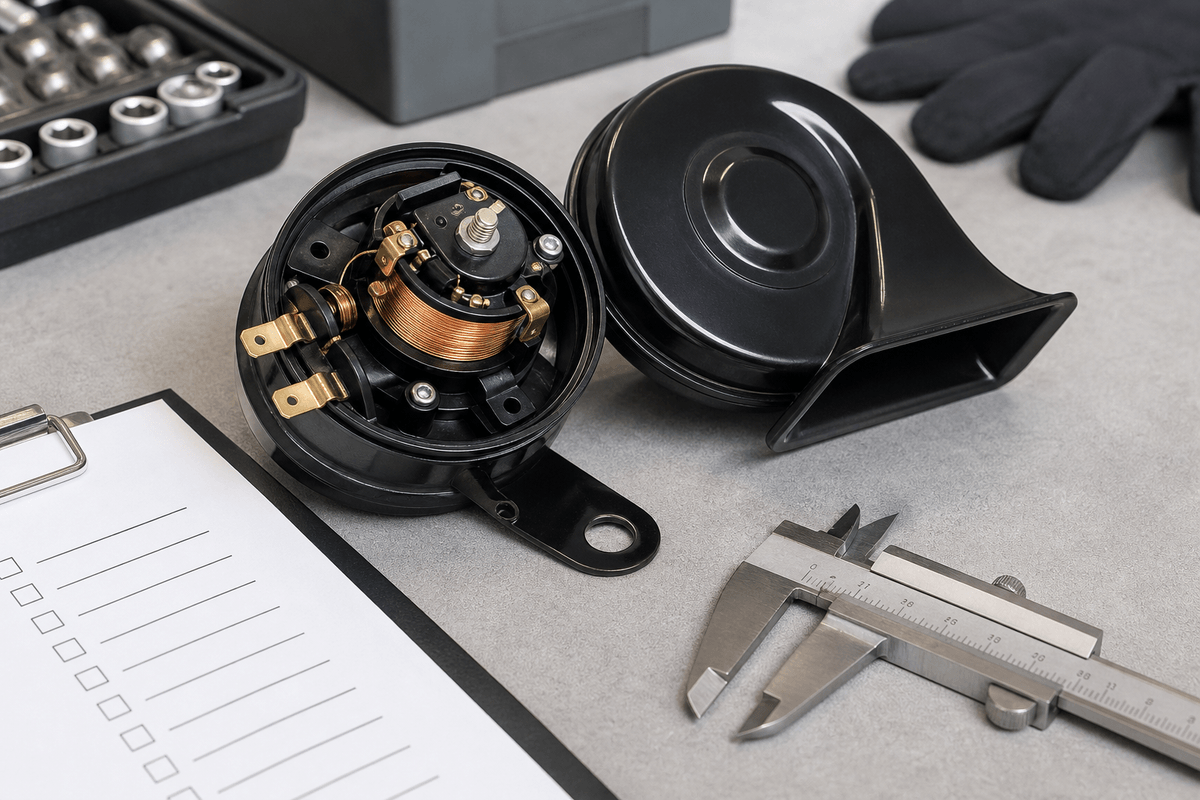
Some suppliers use "copper" to describe the coil. Others use it for terminals, conductor pieces, or general electrical parts. OSUN's ODL-162 snail horn page uses pure-copper wording and also highlights E-mark positioning, membrane filter technology, waterproof/exhaust performance, and anti-corrosion treatment. Buyers should ask whether the copper wording applies to the coil, terminal, or another component in the exact SKU.
OSUN's KSN169P sports horn page also mentions pure copper together with a compact sports horn design, water/dust proof positioning, and a patented resonator concept. That makes it useful for a premium sample discussion, but the buyer should still confirm the material statement on the physical sample and the production specification.
Current Draw and Heat Are Practical Signals
A copper coil is not useful if the horn draws too much current for the intended vehicle wiring. OSUN product evidence gives practical reference points: ODL-151 disc horn imagery shows 12V 3A 110dB high/low tone markings, while several snail and sports horn examples show 12V 4A 110dB style markings. The buyer should compare coil claim, current draw, sound result, and installation requirements together.
HELLA and PIAA both present horns as automotive electrical products, not loose sound accessories. That framing matters because coil quality should be judged through electrical and acoustic performance, not by material language alone.
Sample Approval Checklist
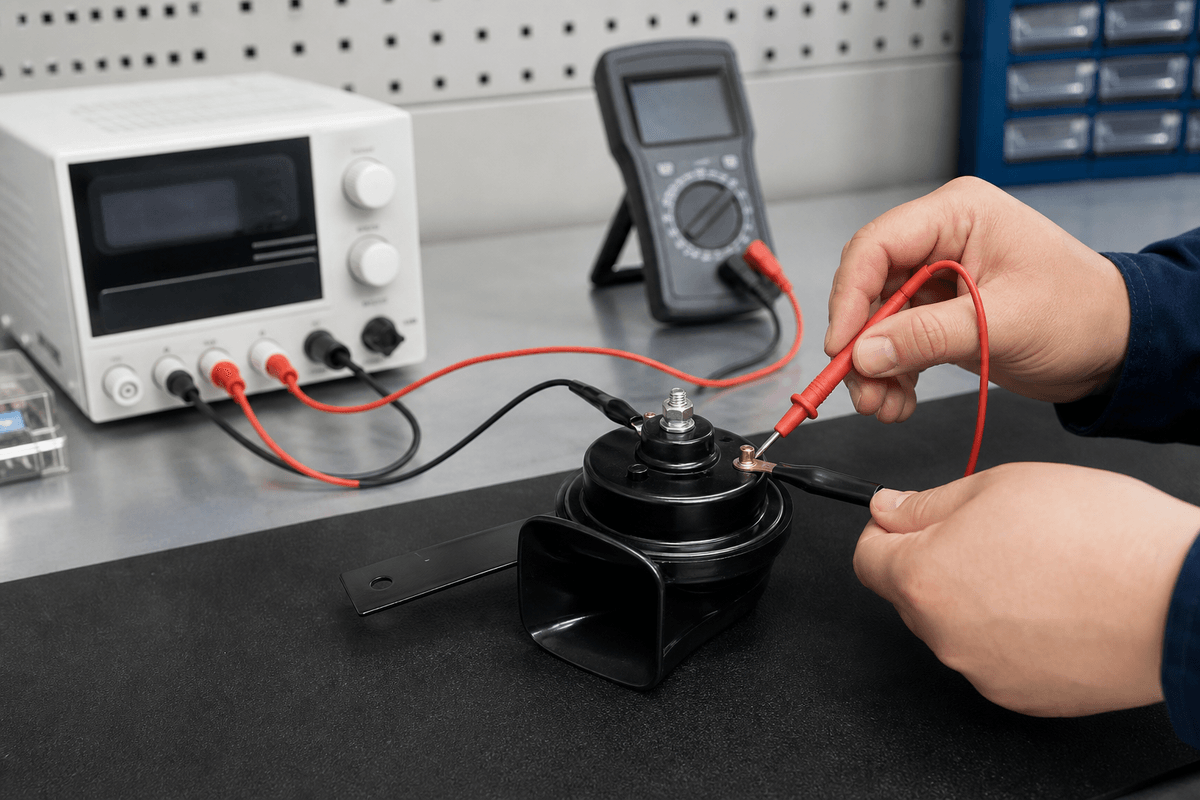
- Material scope: Ask whether copper refers to the coil, terminal, conductor, or full electrical assembly.
- Electrical data: Confirm 12V operation, current draw, relay needs, and terminal style.
- Sound data: Check dB marking, high/low frequency pair, and the supplier's test method.
- Heat control: Run repeated short activations and inspect for abnormal odor, discoloration, or unstable tone.
- Batch consistency: Compare several samples, not only one hand-picked unit.
- Documentation: Match any certificate or E-mark claim to the exact SKU when required.
OSUN Product Fit
For a compact replacement program, ODL-151 is useful because it provides a lower-current disc horn reference. For a snail horn with pure-copper positioning, ODL-162 is more relevant. For a premium sports horn discussion, KSN169P helps connect copper language with resonator design and compact styling. If installation convenience matters, OSUN's multi-fit car horn brings connector and terminal questions into the same sourcing conversation.
Conclusion
A copper coil car horn should be sourced through verification, not assumption. Buyers should confirm which component uses copper, how the horn behaves electrically, whether the tone remains stable, and whether production samples match the approved unit. OSUN's ODL-162, KSN169P, ODL-151, and multi-fit horn examples give buyers useful ways to ask better questions before placing bulk orders.