
An aftermarket horn does not automatically need an added relay, but many upgrades do. The decision depends on the new horn’s current demand, the number of horns, the existing relay and switch design, wire capacity, fuse protection, connector condition, and instructions for the vehicle and product. A relay is a control device, not a cure for undersized wiring or an incorrect fuse.
What the Relay Changes
A typical four-pin normally open relay lets a low-current control circuit energize a separate load circuit. In a horn installation, the original horn command can operate the relay coil while a fused supply and suitable wiring carry current to the horn. This can reduce load through an older switch and shorten the high-current path, but only when the harness is correctly designed.
HELLA’s relay documentation shows the familiar terminal scheme: 30 and 87 serve the switched load path, while 85 and 86 serve the coil. Terminal conventions are useful, but installers must follow the supplied diagram because polarity protection, dual outputs, solid-state controls, and vehicle electronics can change the connection method.
When the Factory Circuit May Be Enough
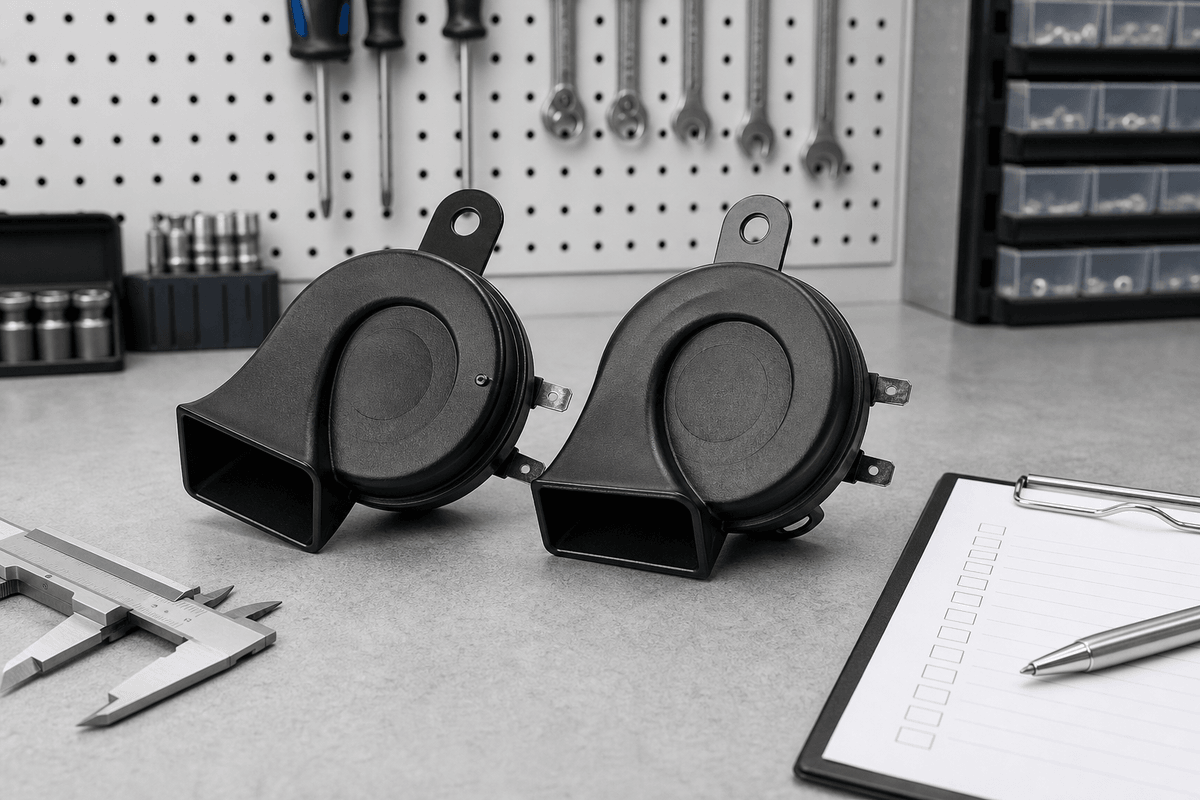
A direct replacement may use the factory relay and wiring when the vehicle already has adequate circuit capacity and the replacement load is within specification. Confirm this from service data rather than appearance. In HELLA’s published replacement example, the vehicle already had suitable wiring, a power relay and a 20A fuse for a two-horn load, so no circuit change was required. That result applies to the documented vehicle and load, not every retrofit.
Signs a Dedicated Harness Should Be Evaluated
- The upgrade changes from one horn to a high/low pair.
- The new steady or startup current exceeds the original unit’s requirement.
- The original horn switch carries load current directly.
- Voltage measured at the horn is low while the circuit is operating.
- Existing connectors or wires heat up, discolor, or show excessive voltage drop.
- The horn manufacturer specifically requires a relay harness.
Modern vehicles need extra care. The horn may be commanded by a body control module, security system, or steering electronics. A relay coil still creates an electrical load and can generate voltage transients unless the circuit includes appropriate suppression. Consult vehicle-specific information before connecting an aftermarket harness to a monitored output.
Apply the Numbers to the Actual OSUN Model
The OSUN ODL-151 product image is marked 12V and 3A. The ODL-161 snail horn image is marked 12V and 4A, with high and low frequencies shown at 500 Hz and 400 Hz. A high/low pair can demand more current than one disc horn, so procurement should request measured current data and define whether the rating is per unit or per pair.
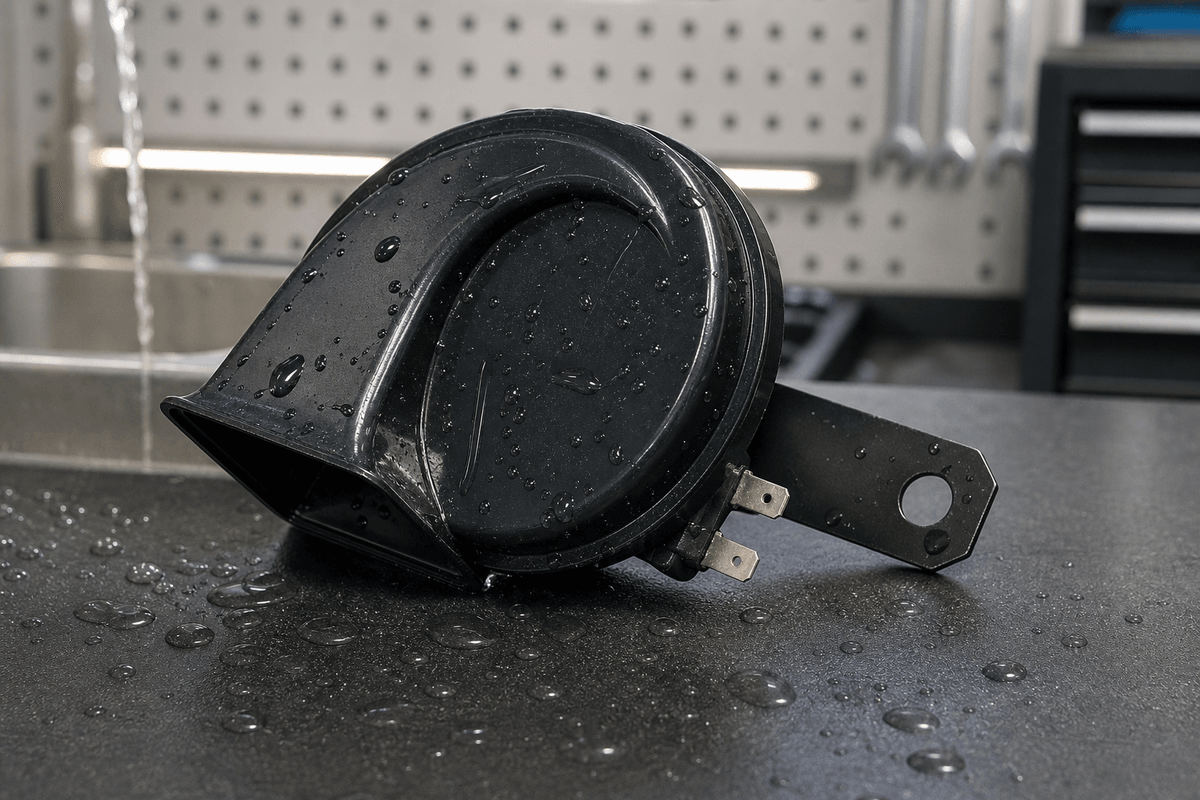
Physical installation also affects the harness. ODL-161 is presented with approximately 65 mm depth and an 8.5 mm mounting hole. The relay, fuse and connectors should be mounted away from direct water exposure and heat, while the horn outlet and drainage design remain correctly oriented.
Relay Harness Checklist
- Calculate and measure total horn current at operating voltage.
- Select wire and terminals for the load, route length and environment.
- Choose a relay with suitable DC contact capacity and coil characteristics.
- Place a correctly rated fuse close to the power source.
- Use secure grounds and sealed connectors where exposed.
- Run voltage-drop and function tests before final assembly.
Never increase the factory fuse simply to stop nuisance blowing. Fuse selection must protect the smallest relevant conductor and follow vehicle and harness specifications. For model-specific drawings, current information, connector choices and samples, buyers can contact OSUN.