
A dual tone 12V snail horn is usually chosen because a high and low tone pair sounds fuller and more recognizable than a single horn. But buyers should not approve a pair by listening only once in a room. They need to check frequency, current draw, sound marking, shell size, bracket position, water resistance, and packaging format.
OSUN's automotive horn product range includes several 12V snail horn examples with high/low tone markings visible in product evidence. These details make the article useful for importers building a product line, not just shoppers comparing loudness.
High and Low Tone Need to Be Matched
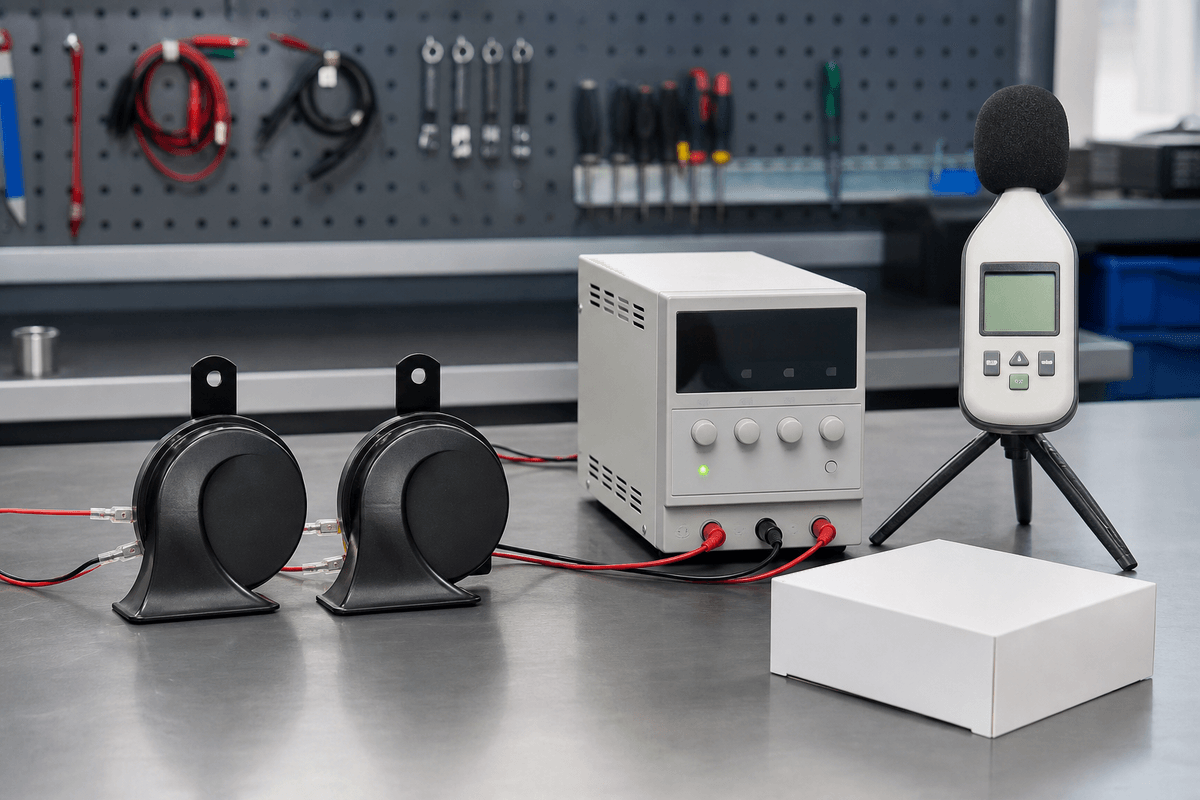
A dual tone horn set works when the two tones complement each other. OSUN snail horn product images commonly show 12V 4A 110dB markings with high tone around 500Hz and low tone around 400Hz. That does not mean every model or shipment should be assumed identical; buyers should confirm markings on the exact sample and ask how the factory controls frequency during production.
PIAA also uses frequency pair language in aftermarket horn positioning. This is helpful because it reminds buyers that "loud" and "good sound" are not the same specification. Frequency affects tone character, while dB marking and test conditions affect measured sound pressure.
OSUN Model Comparison
| OSUN Example | Useful Buyer Angle | What to Verify |
|---|---|---|
| ODL-161 | Compact water-drainage snail horn with forward sound direction | 65 mm slim depth, mouth direction, 12V 4A marking, high/low frequency |
| ODL-162 | E-mark-positioned snail horn with membrane filter and anti-corrosion language | Certificate scope, waterproof/exhaust design, sample marking, bracket fit |
| ODL-165 | Material and weather-resistance story for premium sourcing | Pure-PP shell claim, carbon-fiber-added material wording, dimensions, batch consistency |
Kit and Packaging Questions
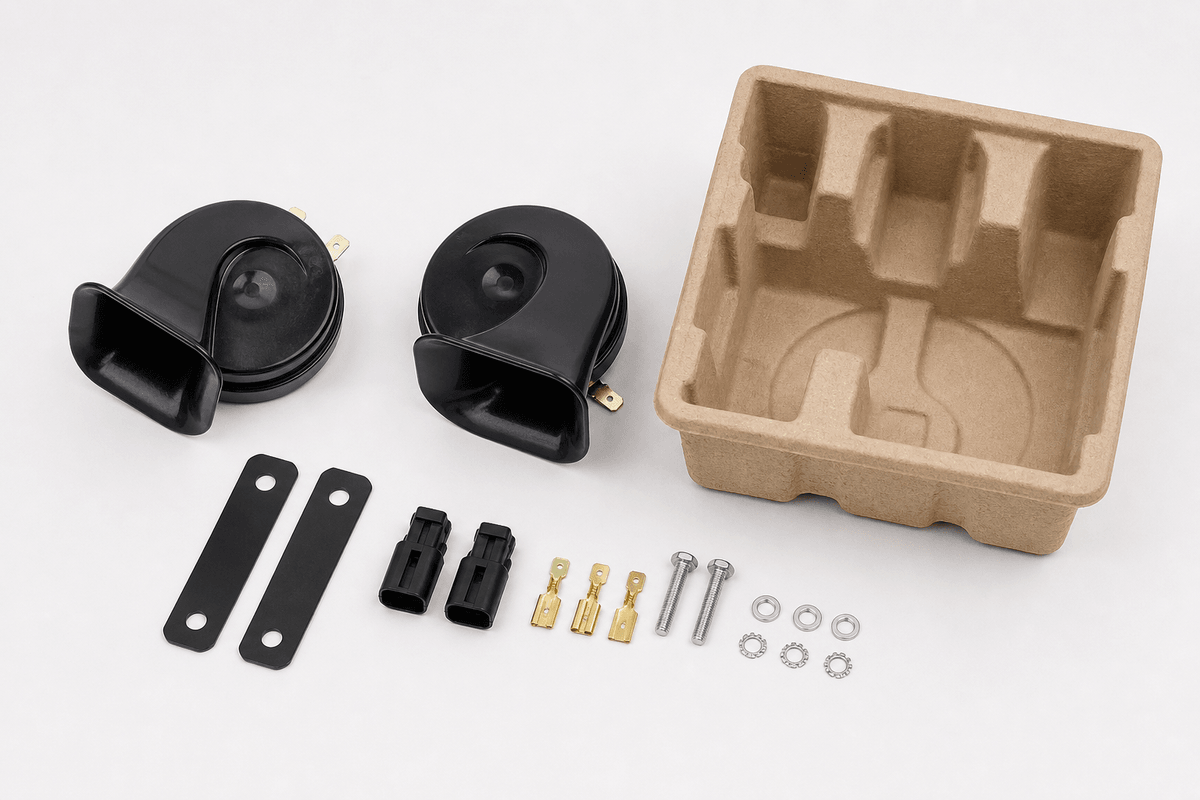
Dual tone products are often sold as a pair, so packaging needs attention. The buyer should confirm whether the quote includes one horn or a high/low set, whether mounting hardware is included, whether the pair is packed together, and whether the packaging clearly separates high and low tone units. Confusion at packing can create returns even when both individual horns are acceptable.
- Confirm the voltage and current draw for each horn in the pair.
- Check high/low tone markings and run a paired sound test.
- Compare shell dimensions against the intended vehicle space.
- Ask whether a relay, wiring, bracket, or connector is required for the target installation.
- Approve packaging that prevents high and low units from being mixed.
Fitment After the Sound Test
The pair should also be checked in a realistic mounting position. A high tone unit and low tone unit may both pass on a bench but become difficult to install together behind a grille. Check whether the two shells compete for the same space, whether both mouths face open air, and whether the wiring length supports the final position. For aftermarket kits, this step can prevent a good-sounding product from becoming a difficult installation.
Conclusion
Dual tone 12V snail horns should be selected by measured details, not only by a quick sound impression. OSUN ODL-161, ODL-162, and ODL-165 show useful options for compact drainage, E-mark-positioned, and material-focused programs. Buyers should verify frequency, current, dB marking, fitment, water-resistance design, and packaging before ordering.