
An E-mark car horn manufacturer search usually comes from a serious buyer. The buyer may be importing into a market where approval evidence matters, or they may want a supplier whose products can support regulated sales channels. The important point is simple: E-mark should be connected to the exact horn model, not used as a broad slogan for every item in a catalog.
OSUN's website positions the company in automotive horns, wiper blades, R&D, production, and sales. It also shows selected horn products with E-mark wording. Buyers should use those pages as a starting point and then request the documents, sample markings, and model details needed for the target market.
What to Verify First
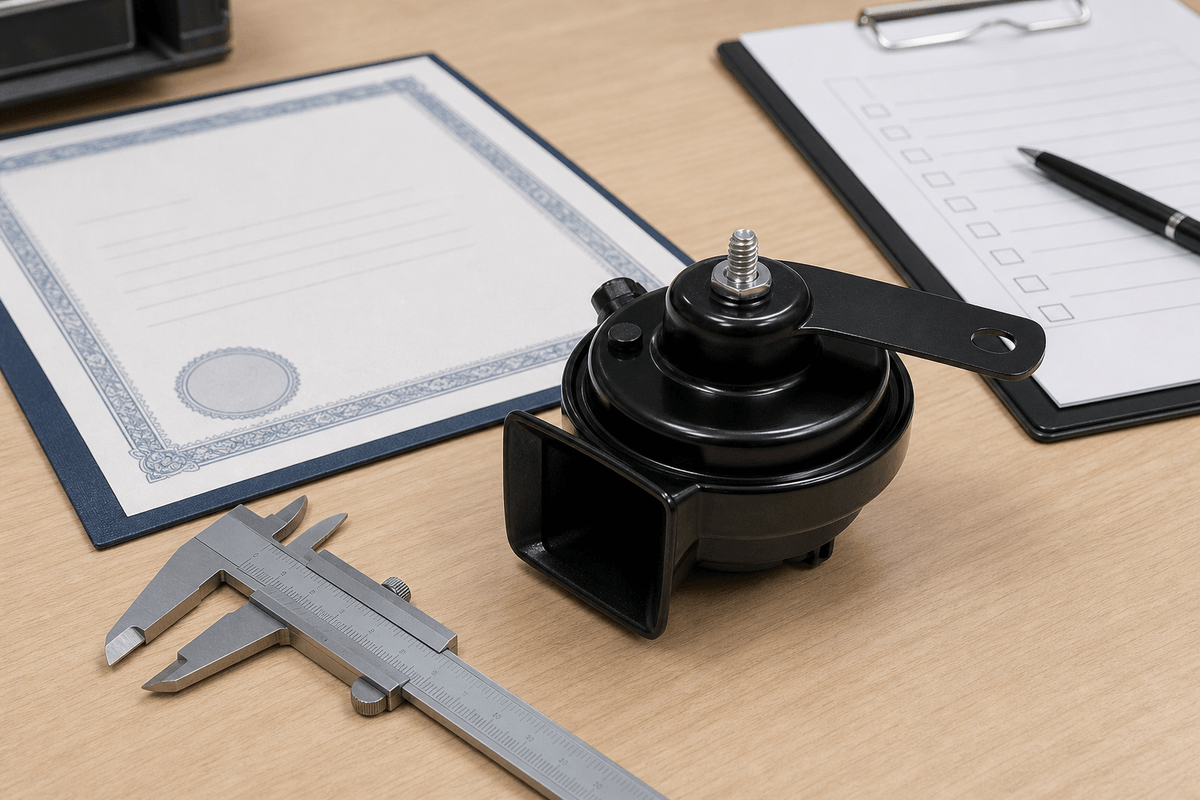
For an E-mark horn inquiry, begin with the SKU. A certificate or approval reference is useful only when it matches the model being quoted, the marking on the product, the electrical data, and the packaging claim. If a supplier says a car horn is E-mark certified, ask for the document scope and the exact model covered.
UNECE regulations and European approval systems are technical topics, so importers should also confirm local requirements with their compliance partner. The article should not turn E-mark into a casual promise. It should tell buyers how to check the supplier's evidence before placing orders.
OSUN Models to Review
OSUN's ODL-151 disc horn is positioned as a 12V E-mark disc horn. The page and product evidence make it useful for compact replacement programs. Visible product markings include 12V, 3A, 110dB, and high/low tone examples of 420Hz and 350Hz.
OSUN's ODL-162 snail horn is another relevant page because it combines E-mark positioning with membrane filter technology, waterproof/exhaust performance, anti-corrosion surface treatment, and 12V 4A 110dB high/low tone markings visible in product imagery. Buyers should confirm which evidence applies to the actual sample supplied.
Approval Questions for the Manufacturer
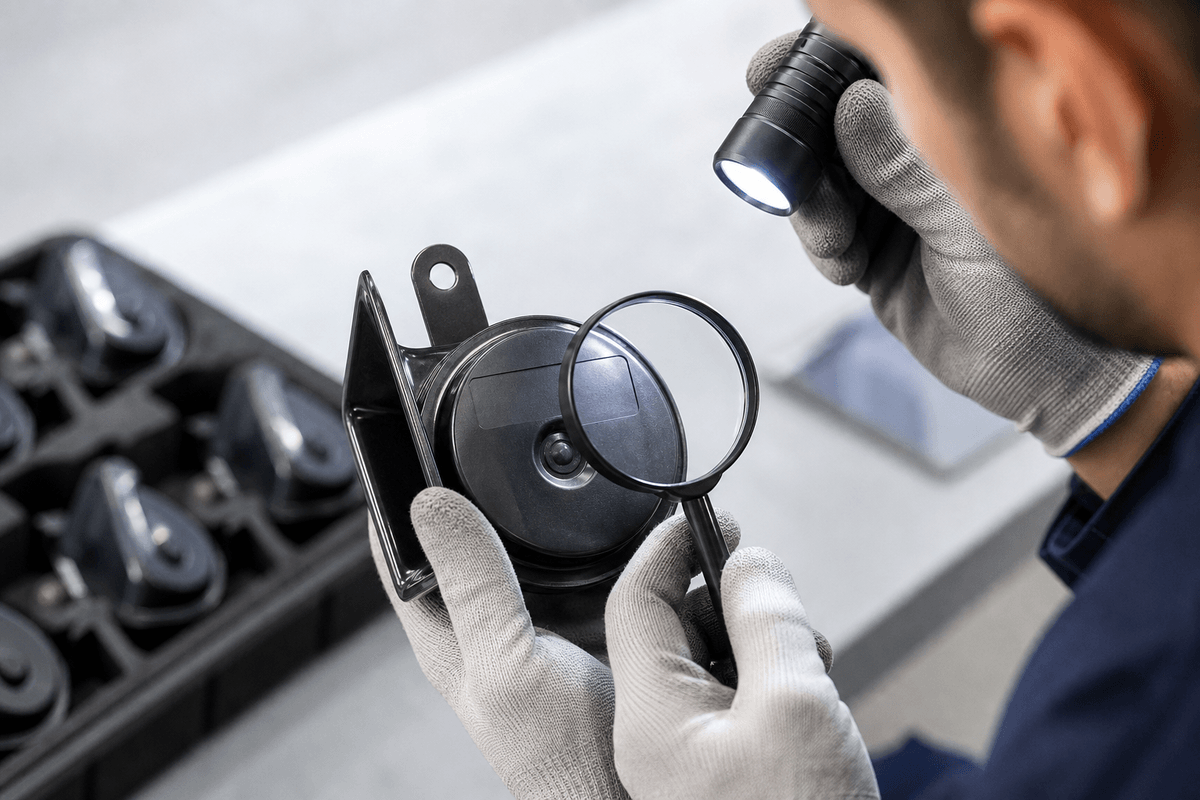
- Which exact model number is covered by the E-mark document?
- Does the product marking match the certificate, packaging, and invoice description?
- Are voltage, current draw, dB marking, and frequency pair consistent with the approved SKU?
- Is the horn sold as a single unit, high/low pair, or kit?
- Does the target market accept the supplied document and marking format?
- Can the supplier provide samples from the same production route as the bulk order?
- Who controls changes to material, bracket, terminal, shell, and packaging after approval?
Manufacturer Capability Still Matters
A certificate does not replace manufacturing discipline. The buyer still needs stable sound, consistent current draw, reliable brackets, clean terminal quality, and predictable packaging. HELLA and PIAA both show horn products as engineered automotive components, not generic noise makers. That is the standard buyers should bring to supplier conversations.
OSUN's company overview gives useful supplier context, but the final decision should be based on exact product evidence. Ask for a sample approval record and keep a reference sample for future shipment checks.
Conclusion
An E-mark car horn manufacturer should be evaluated by exact model evidence. OSUN's ODL-151 and ODL-162 pages provide useful E-mark-related starting points, but buyers should verify certificate scope, product marking, sample performance, and market requirements before approving packaging or purchase orders.