
Snail shell material is easy to overlook when buyers focus only on sound level. In real aftermarket use, the shell has to keep its shape, resist weather exposure, protect the acoustic path, and survive handling during installation. If the shell becomes brittle, warps, cracks around the bracket area, or traps water in the wrong place, the horn may create returns even when the first sample sounds strong.
OSUN's automotive horn range gives buyers several useful snail horn examples. The product details are not just catalog decoration; they become a practical checklist for importers, wholesalers, and private-label buyers comparing shell materials before ordering.
Material Claims Should Become Sample Checks
OSUN's ODL-165 snail horn page says high-quality carbon fiber is added to a pure-PP snail shell and highlights weather-resistant shell language. That is a useful product direction, especially for buyers selling into hot, cold, wet, or dusty markets. Still, a material claim should be verified through sample review, not repeated as a universal promise.
Ask whether the material statement applies to the exact SKU, whether the supplier can explain the shell formula in practical terms, and whether the sample matches the production version. The buyer does not need a chemistry lecture; they need confidence that the shell will remain stable after storage, installation pressure, temperature change, and road exposure.
Design Works Together with Material
A strong material cannot fix poor mounting direction. OSUN's ODL-161 snail horn is positioned around a mini shape, slim 65 mm thickness, water-drainage design, and forward sound direction. For a buyer, this means the shell should be checked together with bracket position and horn-mouth direction.
HELLA and PIAA both present horns as application-specific automotive parts, which is a good reminder that the shell, bracket, and sound path must work together. A horn that looks durable on a desk may perform poorly if its outlet points into a blocked surface or if water collects after installation.
Procurement Checklist
- Material confirmation: Ask what shell material applies to the exact model, especially when PP or carbon-fiber-added PP is mentioned.
- Visual inspection: Check for molding marks, thin corners, bracket stress points, and shell consistency across samples.
- Dimensions: Compare depth, width, height, bracket hole, and clearance behind the vehicle grille.
- Drainage or exhaust: Confirm how water exits and whether the horn must be installed in a specific orientation.
- Weather testing: Ask for heat, cold, humidity, and vibration checks that match the buyer's market.
- Production matching: Keep the approved sample and confirm the same shell material is used for bulk production.
OSUN Product Fit
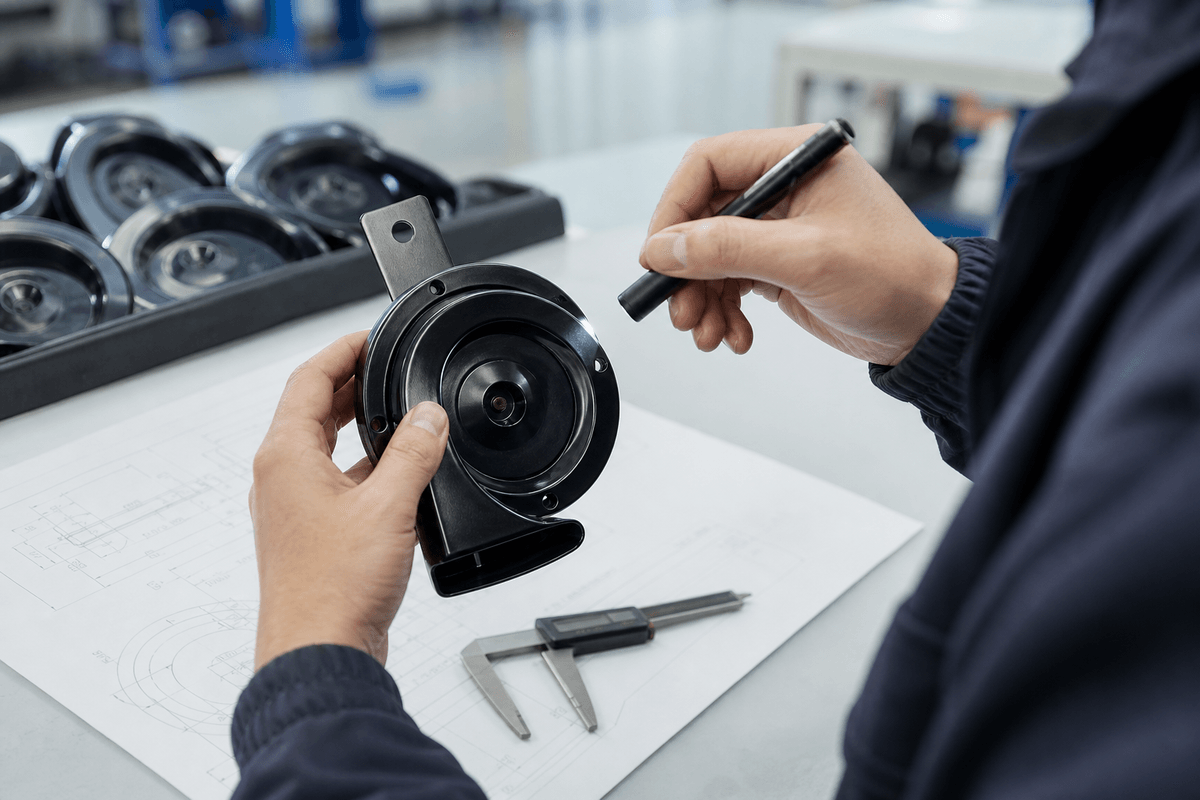
ODL-165 fits a premium material and climate-positioned sourcing story. ODL-161 fits a compact drainage-focused story. ODL-162 is useful when the buyer wants membrane filter, waterproof/exhaust, anti-corrosion, and E-mark positioning in the same conversation. These models let a buyer build a product line instead of forcing one shell design to answer every market need.
Conclusion
Snail shell material should be judged by how it supports real use: stable shape, weather resistance, bracket strength, drainage, sound direction, and production consistency. OSUN's snail horn pages provide useful starting points, but buyers should verify exact samples, drawings, material claims, and installation conditions before making catalog claims or approving bulk orders.