
A replacement horn can match a vehicle's mounting space and still be the wrong electrical fit. Buyers often begin with the horn button because that is the part a driver touches. The button is only one part of the control path. Depending on the vehicle, it may operate a low-current control circuit or send a request through a module. The horn itself is the load. Those two parts of the system need separate checks before an order is placed.
This guide is for distributors and product teams comparing replacement automotive horns. Use it to prepare a fitment inquiry, set up a representative sample and identify questions that need a vehicle wiring diagram. For any work involving a steering wheel or restraint system, use the vehicle manufacturer's procedure and a qualified technician.
Start with what the horn button controls
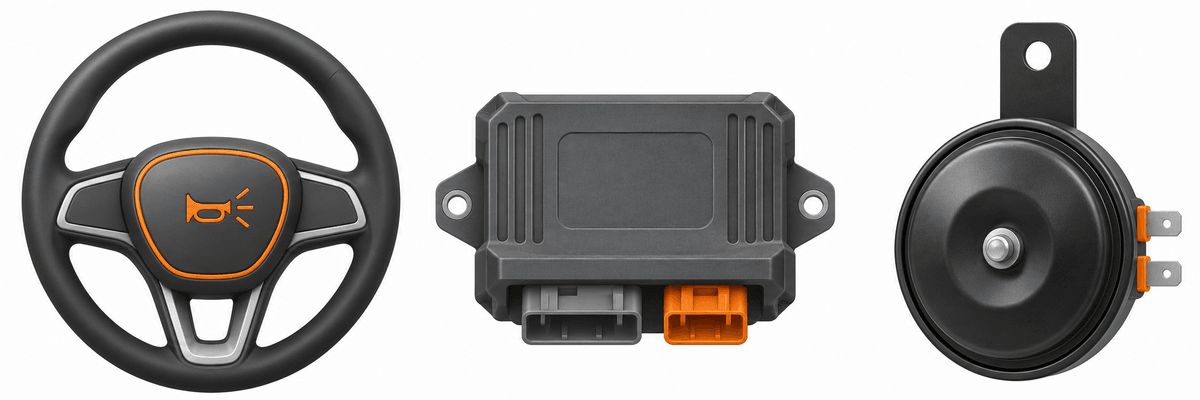
Concept illustration. The horn button and the sound-producing load have different roles.
A horn button can work through more than one circuit design. In a relay-controlled system, the control path commands the relay and the relay contacts switch power to the horn. In other systems, a control module receives the request and manages the output. A vehicle wiring diagram is the most useful starting point because it shows which arrangement applies to that vehicle.
Ask for the year, model, market and relevant electrical configuration when a buyer reports a fit issue. Similar trim names can cover different hardware. If a customer provides only a photo of the horn button, request the part information for the horn that is being replaced and the vehicle application. A picture of the button cannot establish the voltage, connector or current demand at the horn.
Keep control-side symptoms separate from the proposed replacement. If pressing the horn button produces no response, a qualified technician should establish whether the request reaches the horn circuit before a buyer changes the horn specification. A replacement component should not be used to diagnose a steering-wheel switch, a vehicle module or an intermittent connection.
Match the replacement to the load side
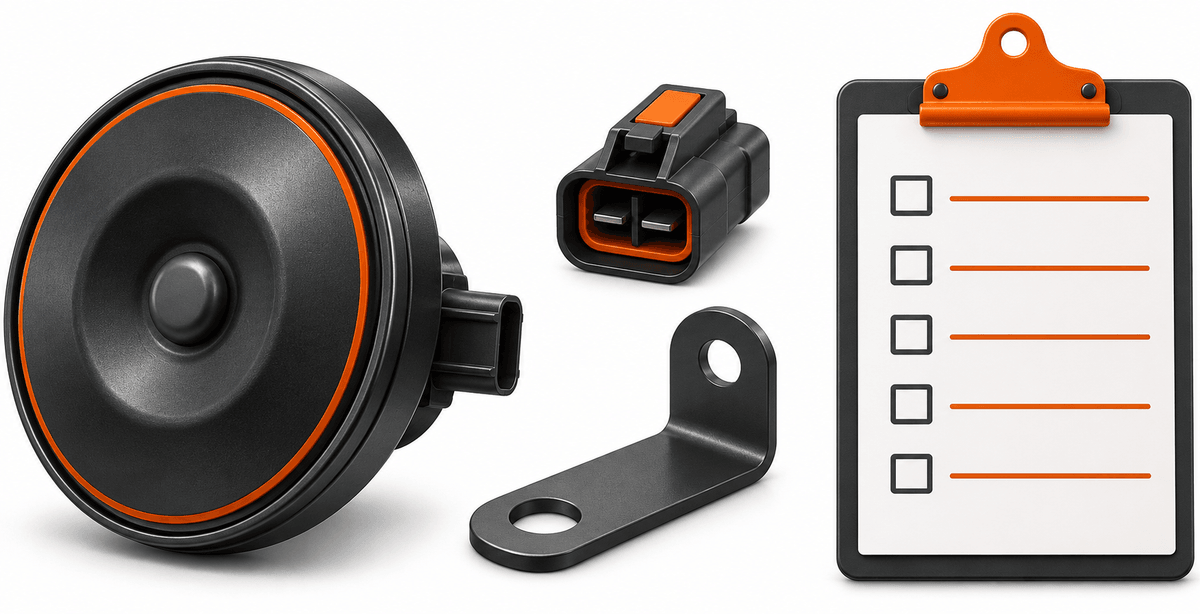
Concept illustration. Compare the connector, bracket and electrical ratings on the actual sample.
Record the replacement horn's rated voltage, connector type, terminal arrangement and rated current using the actual sample or confirmed model documentation. Check mounting space and bracket orientation separately. The fact that a connector plugs in does not establish that the electrical rating or installation arrangement is suitable.
For a dual-tone request, confirm the proposed configuration as a pair. Buyers should obtain the rating of each horn and ask the vehicle or installation specialist to verify that the intended circuit can support the combination. Avoid assuming a second horn can be added to the original connector solely because the horn button already works with one horn. The relevant evidence is the proposed load and the approved circuit for that application.
The OSUN automotive horn range can help identify a starting product category. Confirm the exact model and its markings before putting a rating into a quote, fitment note or catalogue. A family name is useful for navigating the range, but it cannot replace the electrical and physical checks on the sample.
Separate intermittent response from poor sound
An intermittent horn button complaint can describe several different observations. The horn may fail only at a certain steering position, may respond after a delay, or may sound weak even when it responds every time. Ask the customer to describe the actual result before suggesting a cause. Record the original horn model, whether the vehicle has been modified and what changed before the complaint began.
A weak tone can have different causes from a missing control request. A qualified technician can check the relevant supply and return path under appropriate test conditions and compare the result with the vehicle documentation. A distributor can help by confirming whether the supplied horn matches the approved sample and whether the markings and connectors are consistent. Keep those responsibilities clear in the customer handoff.
Avoid giving generic instructions that bypass a fuse, defeat a module or require access to steering-wheel restraint components. The goal of the fitment review is to make the replacement decision with reliable evidence. It is also to make clear when a vehicle-specific diagnosis is required before a sample can be accepted.
Record the horn button response when approving a sample
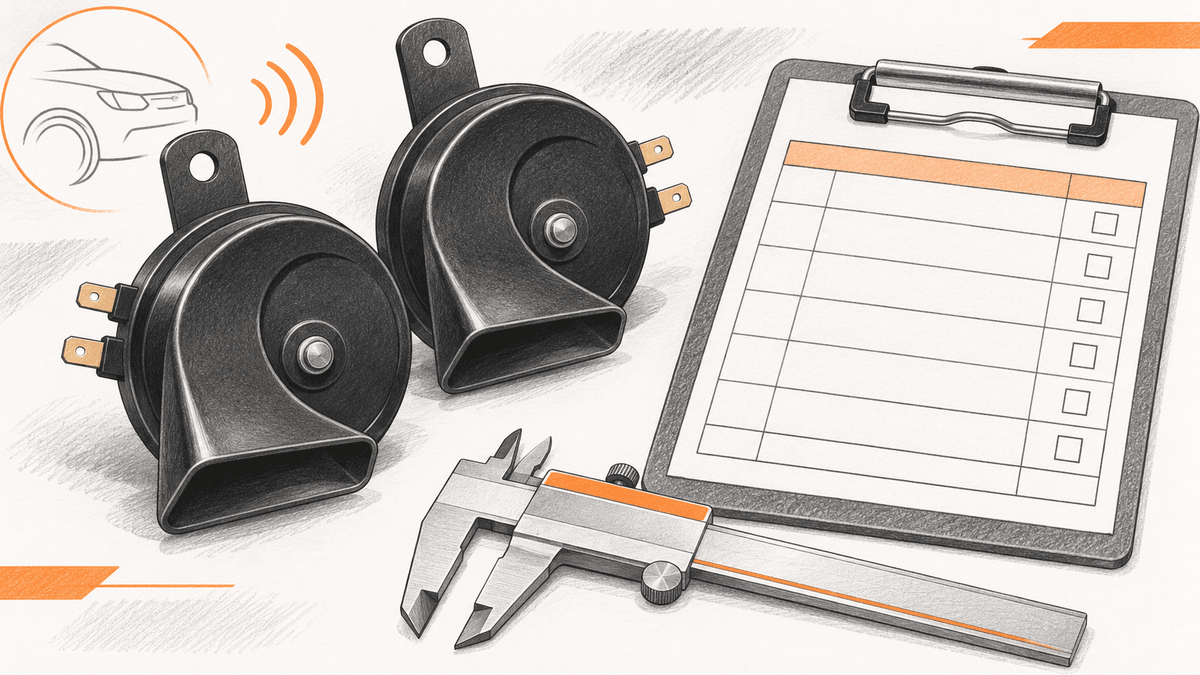
Concept illustration. Keep sample measurements and vehicle test findings in the same record.
Before the trial, identify the test vehicle or documented equivalent, the original horn and the proposed replacement. Photograph the sample markings and connectors with enough detail for another person to read them. Record whether the sample represents a single horn or a pair. If an adapter or bracket is part of the quotation, give it its own line in the record.
Ask the test owner to report three results separately. First, confirm that the approved control path requests the horn normally. Second, record whether the replacement works consistently with the verified circuit and mounting arrangement. Third, document the final installation condition, including clearance, orientation and any connector strain. If there is an unresolved issue, record what was observed and who will check it rather than marking the sample approved based on a single sound test.
Repeat the review when a supplier changes the horn model, connector or bracket. Even if the catalogue description remains the same, a changed component can affect installation. Use the sample identification in the purchase record so later shipments can be compared against it.
What to include in an OSUN inquiry
For a replacement inquiry, send the vehicle application, photos of the original horn and connector, the required voltage, the available mounting space and whether you need a single horn or a pair. Include the intended market and any fitment constraints you already know. If the request starts with a horn button issue, add the technician's finding about the control path so the product discussion can focus on a confirmed application.
For a new catalogue line, include the expected range of vehicles and indicate which applications have already been tested. Keep untested fitment claims out of the catalogue until the evidence is available. An approved sample, clear fitment notes and a record of the confirmed component details make it easier for sales and service teams to answer the same questions consistently.
Start with the information you already have. When the horn button control path is uncertain, identify that gap in the inquiry so it can be resolved before a replacement recommendation is recorded.