
A horn relay wiring review for purchasing starts with the approved vehicle and horn documentation. The immediate question is whether the sample harness matches that documented arrangement. Read the control and load paths separately, confirm the connector view and make the supplier identify the relay and every harness revision. Keep the approved drawing with the sample so a later delivery can be checked against the same evidence.
Ask for the drawing that defines the sample
Request a complete horn relay wiring drawing with a document number and revision. It should name the relay, connectors and intended horn configuration. Ask the supplier to identify which parts come in the kit and which are part of the vehicle. Put that scope on the purchase record so a drawing that includes a vehicle connector is not mistaken for a promise to supply it.
Clarify where the relay information comes from. For example, a vehicle diagram might name an original relay and a supplier drawing might show a different relay physically installed in the replacement harness. Check the reference used for the sample and request the corresponding manufacturer's data. A product photo can confirm markings or shape, while the drawing and device documentation establish the intended relationships.
Ask whether each connector is shown from the mating face or the wire side. Put that view beside the drawing symbol. Two pictures of the same keyed connector from opposite sides can make positions appear reversed. Ask the supplier to identify the locking feature and mark where the position numbering starts. Have the supplier annotate the sample if the drawings alone do not make that clear.
Read the low-current control and the load path separately
In a conventional electromechanical relay, the control side energizes a coil and the switching side carries the load under the intended operating conditions. A vehicle can use a different arrangement or control the function through a module. The actual documentation governs the job. The HELLA horn catalogue provides a manufacturer example of a relay-based horn connection. Its example is tied to the illustrated equipment.
On the horn relay wiring drawing, mark where the control signal enters and where the load reaches the horn. Identify which circuit elements are specified by the vehicle and which are selected in the supplier's harness design. Ask the supplier to identify the relay part number and the approved contact and coil information for that part. Avoid carrying values or terminal expectations from an unrelated illustration into the purchase specification.
Check that the drawing and physical sample tell the same story. In particular, verify the connector markings, relay identity and kit contents against the documentation. If a change in the supplied relay affects the agreed circuit or mounting arrangement, send it to the qualified person responsible for that application before approving the shipment.

Concept illustration showing the relay control and load paths. Verify terminal functions and ratings against the vehicle-specific wiring diagram.
Read the connector evidence in both directions
Start with the sample in front of you. Match the harness connector to its position on the horn relay wiring drawing. Check the documented view, label and intended mating part. Then start at the drawing and ask a different reviewer to find the corresponding connector on the sample. If the two reviewers need to interpret a drawing differently, ask the supplier to revise the callout or add a clearly oriented photo.
Keep wire colour as a secondary identification aid. The supplier should document the connector position and function on the approved drawing. If the sample uses a different colour, record the difference and seek confirmation of the acceptable production specification. A new colour scheme can make an assembly or service check harder even when the underlying electrical arrangement is unchanged.
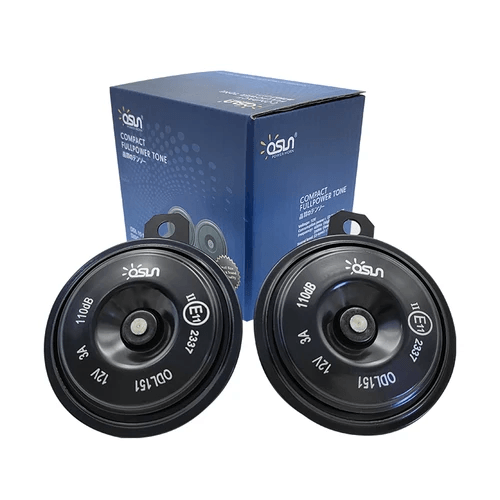
Compare the locking feature, connector label, wire exit direction and available clearance against the intended position. Physical fit and electrical suitability call for different evidence. A sample can connect physically while leaving the question of compatibility open. Give the sampling team the vehicle specification and the OSUN automotive horn range so the selected horn and the harness can be reviewed together.
Confirm what changes between one horn and two
A harness purchase record should state whether the order is for one or two horns and identify the chosen models. Review the documented requirements for the actual application before accepting a change in the number of loads. Ask the supplier to explain any resulting difference in the kit, such as the branch arrangement, connector locations or intended mounting.
Use a sample built to the same drawing the supplier will use for production. If an approval sample has one branch and the ordered kit has two, do not copy the physical acceptance results into the second record. Repeat the fit and arrangement checks that depend on the additional branch or connector. A separate approval note can preserve the relationship between the two configurations.
For horn relay wiring used across several vehicle variants, record which installations have been reviewed. A common component description does not establish a common interface at every vehicle. A drawing that applies across several variants should identify the exact scope and any differences the buyer needs to carry into the order.
Leave purchasing with a usable acceptance record
An acceptance record should include the horn relay wiring revision, sample identification, connector photographs and signed results of the applicable checks. Ask the supplier to include a reference for the inspection method used on the harness. If a check depends on the approved vehicle documentation, attach that reference too. The person receiving the delivery should be able to find the same revision without requesting a new copy of the entire enquiry.
Keep substitutions visible. A new connector shell, relay or horn model should be recorded against the approved baseline and sent to the relevant owner if the change affects the documented arrangement. State which checks will be repeated and who can release the amended sample. If an issue was identified, keep the original result with the corrected record so the team can tell what changed.
Try a supplier revision before approving the order
Imagine a supplier sends a harness built to revision B and asks the buyer to accept revision C for production. Put both drawings beside the sample and ask for a change list. Compare the part identifiers and connector views against the same vehicle reference. In the horn relay wiring record, distinguish a documentation correction from a change to the supplied harness.
If a change touches the intended circuit, ask the application owner to review the revised horn relay wiring before ordering. Repeat the physical checks affected by the revision and label the approved sample so warehouse staff can find it later. Keep the latest horn relay wiring drawing with the release record.
Common questions about horn relay wiring samples
Can I use a generic diagram to approve a kit?
Use the diagram to understand the general idea, then ask for the specific drawing for the vehicle, harness and horn model being evaluated. A generic diagram does not establish the connector view, supplied parts or exact equipment. Ask the supplier to identify the version that represents the shipment.
Should two harnesses with identical connectors be interchangeable?
Physical similarity is one check. Compare the connector orientation, documented functions, electrical characteristics and intended model before approving a substitution. Use the supplier's approved drawing and the appropriate vehicle reference. Document any differences so receiving staff can tell which configuration they have accepted.
What do I send with a purchasing enquiry?
Send the vehicle application, approved horn reference, connector photographs, mounting information and the number of units or branches required. Include the documented diagram if available and say which parts the supplier should provide. This gives the supplier a concrete configuration to review and quote.
Keep horn relay wiring evidence attached to the approved sample and purchase order. Bring the relevant connector, application and horn details into the supplier discussion early enough to resolve differences before ordering.