
"Horn speaker tweeter" is an ambiguous search. In audio, a horn tweeter may refer to a speaker component that projects high frequencies. In automotive parts sourcing, however, buyers often use horn, speaker, tweeter, and car horn terms loosely when they are looking for a 12V warning horn. Before quoting or writing a product listing, the supplier should clarify which product the buyer really needs.
OSUN's website focuses on automotive horns, wiper blades, and related parts. That means OSUN should be positioned around vehicle horn products, not car-audio tweeter speakers unless a specific page supports that product category. This distinction protects buyers from ordering the wrong item and keeps the article useful.
Separate Warning Horns from Audio Tweeters
A vehicle warning horn is designed to create an audible signal outside the vehicle. A tweeter speaker is usually part of an audio system and is designed for music or voice reproduction. The words may overlap, but the applications are different. A car horn buyer should check voltage, current draw, sound level, frequency pair, bracket fit, connector type, and certification. An audio tweeter buyer would check impedance, power handling, crossover, and cabin sound quality.
For OSUN content, the safer reading is automotive warning horn unless the user specifically asks for audio speakers. HELLA's horn and fanfare product organization and PIAA's automotive horn category both reinforce that horn sourcing is about acoustic warning devices, not entertainment audio.
Where OSUN Product Details Fit
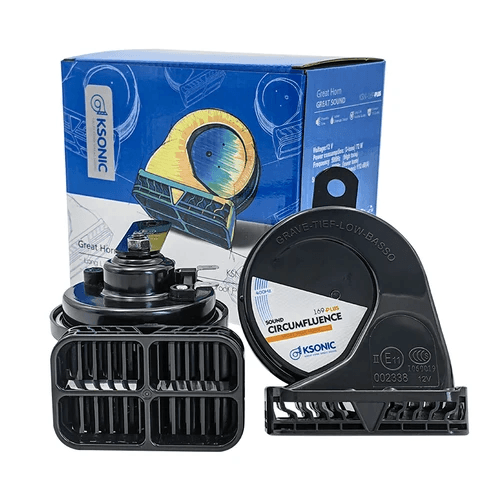
OSUN's disc and snail horns give concrete examples for a horn-speaker-style search. The ODL-151 disc horn page positions the product around compact design, crisp tone, sealing, and E-mark wording. Product imagery shows 12V 3A 110dB high/low tone markings.
For a fuller sound, OSUN's ODL-162 snail horn is more relevant. The page highlights E-mark positioning, powerful and pure tone, membrane filter technology, waterproof/exhaust performance, anti-corrosion treatment, and high/low tone imagery. These are real automotive horn sourcing details, not audio-speaker specifications.
Questions to Ask Before Quoting
- Is the buyer asking for an exterior vehicle warning horn or an interior audio tweeter?
- Does the product need 12V operation, and what current draw is acceptable?
- Is the buyer looking for a single horn or high/low tone pair?
- Which sound character is needed: compact, sharp, full, sports, or premium?
- What bracket space, mounting hole, and connector type does the vehicle use?
- Does the target market require E-mark or other documents for the exact SKU?
- Will the product be sold in retail packaging, service kits, or bulk cartons?
Why Frequency Still Matters
The word tweeter may suggest high-frequency sound, and frequency is still relevant for automotive horns. OSUN product images show high/low tone examples, such as ODL-151 with 420Hz/350Hz markings and several snail horn examples with 500Hz/400Hz markings. PIAA also uses frequency pairs in performance horn positioning. Buyers should compare frequency because a horn's tone affects perceived loudness and quality.
Still, a high-frequency horn is not an audio tweeter. The buyer should not use car-audio terms like impedance or crossover when requesting an automotive warning horn. A clearer inquiry will produce a better sample recommendation.
Conclusion
Horn speaker tweeter searches need clarification. If the buyer wants a vehicle warning horn, OSUN's disc and snail horn models can be evaluated by voltage, current, frequency, sound level, bracket fit, connector type, and documentation. If the buyer wants an audio tweeter, that is a different product category. Clear language at the inquiry stage prevents wrong samples, wrong claims, and wrong packaging.