
A low current 12V car horn can reduce installation stress, especially in replacement and service programs where vehicles may have different wiring conditions. But "low current" should be compared with the complete horn requirement: tone, sound level, bracket fit, terminal type, relay needs, and target vehicle application. A horn that draws less current but does not fit or sound right is not a good replacement product.
OSUN's automotive horn range gives buyers useful comparison points. The ODL-151 disc horn is the most direct low-current example, while OSUN snail horns help buyers understand when a fuller tone may require different electrical planning.
Start with the Vehicle Wiring
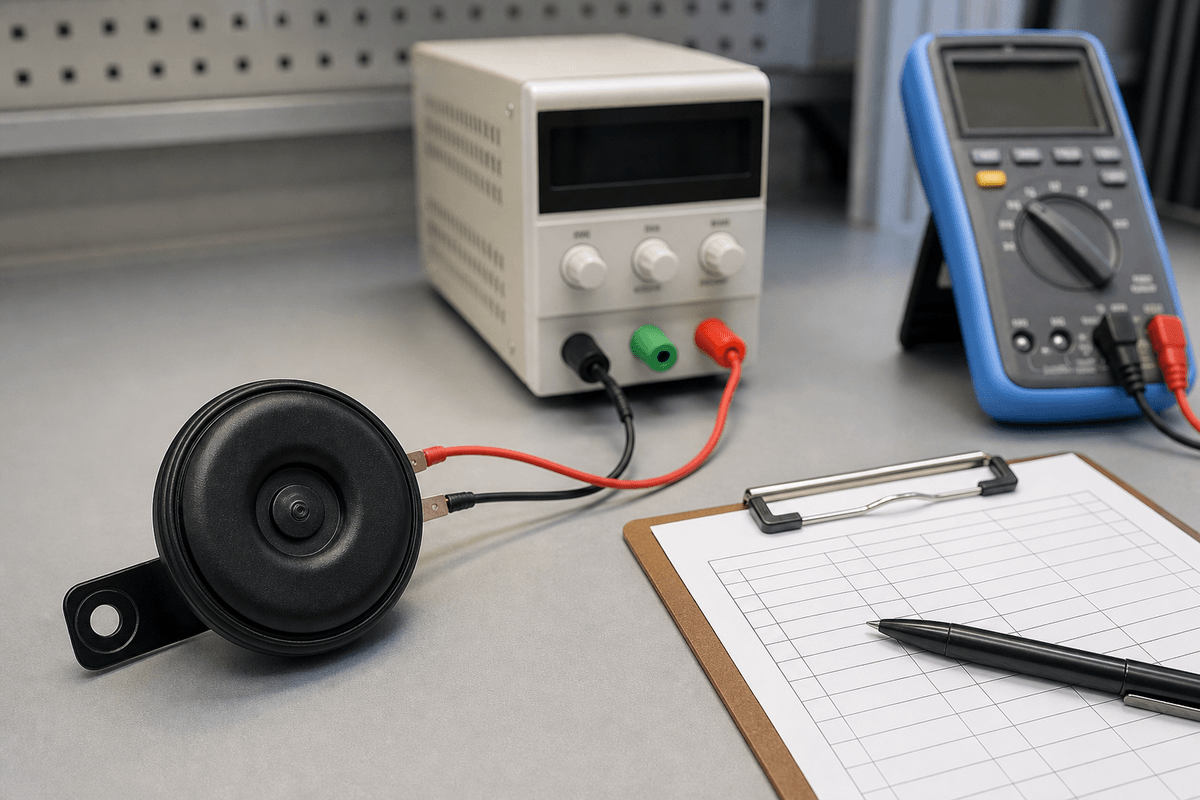
Before choosing a horn, buyers should ask how the horn will be installed. Is it replacing an original horn through the existing connector? Is it part of an aftermarket kit with a relay? Is the product sold to repair shops or retail customers? The lower the installation control, the more important current draw and connector fit become.
HELLA and PIAA both treat horns as automotive electrical components. This is a useful reminder that the current rating is not a small detail; it affects wiring load, fuse selection, relay planning, and the risk of poor installation.
OSUN Current-Draw References
| OSUN Example | Visible / Page-Supported Buyer Point | What to Verify |
|---|---|---|
| ODL-151 disc horn | 12V 3A 110dB marking, compact disc-horn fitment, low-current positioning | Existing wiring load, 8.5 mm mounting hole, high/low tone marking, certificate scope |
| ODL-161 snail horn | 12V 4A 110dB marking, water-drainage design, forward sound direction | Relay need, shell depth, horn mouth direction, water exposure |
| Multi-fit car horn | Multiple adapter concept, pure copper terminal and low-resistance language | Exact connector list, target vehicle parc, installation instructions |
When Low Current Matters Most
Low current is especially valuable for compact replacement, older vehicle service, and markets where installers prefer simple horn swaps. OSUN's ODL-151 disc horn is a practical example because it combines compact sizing, sealing/waterproof language, E-mark positioning, and a 3A visible marking.
However, buyers should not reject every 4A snail horn automatically. A snail horn such as ODL-161 may be selected for tone, projection, drainage, and stronger application positioning. The decision depends on the vehicle and kit design.
Procurement Checklist
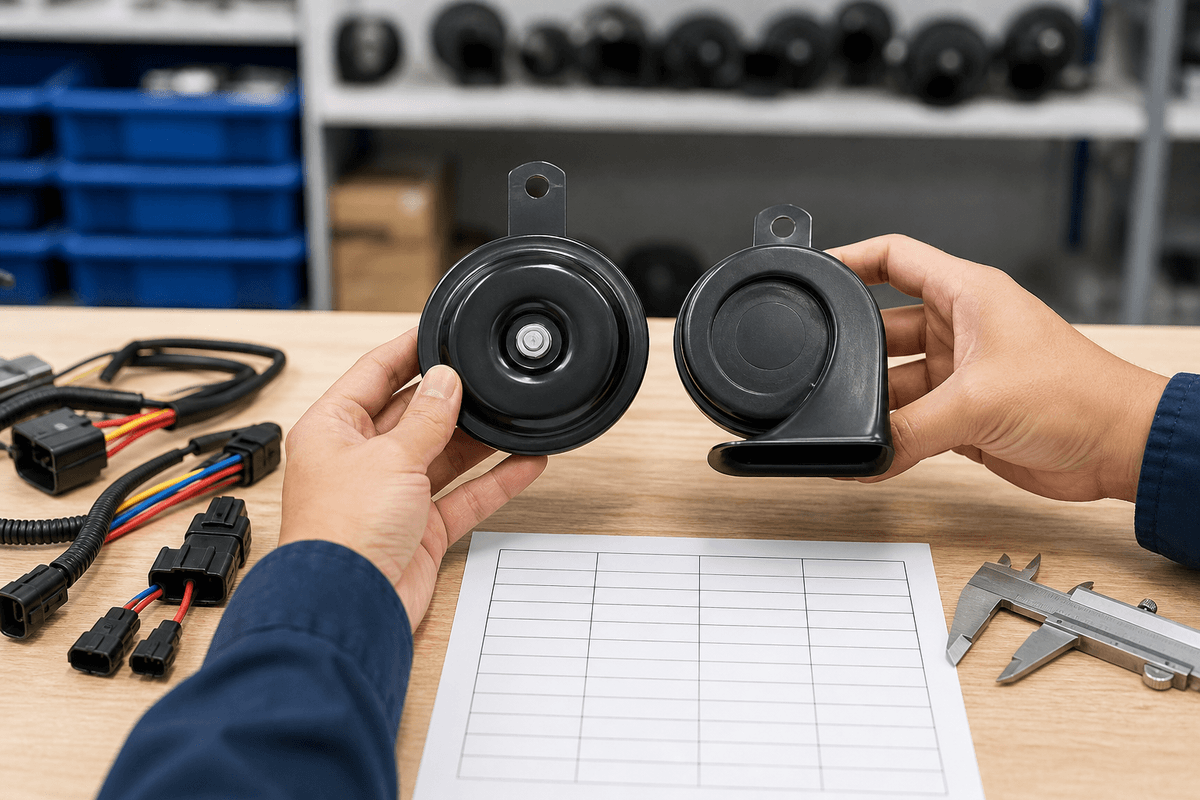
- Confirm 12V operation and current draw on the physical sample.
- Ask whether a relay is required or recommended for the target installation.
- Check terminal style, connector fit, fuse condition, and wiring instructions.
- Compare sound level and frequency after installation, not only on the bench.
- Keep approved current-draw data with the sample record for shipment checks.
What to Put in the RFQ
A clear RFQ should state the target vehicle type, whether the horn replaces an original unit, whether the buyer needs a single horn or high/low pair, and whether the kit includes connectors or adapters. It should also request the current draw range, sound test condition, terminal drawing, bracket drawing, and packaging option. With those details, buyers can compare OSUN samples against real installation risk instead of comparing only the dB number.
Conclusion
A low current 12V car horn should be selected through electrical fit, not marketing language. Buyers should compare current draw, sound, frequency, fitment, relay needs, connector design, and documentation. OSUN's ODL-151, ODL-161, and multi-fit horn examples provide useful references for building safer replacement programs.