
A waterproof electric car horn should be selected by design evidence, not by the word "waterproof" alone. In real vehicle use, horns face rain, road spray, humidity, dust, temperature changes, and sometimes poor mounting direction. If water collects around the shell, outlet, terminal, or bracket, sound and life can both suffer.
OSUN's automotive horn range includes several pages that use different water-resistance ideas. This is useful for buyers because it shows that waterproof design can mean sealing, drainage, membrane exhaust, anti-corrosion treatment, or a protective cover.
Waterproof Is Not One Design
OSUN's ODL-151 disc horn page mentions sealing performance and waterproof property, making it a practical compact replacement option. Because disc horns can fit tighter spaces than many snail horns, buyers should check whether the installation position protects the horn from direct spray while still allowing sound projection.
OSUN's ODL-161 snail horn uses water-drainage language and highlights forward sound direction. That points to an important installation question: will the drainage path and horn mouth work correctly after the horn is mounted behind the grille?
Membrane, Exhaust, and Anti-Corrosion
For buyers needing a stronger waterproof story, OSUN's ODL-162 snail horn is relevant because the page mentions membrane filter technology, waterproof/exhaust performance, and anti-corrosion surface treatment. ODL-165 adds shell material and weather-resistant shell positioning, while sports horn models such as ODL-163 and ODL-168 use waterproof cover language.
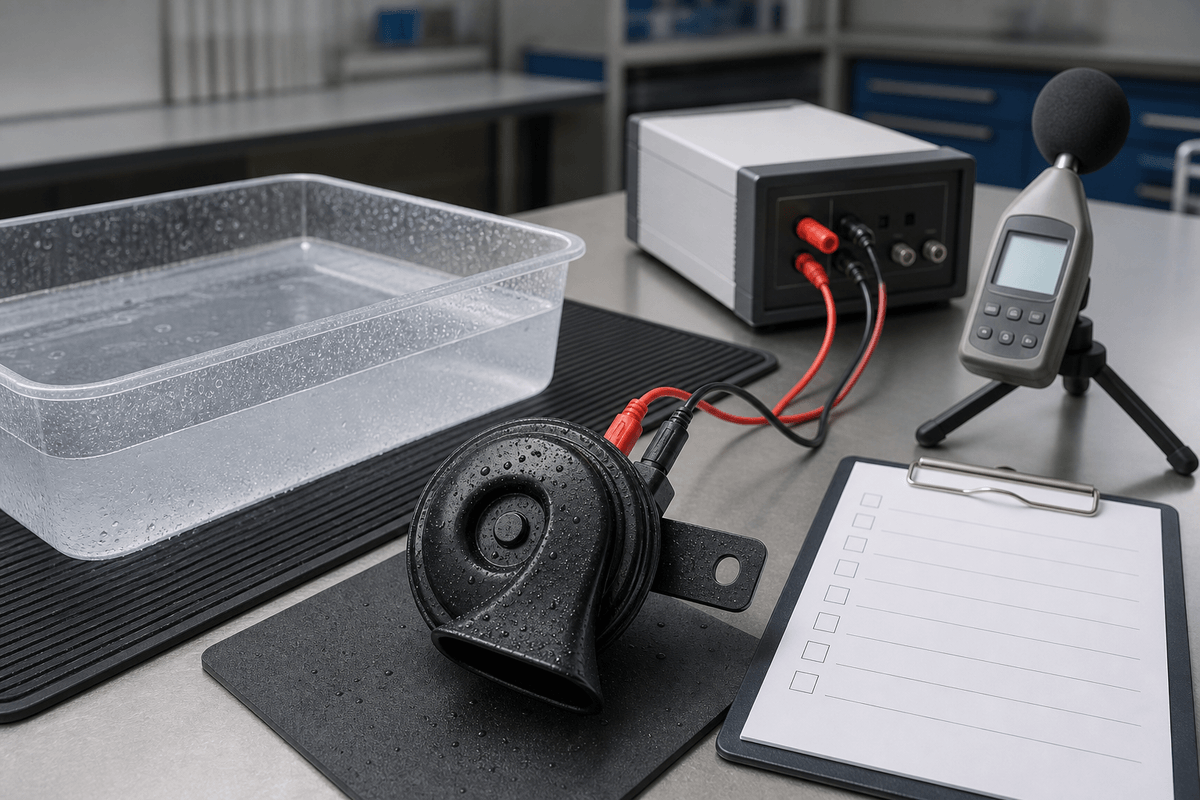
These phrases should become sample checks. Buyers should ask where the membrane is located, how exhaust works, what parts receive anti-corrosion treatment, and whether the cover affects sound direction.
Verification Checklist
- Identify whether waterproofing comes from sealing, drainage, membrane exhaust, cover design, or surface treatment.
- Confirm 12V marking, current draw, dB marking, and frequency pair on the exact sample.
- Check terminal orientation and whether connectors are protected from water collection.
- Mount the horn in a realistic position and test sound before and after water exposure.
- Inspect bracket, screws, terminal plating, and shell after exposure.
- Ask for the supplier's test condition before using waterproof wording on packaging.
OSUN Product Fit
ODL-151 fits compact waterproof replacement discussions. ODL-161 fits drainage-focused snail horn programs. ODL-162 fits buyers who want membrane/exhaust and anti-corrosion details. ODL-163 or ODL-168 may fit sports horn upgrade programs, but buyers should verify any higher sound claim separately from waterproof cover language.
How to Avoid Misuse Claims
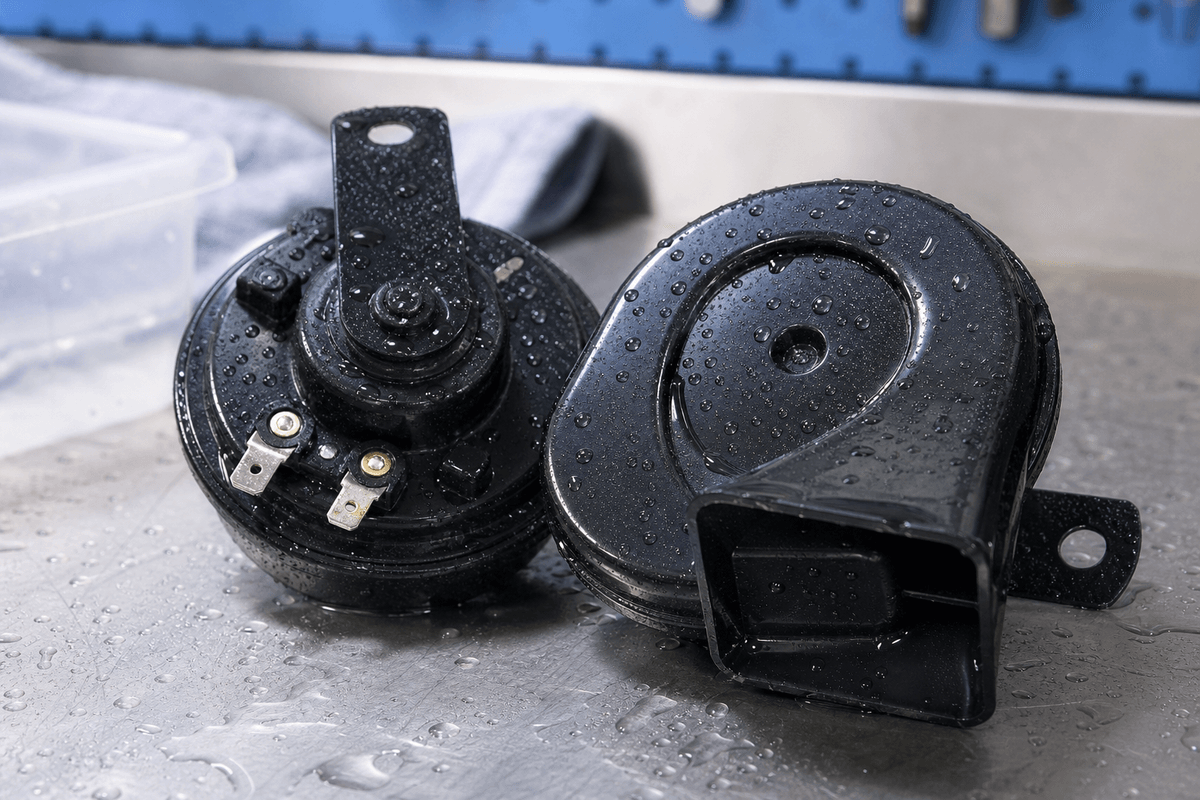
Waterproof wording should be written carefully in catalogs and packaging. If the supplier only provides drainage language, do not imply full sealing. If the product uses a waterproof cover, explain the intended mounting direction. If the horn was tested under a specific spray or exposure condition, keep that condition with the sample record. Clear wording protects the buyer from promising more than the design can support.
Conclusion
A waterproof electric car horn should be approved through structure, installation, and test method. Buyers should check sealing, drainage, membrane exhaust, anti-corrosion treatment, terminal protection, and post-exposure sound. OSUN's disc, snail, and sports horn pages give useful examples, but the final claim should always match the exact SKU and sample test result.