
A private label car horn manufacturer does more than put a buyer's brand on a box. The manufacturer and buyer must lock the actual horn specification, connector set, tone pair, sound claim, certificate wording, installation instruction, and packaging promise before artwork is printed. If the box says "universal," "waterproof," or "extra loud" without exact support, the buyer's brand carries the risk.
OSUN's car horn range gives private-label buyers several product positions: compact disc replacement, fuller snail horn sound, sports horn upgrade, and multi-fit adapter coverage. The right choice depends on the buyer's sales channel, target vehicles, and claim strategy.
Lock the SKU Before the Box
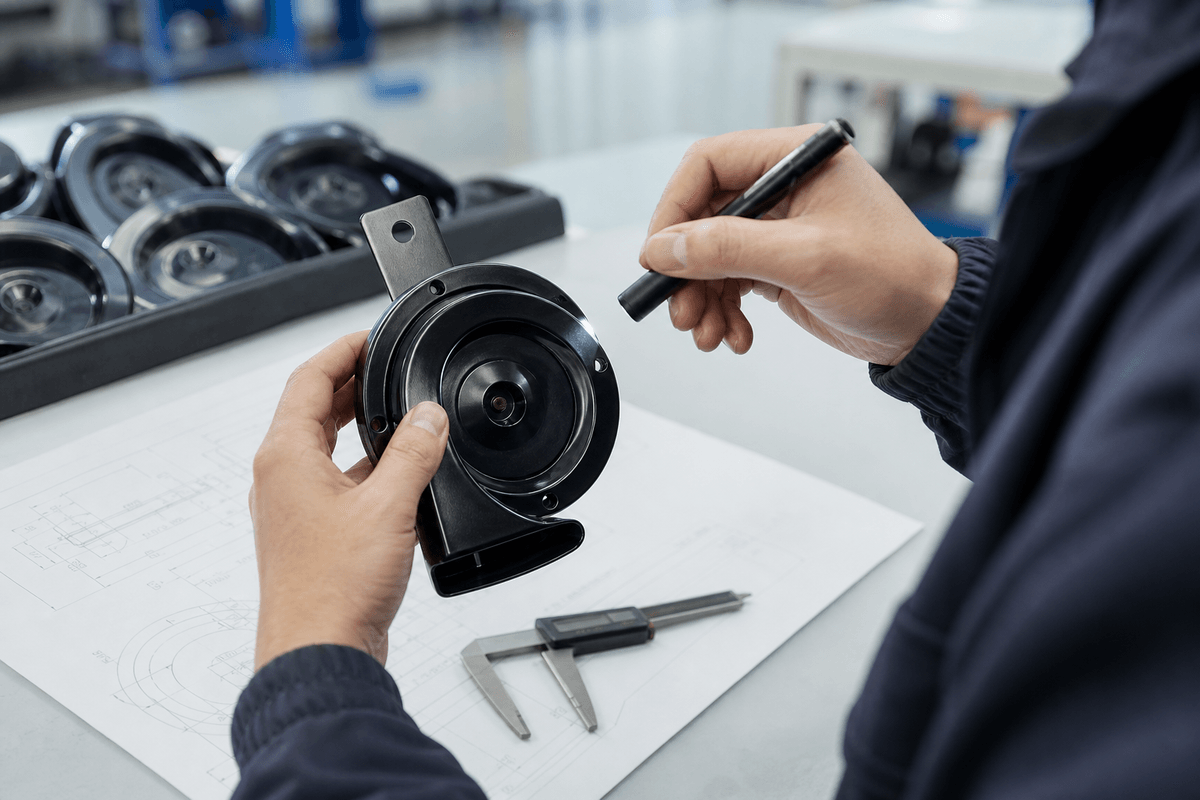
Private-label projects often start with packaging ideas, but the SKU should come first. A compact disc horn such as OSUN ODL-151 can be positioned around easy replacement, compact installation, and lower-current checking. A snail horn such as ODL-161 or ODL-162 can support a fuller high/low tone package, but it needs more space and a clearer wiring plan. A sports horn can support a premium upgrade line, but higher sound language should be confirmed through the exact sample test method.
Once the SKU is chosen, the buyer should freeze voltage, current draw, dB test condition, frequency pair, bracket drawing, connector type, included accessories, and packaging quantity. Artwork should not move forward while these details are still changing.
Packaging Claims Need Evidence
Claims that sound attractive on a retail shelf can become after-sales problems. If the package says waterproof, the buyer should know whether the specific product uses sealing, drainage, membrane or exhaust design, waterproof cover, or another structure. OSUN snail horn references include water-drainage or membrane/exhaust language depending on model. Use the correct model-specific wording rather than applying one claim across the whole range.
If the package mentions E-mark, ask OSUN to confirm whether the certificate applies to the exact SKU, voltage, tone, and production version. If the package mentions broad vehicle fit, request the actual connector or adapter list and compare it with the buyer's market before printing coverage language.
Private Label Checklist
- Approved sample photo, product marking, and model code.
- Voltage, current draw, sound level, frequency pair, and test method.
- Connector type, adapter count, wiring harness, relay, and hardware list.
- Bracket drawing, mounting hole, installation direction, and space warning.
- Certificate copy and the exact wording allowed on packaging.
- Carton mark, inner box, instruction sheet, barcode area, and spare-parts policy.
OSUN Product Fit for Private Label Lines
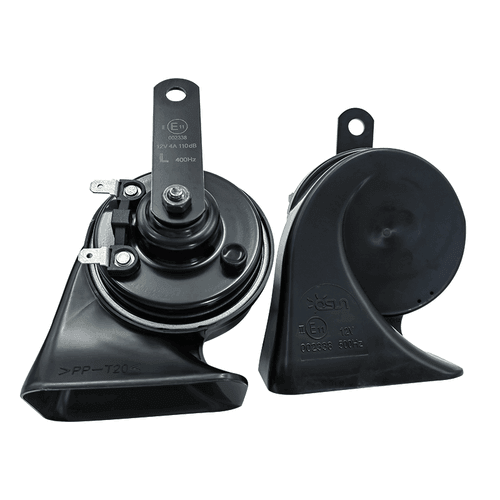
The OSUN multi-fit car horn is useful for private-label buyers who want a service-friendly replacement kit with multiple adapters. Its page highlights broad coverage language, pure copper terminal wording, stable connection, and low-resistance installation language. Buyers should verify the exact adapter list before printing fitment promises.
For a clearer single-product private-label line, OSUN ODL-151 can support compact disc horn positioning, while ODL-161, ODL-162, and ODL-165 can support different snail horn stories around drainage, E-mark positioning, anti-corrosion treatment, shell material, or climate adaptation. The key is to make the packaging match the product evidence.
Conclusion
A private label car horn manufacturer should help the buyer turn product details into packaging that is accurate and easy to support. Before artwork, lock the SKU, tone, current, connector set, certificate wording, test record, and installation accessories. OSUN's range gives buyers multiple private-label directions, but each package should be built from the approved sample, not from broad marketing language.