
A single horn uses one sound-producing unit, while a dual horn system normally combines a high-tone and low-tone unit. The pair creates a broader, fuller warning character, but it also adds load, wiring, mounting and packaging requirements. The better choice depends on the original vehicle design and target application rather than the assumption that two horns are always better.
What Changes When a Second Horn Is Added?
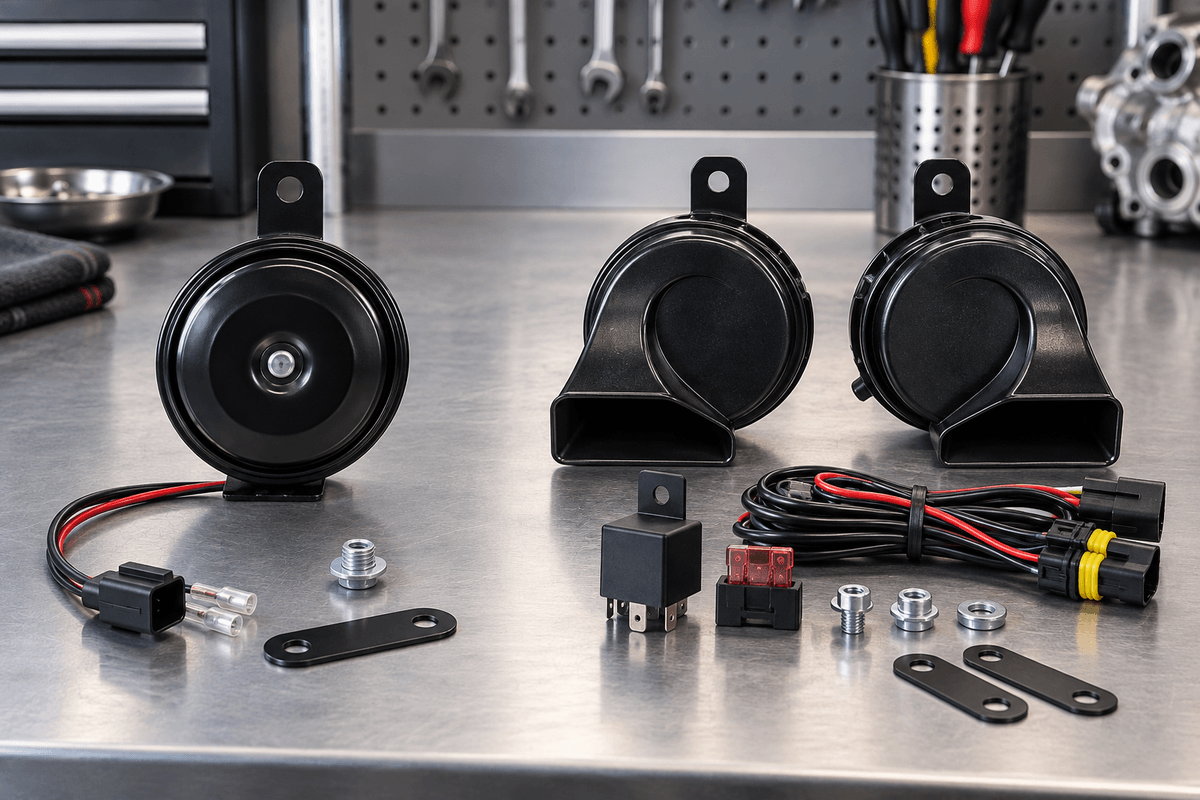
The most obvious change is frequency content. Two distinct tones can make the warning sound richer and more recognizable in traffic. However, the system also needs two secure mounting positions, enough clearance around both outlets, appropriate connectors, suitable wire capacity and a control circuit that can handle the combined current.
If two horns are wired in parallel, their loads add. A pair of units marked 4A each suggests an 8A marked total before accounting for startup behavior and test conditions. The existing fuse, relay, switch, wiring and grounds must be checked against measured load and vehicle data. Never increase the fuse simply because a second horn causes the original fuse to open.
OSUN Examples for Real Fitment Decisions
The OSUN ODL-151 disc horn is a compact option whose reviewed image shows 12V, 3A and high/low variants at 420Hz and 350Hz. Its drawing indicates roughly 76mm body width, 47mm depth and an 8.5mm mounting hole. A single unit can suit a space-conscious replacement, while two variants can form a high-low set if the vehicle circuit and space allow.
The ODL-161 snail horn is shown with 500Hz and 400Hz variants, 12V and 4A markings, and a slim depth of about 65mm. Its forward sound direction and drainage-oriented design add installation questions: the mouths need clear paths, correct orientation and protection from direct spray.
When a Single Horn Makes Sense
- The vehicle originally uses one horn and direct replacement is the priority.
- There is only one safe mounting location behind the grille or bumper.
- The factory circuit has limited current capacity.
- A fleet values lower parts count and simpler service procedures.
- The target market accepts the tone and approval evidence for that exact unit.
When a Dual Horn Pair Adds Useful Value
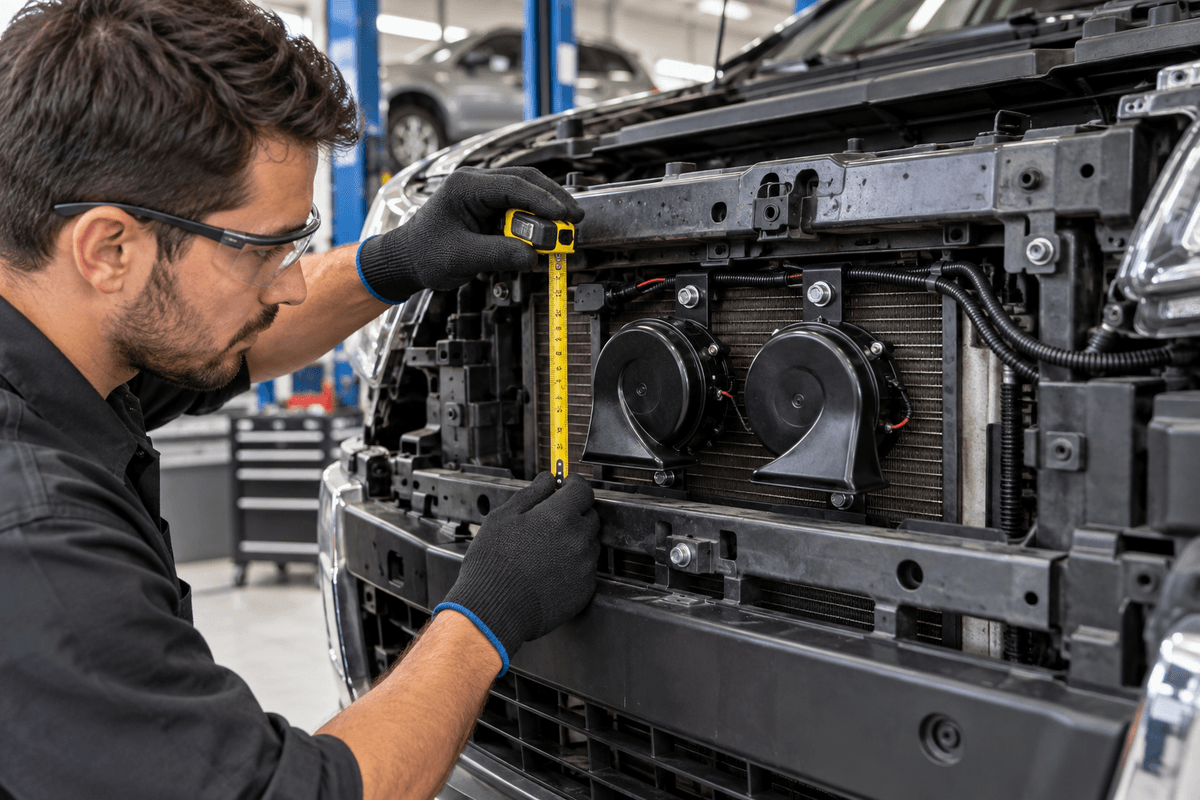
- The original vehicle is designed for a high-low pair.
- A fuller acoustic character is required for a product upgrade.
- Two secure mounting points and clear sound paths are available.
- The relay, fuse, wiring and connectors support the combined measured current.
- The high and low models, markings and approval documents are correctly paired.
Test the Pair as a System
Evaluate each horn separately first, recording voltage, current, frequency and sound. Then test the pair on the intended harness. Check voltage drop at both branches, because an unequal ground or connector can make one horn dominate. Listen for stable tone across repeated activations and inspect the bracket for resonance or contact with body panels.
For purchasing, specify whether the package contains one unit or a matched pair, connector type, frequency tolerance, current per unit, bracket orientation and applicable certificate. OSUN’s multi-fit horn concept can help with connector coverage, but buyers should verify the exact adapter list rather than assume universal fitment.
Send vehicle platform, market, available space and circuit details through the OSUN contact page to select samples that can be tested as a complete installation.