
A Tesla Model 3 horn upgrade cannot be planned from the vehicle name alone. Tesla's public service information shows separate horn procedures and architecture differences across production periods. The 2017–2023 manual lists high-tone, low-tone and horn-assembly procedures, while the 2024+ manual indexes a “Super Horn.” Low-voltage battery architecture can also vary. Compatibility must therefore be established by model year, market and vehicle configuration.
What the Official Service Information Reveals
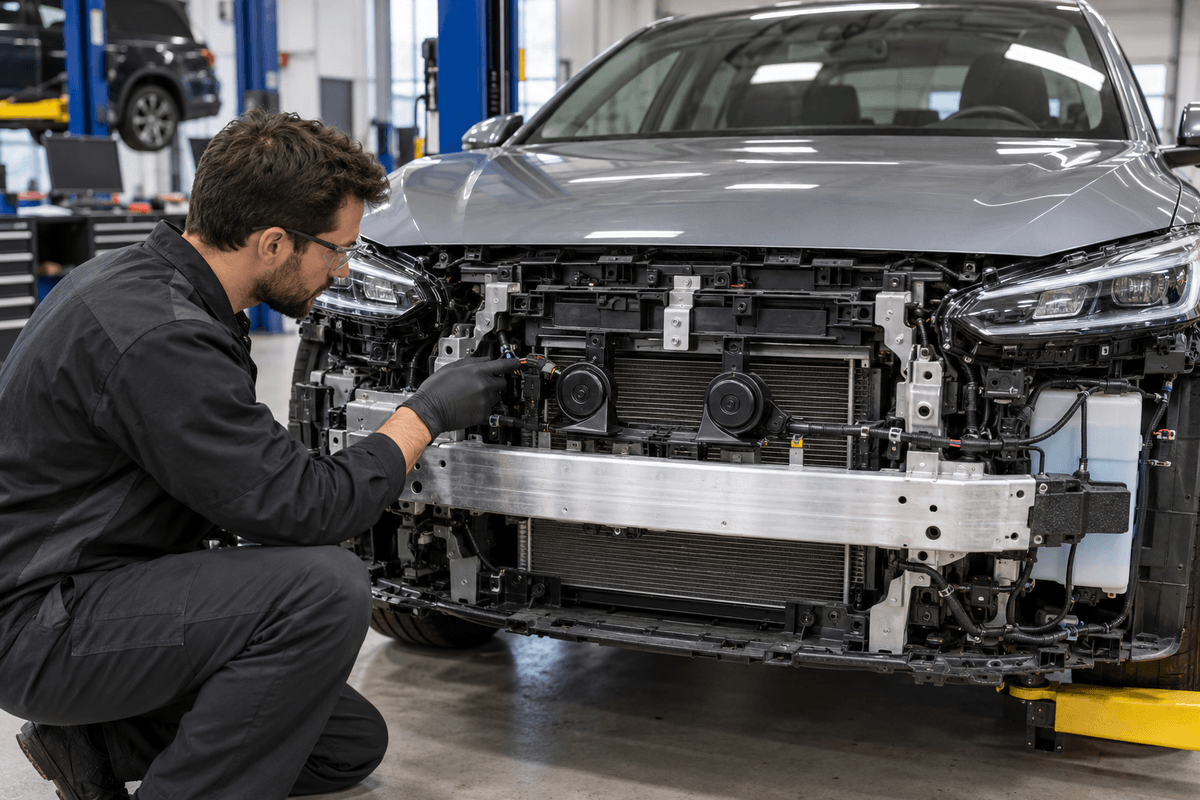
Tesla's 2017–2023 high-tone horn procedure requires substantial access work, including removal of underhood components, front aero shield and front fascia before disconnecting and unbolting the horn. The manual shows regional distinctions and specifies a mounting fastener value for the documented procedure. Another low-tone procedure includes a Toolbox functional test after installation.
These details make two points clear: the horn is not always a five-minute exterior swap, and a successful physical installation may still require vehicle diagnostics. Owners should use the current service procedure for their VIN and production date or engage a qualified repairer.
Do Not Assume Every Model 3 Uses the Same Voltage
OSUN horn examples discussed here are 12V products. Tesla service information includes references to vehicles with different low-voltage battery arrangements, including 16V-related components in some contexts. A 12V aftermarket horn should never be connected until the vehicle's nominal and operating voltage, controller output and original horn specification are confirmed.
The correct qualification packet should include:
- VIN range, build date, market and steering configuration.
- Official horn part architecture for that vehicle.
- Low-voltage operating range and control-module behavior.
- Original connector pinout and measured current.
- Mounting envelope, bolt, bracket and outlet orientation.
- Required Toolbox or diagnostic validation.
How OSUN Products Could Be Screened
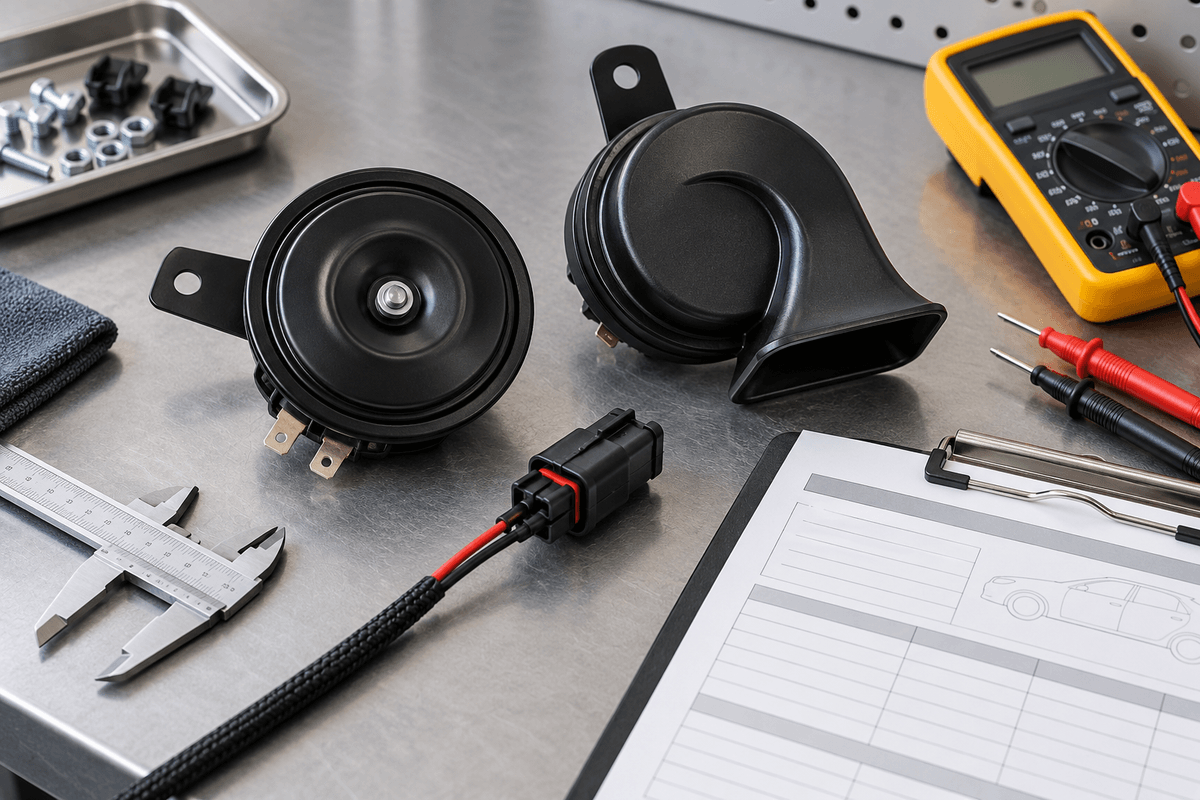
The OSUN ODL-151 disc horn has reviewed dimensions of approximately 76mm width, 47mm depth and an 8.5mm mounting hole, with a visible 12V, 3A marking. Its high/low variants are shown at 420Hz and 350Hz. These details can populate an engineering comparison, but they do not establish Model 3 compatibility.
The ODL-161 snail horn is approximately 65mm deep and is shown with 12V, 4A and 500/400Hz variants. Its drainage and forward-facing sound design require the outlet to remain clear after fascia reassembly. A two-horn pair also changes total load.
Adapter Fit Is Only One Layer
A connector adapter can avoid cutting factory wires, but it must preserve pinout, polarity, sealing and terminal capacity. The body controller may detect unexpected electrical behavior. If a relay interface is considered, engineers must evaluate coil current, suppression, fuse protection and whether the control output permits it.
Do not tap the pedestrian-warning speaker circuit or confuse that system with the driver-operated horn. Avoid high-voltage components and follow Tesla's electrical precautions and power-down steps.
A Responsible Upgrade Workflow
- Look up the current Tesla service procedure for the exact vehicle.
- Record original high/low horn markings, connectors and mounting positions.
- Measure available space only after following safe access steps.
- Compare voltage, current and controller behavior with the proposed horn.
- Build a reversible, fused and sealed connection without cutting wires where possible.
- Perform the specified diagnostic test and check for fault codes.
- Confirm sound, legality and clearance after complete reassembly.
This article does not claim that any OSUN horn is a validated direct-fit Tesla part. Buyers evaluating a program can request OSUN drawings, samples and connector information through the contact page, then complete independent vehicle-level validation.