
Car horn types are useful as an initial sorting tool when the original label is incomplete. Start by recording the physical unit, then document the package, connector and original vehicle application. Disc, snail and trumpet describe families that can help narrow the search. A buyer still needs a model-specific answer before quoting a confirmed replacement. Keep the physical evidence beside the supplier’s proposed part number so another person can repeat the comparison.
Start with shape and record the unknowns
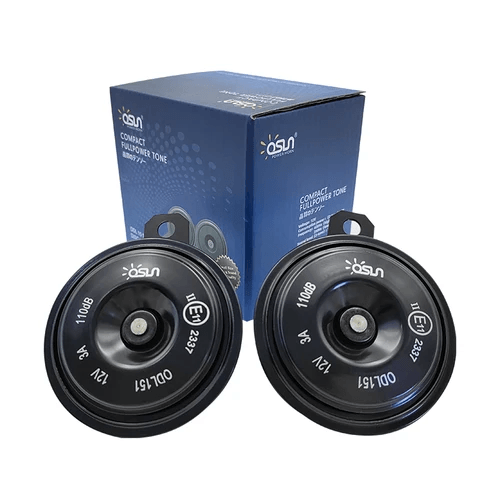
Before comparing car horn types, photograph the complete unit from the front and side and mark where the connector, mounting point and sound opening sit. A disc-style unit has a different visible body shape from a snail-style horn with a curved outlet. A trumpet-style opening is another visible clue. Record what is observable and leave the exact model as unknown when the label is unreadable.
Ask for the original label or a legible photo of the part reference. If the unit is hard to see in the vehicle, request the service documentation release or purchasing record available to the qualified person responsible for the job. A label may contain several lines. Specify which characters are readable and which are uncertain. An incomplete number can look like a different part if someone fills the missing digits by guesswork.
Use the supplier’s product classification to confirm whether the terms describe the same kind of body. Ask for a drawing if the catalogue photo shows only one view. Put the family and model in separate fields. For a flat disc, capture both the circular face and bracket offset. For a snail housing, show where the curved outlet points after mounting. For a trumpet shape, show the full length and mouth clearance. The OSUN disc and snail horn comparison gives more context on the two packages. That lets you use car horn types to narrow the alternatives while keeping each offered part number and its source independently visible.
Determine whether the reference is for a unit or a set
The same car horn types can be offered as individual units or as a set. Check the exact catalogue entry and product identification. Do not copy a set description onto an order for one piece without having the supplier identify what its quote includes. Keep the count, position and model details visible where the purchase is approved. For car horn types offered both ways, note whether the quoted quantity counts pieces or sets.
When a vehicle uses two horns, photograph the existing labels separately. Record why the request is for one replacement or a matched set. Ask which physical positions are in scope and whether a named model differs between those positions. These observations keep a description such as “replace front horn” from hiding which unit is needed.
If the supplier has quoted packaging that differs from the stated requirement, route the quote back for clarification before approving the order. Ask it to list the part references, quantities and included accessories. Make sure that the answer distinguishes an advertised configuration from the exact package the supplier will ship.
Compare the information that actually controls acceptance
When comparing car horn types, keep the reference document and acceptance evidence in separate columns. A manufacturer drawing may tell you the arrangement for one model. A physical sample provides an observation about the unit offered. A vehicle document shows which requirements apply to the actual installation. A good comparison records which source supports each field.
Begin with the mounting arrangement, connector or terminal interface, documented vehicle requirements and the product’s electrical information. Then record what the supplier says can be inspected on a sample. If sound performance is important, agree on the evidence expected for the actual model and application. Avoid carrying a measurement or approval marking over from a different catalogue entry.
Where the enquiry allows alternatives, share your requirements with the supplier of the proposed alternative. Use the OSUN automotive horn range as a starting point for discussing OSUN products. Request the exact OSUN model information and compare it with the documented application. Keep model selection open until the required evidence supports the decision. If two car horn types appear to fit the same space, record whether each sound outlet can face the intended direction without blocking access to the connector or bracket.
Work through a label-versus-catalogue example
Imagine that a distributor receives a close-up photo of part of the original horn label and a catalogue image of a horn with a similar shape. The customer asks for one replacement unit. Start by noting that the label is incomplete and the catalogue picture is a reference supplied by the requester. Ask for the full number and a second view that shows the connector and bracket.
Suppose the complete label reveals a different model than the photo originally suggested. Record which information changed and update the request without deleting the original evidence. Then confirm whether the order still requires the original branded model or allows consideration of a separate option. Include that purchasing condition with each line in the quote comparison.
When a sample arrives, match its label and accompanying documentation to the item the supplier proposed. Document any differences between the actual item and the accepted details before the sample reaches installation. If a fit or service question falls outside the supplier’s information, send it to the responsible application owner with the original and proposed references attached.
Preserve the basis for any substitution
When car horn types help identify an alternative, the purchase record should name the original reference and the exact approved replacement separately. If the customer’s instructions allow only the original brand or part, retain that restriction in the order. If an alternative has to be reviewed, say which dimensions and documentation were checked and who accepted the result.
Avoid using the original brand name as an informal label for the replacement. The invoice, package and purchase order should identify what was actually supplied. This is useful when a buyer raises a return or wants a second order. The receiving team can compare what it sees with the approved record without relying on someone’s memory.
When a later request appears to match one of the same car horn types, check whether the vehicle model, part suffix and accepted configuration still match the earlier order. A similar request can involve different evidence. Reuse the comparison fields and source links while confirming the current requirement.
Put the supplier answer beside the source reference
In a comparison of car horn types, save one line for the original reference and a separate line for the supplier offer. Identify the brand and part number shown on the quoted package. If the offered unit has a different brand, record the exact evidence used to evaluate it. If the customer has asked for an original branded part, identify whether the supplier can meet that requirement. Leave any mismatch visible so a buyer looking only at the summary can tell why an order is still open.
Before requesting the next sample, send both lines to the person who owns the vehicle application and ask which information still needs confirmation.
Questions about identifying car horn types
Is a photo enough to identify the horn family?
Use a photo to read the label and identify visible features. Confirm the complete reference and the relevant manufacturer information before treating it as a model identification. Take a second view if the bracket, terminals or other orientation details are important to the replacement request.
Can a single reference be used to approve a set?
Ask which exact items the reference covers. Compare the listed unit or set with the required quantity, position and supplied accessories. Keep each model and position visible if two horns are involved. The order should reflect the offered package that the buyer has actually reviewed.
What should an alternative quotation identify?
Ask for the brand, exact model and supplied configuration. Compare the documented application, mounting and interface information with the requirement, and request a sample where the decision depends on physical fit. Keep the original reference as context for the enquiry and identify the proposed replacement under its own name.
After narrowing down the possible car horn types, send the complete reference and label photo along with the application and purchase requirement. If an alternative is allowed, ask for its model-specific evidence and record the final decision under the correct brand and part number.