
A horn contact ring can be part of the path that carries the horn command through a steering assembly. If the horn works only at certain steering positions, that observation is useful to the repairer, but it does not identify the failed part on its own. For a distributor, the immediate question is whether the customer needs an acoustic warning device or help identifying a vehicle-side control fault. Decide before quoting to avoid a replacement that leaves the symptom unchanged.
What a horn contact ring does
In designs that use a sliding electrical contact, a ring and a mating contact maintain a connection as the steering assembly turns. Other vehicles may carry the horn switch signal through a clockspring, a steering wheel module or a different arrangement. Part names in a trade catalog may be imprecise, so use the vehicle-specific parts diagram instead of assuming a term describes the same component on every vehicle.
The warning horn itself sits elsewhere on the vehicle. It produces sound when it receives the appropriate electrical supply or command for its design. Replacing it neither restores a missing command upstream nor repairs a poor connection in the vehicle. Conversely, a confirmed command at the vehicle-side connector does not prove the horn is good. Those distinctions help route the complaint to the right person.
Record the symptom before identifying a part
Start with the customer’s description in ordinary language. Ask whether the warning sound is entirely absent, weak, intermittent or different from the expected tone. Note whether the complaint appeared after steering work, after work near the horn mounting point or after another repair. Ask whether the symptom changes with steering position, without asking the customer to recreate it while driving.
A horn contact ring should enter the discussion as a possible part only when the vehicle design and symptom support that line of review. A repairer may need to distinguish a switch input, a rotating connection, a module decision and the feed at the horn connector. A missing audible warning can follow a fault at any of those points. The supplier should avoid turning a customer’s symptom into a definite diagnosis on the order form.
Use the part diagram to separate two kinds of orders
Ask for the vehicle year, model and identification needed by the relevant parts system. In the diagram, locate the steering-column or steering-wheel component separately from the acoustic horn. Compare the reference number and catalog description with what the customer is asking to replace. If the request is for a horn contact ring, carry that name through to the order record. In a mixed distributor catalog, two lines that both contain the word horn may belong to different product families.
When the customer requests a horn contact ring, determine whether they mean a steering assembly part, an electrical contact or the audible warning unit. Do not substitute an acoustic horn just because the connector or general model year looks familiar. If the reference points to a steering assembly component outside the seller’s range, explain what identifier is needed and refer the fitment check to an appropriate parts source.
Hand steering assembly diagnosis to a qualified technician
Airbag equipment and steering controls can share the area around a horn contact ring or clockspring. A parts seller should collect symptom and vehicle information, then refer checks that involve opening the steering assembly to a qualified technician following the vehicle service information. Avoid inferring that a steering-wheel warning lamp confirms a horn fault or that a horn fault means the safety system is intact.
For a possible horn unit failure, ask the technician which checks have already been performed at the horn location and what decision they support. The distributor needs a result sufficient to select a part, such as whether the existing unit itself has been identified as the replacement item. Do not ask the customer to bridge circuits or bypass protective devices to prove that conclusion.
Worked example: one complaint, two different purchase paths
Imagine a customer says the horn stopped sounding after steering work. The complaint alone does not settle whether the horn contact ring, steering connector or sound unit is involved. Record the work history and find the correct vehicle diagram. If the technician identifies a missing horn command in the steering assembly, forward the verified steering-side reference to a supplier that covers that component.
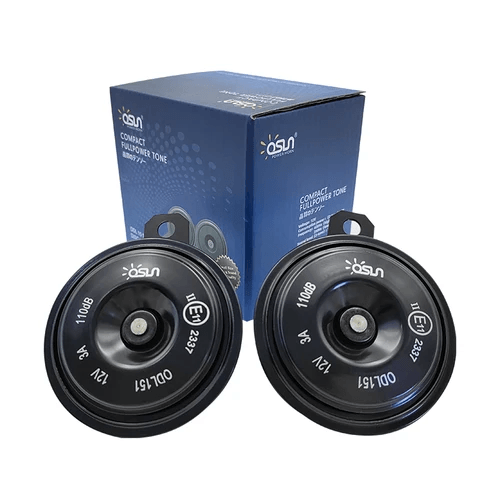
Imagine instead that the technician has identified a failed warning horn, and the customer can provide its model label, bracket and connector photos. The replacement discussion can now focus on the horn unit. Use the OSUN automotive horn range to identify candidates, then check the intended application, electrical requirements and mounting details against the exact model drawing. Keep the technician’s finding in the order record to explain why this part was selected.
Give counter staff a short handoff record
A useful record names the vehicle, describes the symptom, identifies which part the customer requested and states what has actually been verified. Include any catalog reference for the horn contact ring separately from the number on the sound unit. Record whether the customer is asking for a quote, providing a diagnostic finding or requesting help locating the correct catalog group.
Attach the photos or drawing references that support the selection. If the request remains unresolved, state which detail is missing and who can provide it. A brief note such as “supplier awaiting warning horn label” is more useful than a broad diagnosis that the next counter employee cannot check. The record also helps prevent repeat returns when a vehicle family has more than one configuration.
Document the handoff between service and purchasing
Use a separate line in the return record for the symptom and for the part that was tested. A useful record might read: intermittent sound reported; inspection by workshop pending; warning horn and vehicle-side command path considered separately. That makes it clear what the distributor knows and what still needs to come from the workshop. Avoid treating a supplier quote as confirmation of a diagnosis.
If an order does move forward, put the confirmed part family beside the product reference. Record the outcome expected from the new unit, such as matching the specified connection and fitting the documented mounting location. Keep the workshop’s finding with the order if it is available. The buyer can then compare the supplier’s sample against the intended component without carrying over an earlier assumption about the horn contact ring.
Use the same distinction when a return comes back. First establish whether the supplied unit differed from the ordered item, whether it fit the expected vehicle-side interface and whether the original complaint changed. Each answer belongs with a different owner. If the catalog lists a horn contact ring and the sample is an acoustic horn, send that mismatch to the supplier. An unresolved command fault belongs with service. Closing those issues separately gives the distributor a clearer record for the next claim.
Questions about identifying the replacement
Does an intermittent horn mean the horn contact ring is faulty?
No single symptom proves that conclusion. A technician can use the vehicle design and observed conditions to separate a command issue from a feed, connection or horn unit issue. Report the conditions under which it happens and whether any related repairs preceded it.
Is a horn contact ring the same as a clockspring?
Do not use the names interchangeably when ordering. Check the vehicle parts information and reference number. A clockspring can carry multiple circuits in some designs, while a sliding contact ring is a different construction.
What should I send if the horn unit really is the part needed?
Send the vehicle application, existing horn marking, connector and bracket photos, and any documented installation constraints. For paired horns, identify whether the order is for one unit or both. Confirm the exact configuration with the supplier before issuing the purchase order.
Brief OSUN on the horn unit you need
Once the horn contact ring and vehicle-side control path have been distinguished from the audible warning unit, share the horn label, vehicle application and mounting details with OSUN. That gives the team a basis for discussing the right product family and what the replacement sample needs to demonstrate.