
A vehicle horn request for quotation should make it easy for manufacturers to quote the same scope. One offer may cover a single unit in a bulk carton, while another includes a matched pair, accessories and a retail pack. Price comparisons are unreliable until purchasing can see what each offer includes. Make the inquiry a shared record of requirements, open decisions, sample evidence and commercial assumptions.
Split the vehicle horn inquiry into order lines
Start with the product lines the distributor wants to sell and the applications they serve. Separate standard replacement units, pairs and kits where their order contents differ. Give each planned item a buyer reference, even if the manufacturer has not assigned a model. The reference can follow the item from inquiry to sample approval and onward to the purchase order.
For each vehicle horn line, state the intended application, market and distribution channel. Identify requirements that are already decided and options that need advice. If the buyer has a vehicle application list, send the version for this inquiry and note any gaps. Do not ask a factory to guarantee broad coverage from a model name without accompanying fitment information.
Give suppliers the information they need to quote the same scope
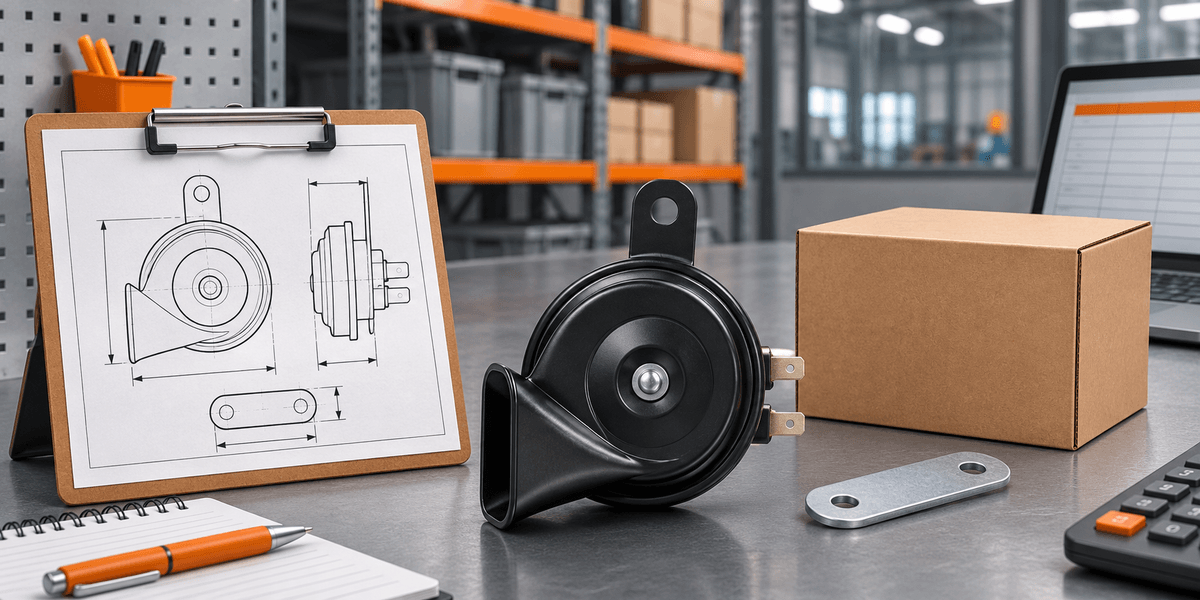
Provide the requested voltage, tone arrangement, available installation space and connector or mounting requirements for the exact vehicle horn application. Add drawings or marked photos if a fitment constraint is easy to misunderstand. Where a document is required by the buyer or the intended market, say which model and configuration it must cover. Ask the factory to identify assumptions and exceptions in the response.
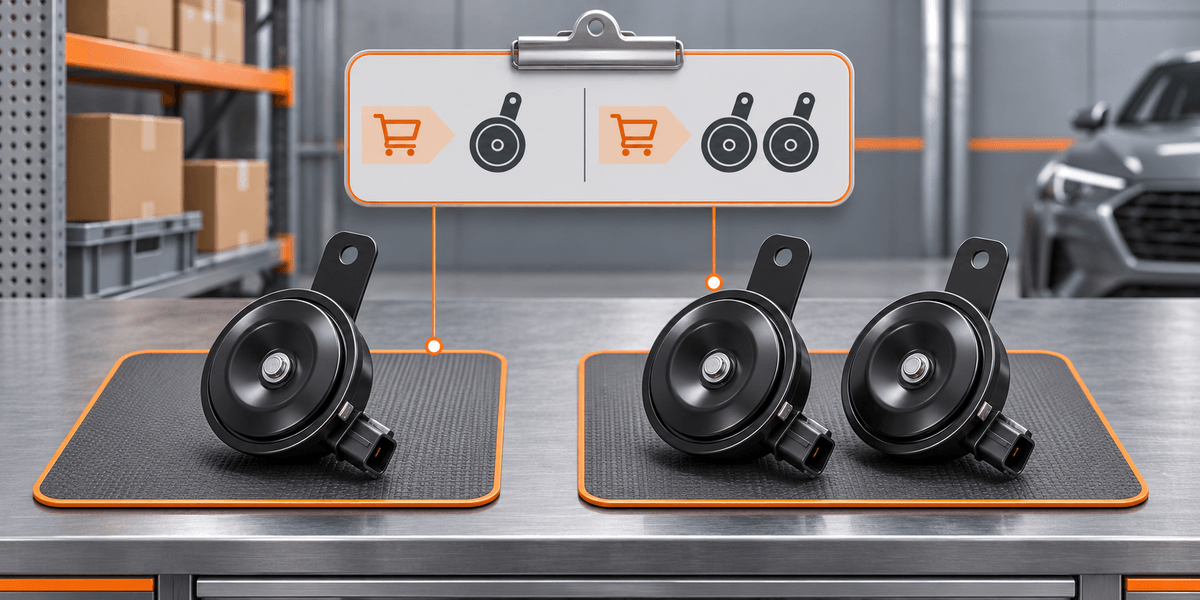
Specify whether the offer should include brackets, leads, connectors, paired units, instructions or a labeled pack. Some programs need only a component in a wholesale carton. Others require an agreed retail configuration. Encourage suppliers to list proposed options as separate lines, so a lower quote does not appear cheaper simply because it excludes an item the buyer expects.
Ask how each sample relates to the offer
Request the factory reference and sample designation for each quoted vehicle horn. If a demonstration unit represents several planned order lines, ask which physical and electrical features are shared and which differ. Make sure the buyer can tell a proposed baseline from an alternative provided for review.
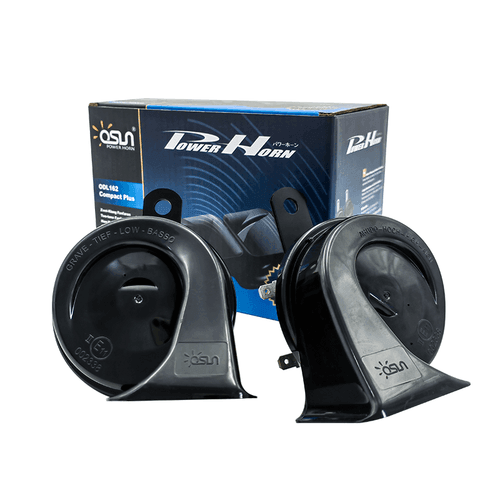
If the sample label or package is temporary, ask the supplier to identify it as such. Confirm what will be provided for production approval before the bulk order moves forward. Use the OSUN automotive horn range to discuss the published product families, then ask OSUN for the exact documents and sample details tied to that quotation.
Compare commercial terms separately from technical approval
Prepare a side-by-side quotation sheet for each vehicle horn line. Include unit basis, contents, packaging, proposed quantities, sample costs, delivery assumptions and which documents are offered. Keep uncertain or omitted items visible. A blank cell should mean that the buyer still needs an answer, rather than that the requirement is automatically included.
Ask suppliers to explain which terms depend on quantity, artwork, product availability or variants. Ask each supplier to date the quote and identify which assumptions would require it to be refreshed. Record the carton quantity alongside the unit basis so purchasing can compare shipment quantities as well as item prices. Use the actual written offer rather than extrapolating from another supplier, a past purchase or a public catalog. If a proposed order changes after sampling, request an updated quotation before using the old terms to place a new order.
Worked example: a single unit and a pair look like the same product line
Suppose one factory quotes a vehicle horn per unit and another quotes a matched pair per set. Both offers appear against the same distributor item number. Split the inquiry into separate lines and ask each supplier to identify contents, quantities and model markings. Confirm whether the distributor will sell either arrangement or needs only one. Compare prices after the scope is aligned.
If the pair requires different approval documents or mounting information, request those against the set the supplier would ship. Record each unit’s reference in the sample record. A quote that appears complete because it names a general family may need more detail before the buyer can judge whether it meets the actual program requirements.
Link the accepted quote to the purchase order
Once a vehicle horn sample and quotation are agreed, list both references on the order. Include the buyer SKU, supplier item, chosen option, document revision and agreed packing scope. Ask the manufacturer to acknowledge any specifications kept in attachments. A change made during the quotation stage should be visible to the people preparing the sample and production paperwork.
Plan what to do if an agreed part is unavailable or a factory proposes a different accessory. Define who can approve a substitution and what evidence is needed before approval. Keep the approval attached to the purchase line. The aim is to prevent a new configuration from being introduced by a note that never reaches purchasing or receiving.
Questions from wholesale buyers
Should the first vehicle horn inquiry include a forecast?
Provide the approximate quantities and timing the buyer is comfortable sharing. Distinguish an initial purchase from indicative future demand. Ask the supplier to state which prices and delivery conditions apply to the specific quote.
Is it enough for a quote to name a product family?
Ask for the full model reference and the configuration proposed for your program. Similar catalog names can cover different connectors, mounting parts or tone options. Confirm which sample and drawings represent the quoted item.
How can I compare different pack options?
Ask for an itemized contents list and an agreed basis for comparing wholesale and retail packaging. Mark optional accessories and artwork separately. Use the same vehicle horn configuration when evaluating which package suits the channel.
Send OSUN the lines you want quoted
For each vehicle horn item, send the application, order scope, connector and bracket references, document requirements, packaging and expected quantity. Mark questions that the factory should answer and ask which sample will represent each proposed line. The resulting quote can then serve as a purchasing record rather than a price detached from the configuration.